Strong El Nino Points to Drier Summer Across Minnesota, Wisconsin, North Dakota, New England, and the Carolinas While Central United States Faces Above Normal Precipitation for June July and August
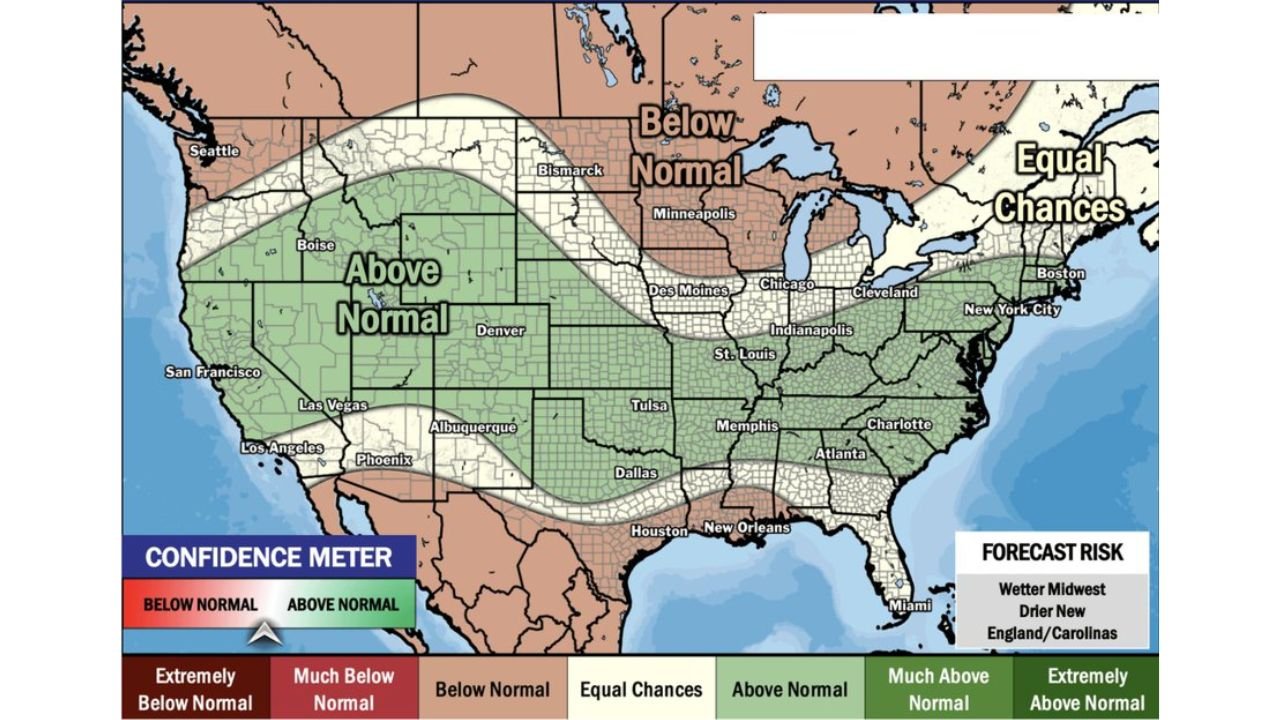
UNITED STATES — The summer precipitation outlook for June, July, and August 2026 is taking shape under the influence of a strong El Nino, with forecasters favoring above normal precipitation across the central United States while the northern tier and south central regions face drier than normal conditions. The JJA Precipitation Outlook updated May 20, 2026 shows a clear dividing line between who gets a wetter summer and who faces moisture deficits through the growing season.
Where Each Region Stands for Summer Precipitation
The outlook map draws distinct zones across the country with confidence varying by region.
Summer precipitation outlook by region:
| Region | Outlook | Key Cities |
|---|---|---|
| Pacific Northwest / Rockies | Above Normal | Seattle, Boise, Denver |
| Central U.S. / Great Plains | Above Normal | Tulsa, St. Louis, Des Moines |
| Southwest / Four Corners | Above Normal | Las Vegas, Albuquerque, Phoenix |
| California Coast | Above Normal | San Francisco, Los Angeles |
| Northern Plains / Upper Midwest | Below Normal | Bismarck, Minneapolis |
| South Central U.S. | Below Normal | Dallas, Houston, New Orleans |
| Great Lakes / Ohio Valley | Below Normal | Chicago, Cleveland, Indianapolis |
| Northeast / New England | Equal Chances | Boston, New York City |
| Mid-Atlantic / Carolinas | Forecast Risk: Drier | Charlotte, broader Carolinas |
| Midwest | Forecast Risk: Wetter | Broader Midwest corridor |
Confidence Meter Points Toward Above Normal
The confidence meter included on the outlook is positioned on the above normal side, reflecting forecaster confidence that the broader pattern will deliver more precipitation than average across the favored zones. This is not a coin flip outlook for the central U.S. — there is genuine confidence behind the above normal signal.
Confidence breakdown:
| Confidence Level | Current Position |
|---|---|
| Extremely Below Normal | Not indicated |
| Much Below Normal | Not indicated |
| Below Normal | Not indicated |
| Equal Chances | Not indicated |
| Above Normal | Indicated on meter |
| Much Above Normal | Not indicated |
| Extremely Above Normal | Not indicated |
El Nino Is the Driving Force Behind This Outlook
A strong El Nino is the primary climate driver shaping this summer precipitation forecast. El Nino patterns historically produce predictable shifts in the jet stream and moisture delivery across North America during the warm season.
What strong El Nino typically means for summer:
- Central and western U.S. tend to see enhanced moisture and storm activity
- Northern tier states typically experience drier and warmer than normal conditions
- South central U.S. often sees suppressed rainfall under El Nino influence
- Growing season impacts become significant when precipitation deficits persist through June and July
- Drought development risk increases across below normal zones during an active El Nino summer
The Carolinas and New England Face a Drier Risk
The forecast risk section on the outlook specifically calls out drier conditions for New England and the Carolinas as a concern for the summer months. This is a notable flag for a region that has already been dealing with drought conditions heading into the warm season.
Drier risk zone highlights:
- Charlotte and the broader Carolinas are in the drier risk zone
- New England faces the same drier summer signal
- Drought conditions already present across parts of the Carolinas could worsen if the drier summer outlook verifies
- Above normal temperatures typically accompany drier El Nino summers in these regions
The Midwest Gets the Wetter Side of the Outlook
On the opposite end of the forecast, the Midwest is flagged for a wetter than normal risk this summer. States across the central corridor including Missouri, Iowa, Illinois, and Indiana sit in the above normal precipitation zone with a specific wetter risk flag applied.
Wetter Midwest implications:
- Flooding risk increases during a wetter than normal summer pattern
- Agricultural areas across the Midwest may see excess moisture affecting crops
- Storm frequency likely above normal through the June through August period
- River levels across the Mississippi and Ohio valleys worth monitoring through the summer
Growing Season Implications Are Significant
With the growing season now underway, the split between a wetter central U.S. and drier northern and south central regions carries real consequences for agriculture, water supply, and drought management across the country through the summer months.
Stay with CabarrusWeekly.com for continuing coverage of the summer outlook and evolving climate patterns across the United States.