1940 to 2026 Timeline Shock: March Temperatures Across the United States Surge Over 7°F, Marking Fastest Warming Trend Yet
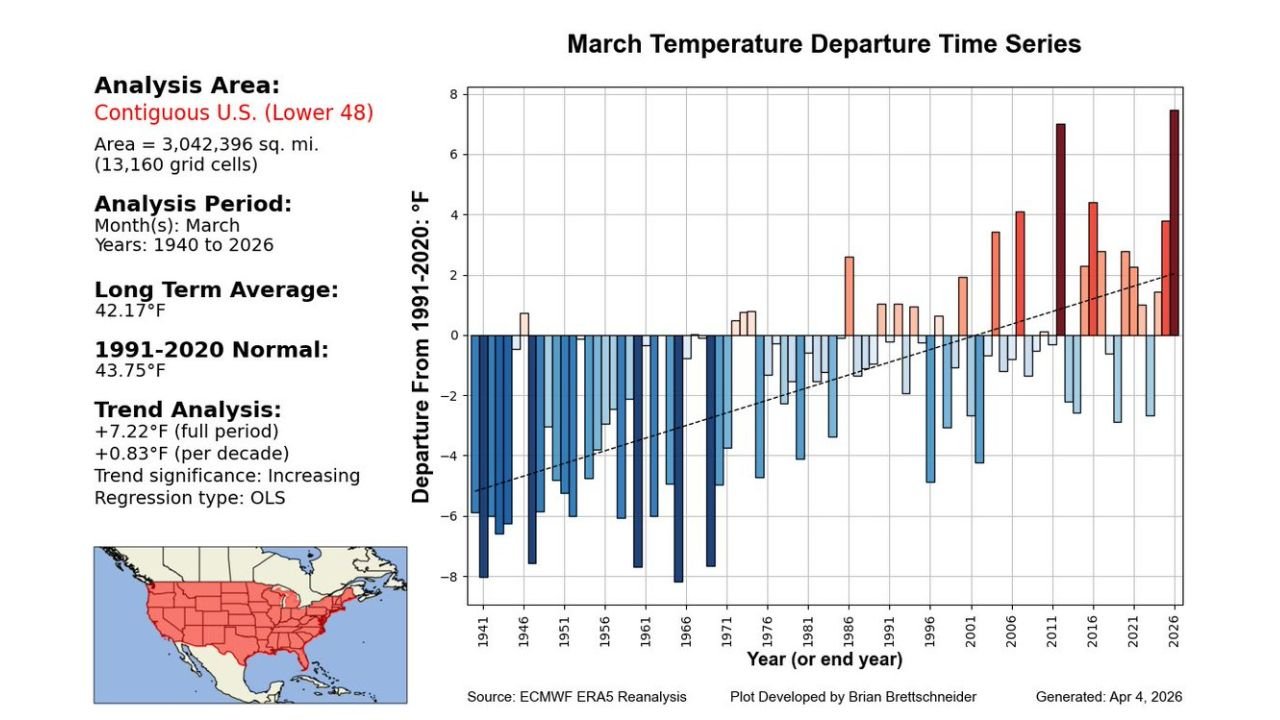
UNITED STATES — Newly analyzed long-term climate data reveals a striking trend: March temperatures across the Lower 48 have risen dramatically since 1940, with the latest data confirming both record warmth and an accelerating upward trend.
March 2026 Stands Out as Warmest on Record
The latest dataset confirms that March 2026 was the warmest March ever recorded across the contiguous United States. But beyond the single record, the broader pattern is what stands out most.
Over the past several decades, March has steadily shifted from predominantly colder-than-average conditions to increasingly warmer outcomes.
A 7.2°F Temperature Rise Since 1940
The long-term analysis highlights a major climate shift:
- +7.2°F total warming since 1940
- Equivalent to roughly +0.83°F per decade
- The warming trend is statistically significant and continuing to rise
Earlier decades, particularly from the 1940s through the 1970s, were dominated by cooler-than-average March temperatures. However, recent decades show a clear reversal, with frequent and stronger warm anomalies becoming the norm.
Acceleration in Recent Decades
The most noticeable increase has occurred in the last 20–30 years:
- More frequent above-average March temperatures
- Stronger warm departures compared to historical averages
- A visible upward slope in the long-term trend line
This suggests that warming is not just ongoing—it is accelerating, especially in late winter and early spring months.
What This Means for Seasonal Patterns
This warming trend has important implications:
- Earlier transitions from winter to spring
- Increased likelihood of early blooming and growing seasons
- Greater variability between warm spells and sudden cold snaps
It also raises concerns about how future spring seasons may evolve, especially if the current pace continues.
A Shift That Impacts Future Generations
The data points toward a long-term transformation in how March behaves across the United States. If this trajectory holds:
- Spring could arrive earlier and more abruptly
- Temperature extremes may become more pronounced
- Weather patterns tied to seasonal transitions could shift significantly
The scale and speed of this warming highlight a major environmental trend that extends beyond a single season or year.
Stay Connected With Cabarrus Weekly
For deeper analysis of long-term weather trends, climate shifts, and real-time forecasts across the United States, stay with Cabarrus Weekly—your trusted source for clear, data-driven weather coverage.