North Carolina Drought Worsens as Over 65% of State Falls into Severe Category, Charlotte and Piedmont Regions Facing Mounting Water Stress
NORTH CAROLINA — Despite recent snow and ice events across parts of the state, drought conditions are not improving. Instead, they are intensifying, with more than 65% of North Carolina now classified in Severe Drought as the growing season approaches.
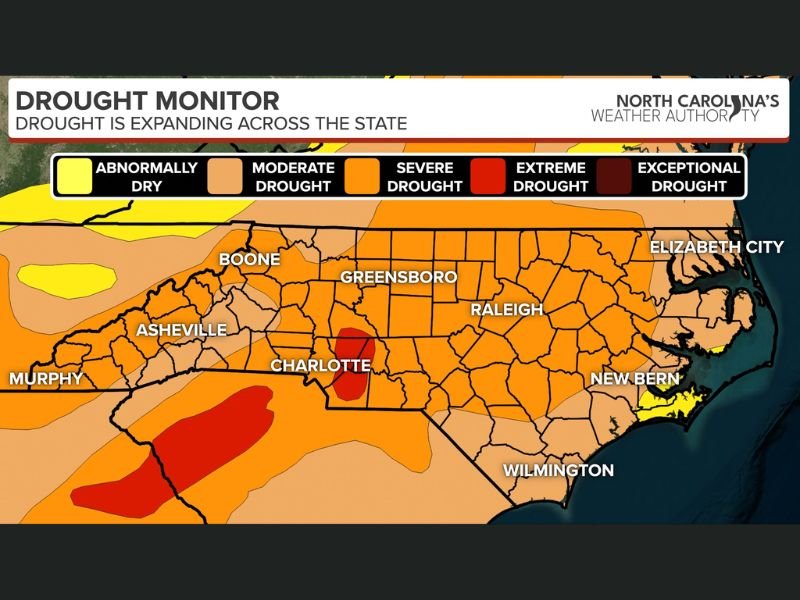
The latest drought monitor shows expanding Severe Drought coverage across much of the Piedmont, including Greensboro, Raleigh, Charlotte, Boone, and Elizabeth City.
Snow and Ice Did Not Deliver Meaningful Moisture
Many residents have questioned why creeks, lakes, and streams remain low after winter precipitation. The answer lies in the liquid-equivalent moisture totals from those snow and ice events.
Most areas received around one inch of liquid moisture or less, which is far below what is required to significantly recharge groundwater or improve streamflow levels. While snowfall can appear substantial on the ground, its actual water content was limited. Without multiple soaking rainfall events, drought recovery remains unlikely.
Severe Drought Now Dominates Central and Western North Carolina
Current drought classifications show widespread Severe Drought (D2) across the state’s central corridor.
Impacted regions include:
- Charlotte and surrounding counties
- Greensboro and the Triad
- Raleigh and much of the central Piedmont
- Boone and parts of the High Country
- Elizabeth City in northeastern North Carolina
A small but concerning pocket of Extreme Drought (D3) is also visible southwest of the Charlotte metro area, signaling deeper soil moisture depletion in that zone. Coastal areas near Wilmington and New Bern remain somewhat less severe, but dryness continues to persist statewide.
Why Water Levels Remain So Low
Even when precipitation falls, extremely dry soil conditions absorb much of the moisture before it can run off into streams or reservoirs.
This has led to:
- Persistently low creek levels
- Limited lake recovery
- Ongoing groundwater deficits
Until repeated rainfall events bring several inches of widespread precipitation, significant improvement is unlikely.
Rain Expected Sunday — But It May Not Reverse the Trend
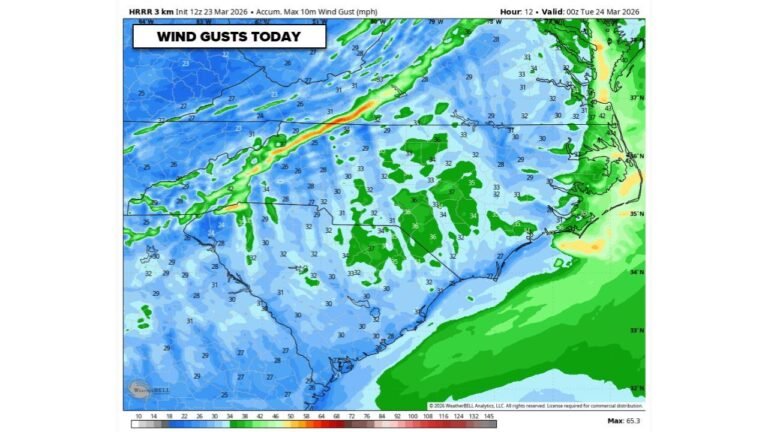
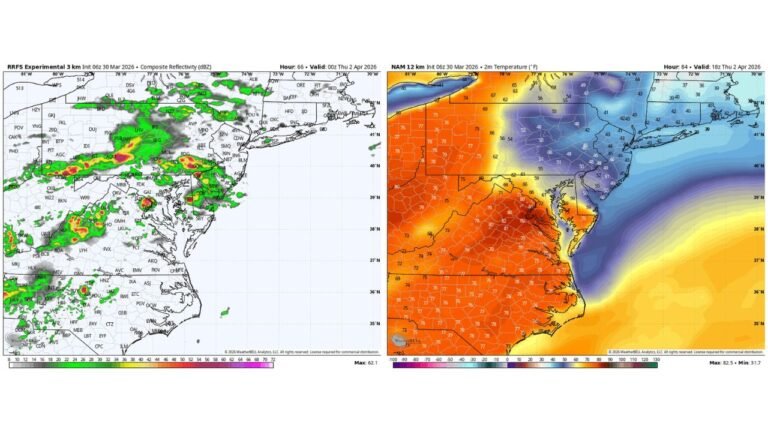
Forecast projections indicate that much of North Carolina could see around one inch of rainfall Sunday. While helpful, this amount will not erase months of accumulated moisture deficits.
Experts suggest the state needs several inches of rainfall spread across multiple weeks to substantially reduce drought intensity. A single rainfall event will provide temporary surface improvement but not long-term recovery.
Growing Season Concerns Increasing
With spring planting approaching, agricultural concerns are rising across central and western North Carolina. Farmers rely on adequate soil moisture heading into early-season growth.
If rainfall patterns do not become more active, the state could face:
- Early crop stress
- Increased irrigation demand
- Elevated wildfire risk in dry vegetation
The coming weeks will be critical in determining whether North Carolina transitions into a wetter pattern or remains locked in expanding drought conditions.
If you’re noticing dry conditions or low water levels in Cabarrus County or surrounding communities, we encourage you to share your observations. Stay updated with the latest weather coverage at CabarrusWeekly.com.