5:05 PM Breakthrough in Fairbanks Alaska Ends 152 Day Freeze Streak as Temperatures Finally Rise Above Freezing
FAIRBANKS, ALASKA — A significant seasonal milestone was reached late Thursday afternoon as temperatures at Fairbanks International Airport finally climbed above freezing, officially ending a long stretch of winter-like conditions.
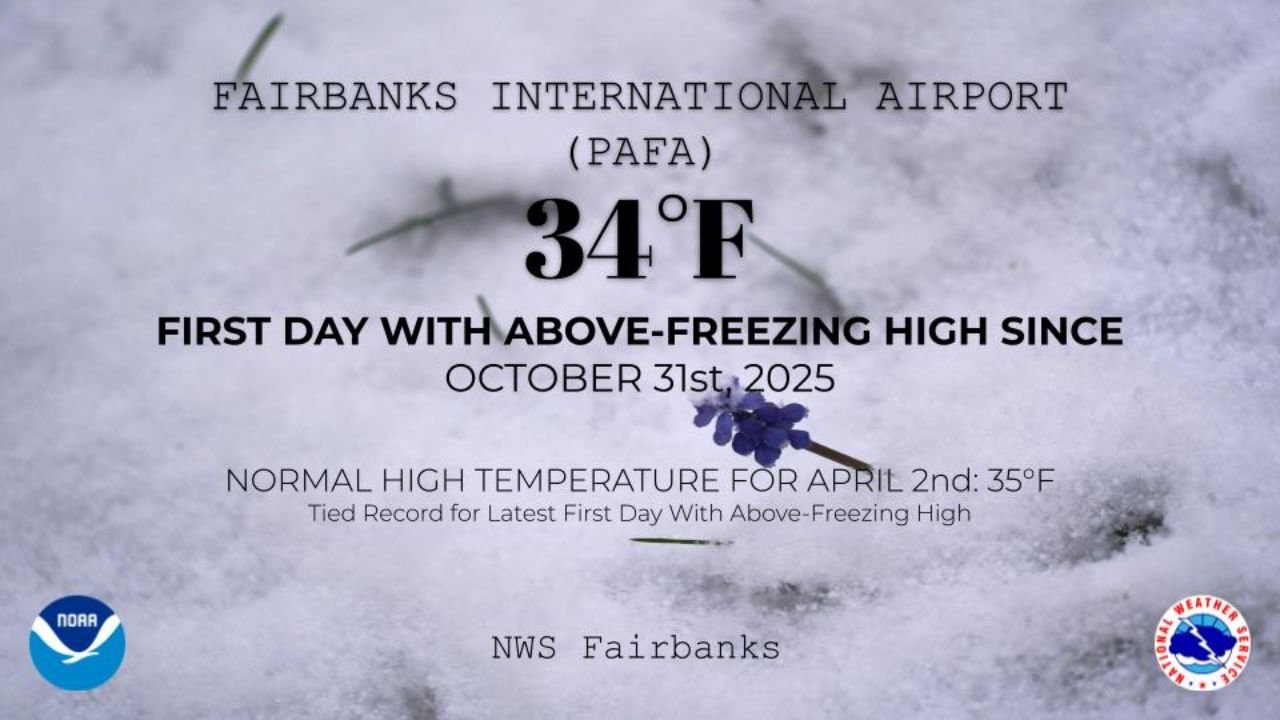
At 5:05 PM, the temperature reached 34°F, marking the first above-freezing high since October 31, 2025. This moment not only signals a shift toward spring but also ends a remarkable 152-day streak where daily high temperatures failed to rise above the freezing mark.
A Rare Late-Season Temperature Milestone
This event is notable not just for ending the streak, but for its timing. The latest data indicates that this occurrence ties the record for the latest calendar date on which Fairbanks has recorded its first above-freezing high temperature.
Typically, Fairbanks begins to see consistent above-freezing highs much earlier in the season. However, this year’s prolonged cold has delayed that transition significantly, keeping the region locked in winter conditions well into early April.
What 34°F Really Means for Fairbanks
Although 34°F may seem modest, it represents an important turning point for interior Alaska. After months of persistent subfreezing temperatures, even a slight rise above 32°F can begin to trigger noticeable environmental changes.
Residents may begin to see:
- Gradual snowpack melting during daytime hours
- Increasing thawing and refreezing cycles
- Early signs of seasonal transition across the region
This shift is often the first clear sign that spring conditions are finally beginning to take hold.
How This Compares to Normal Conditions
The recorded temperature aligns closely with seasonal expectations. The normal high for April 2 in Fairbanks is around 35°F, meaning this milestone arrives near typical early-April values.
However, what makes this year stand out is how long it took to reach this point, highlighting the persistence of winter conditions across interior Alaska.
Why This 152-Day Freeze Streak Matters
A streak of this length reflects:
- Extended cold air dominance over the region
- Delayed snowmelt and spring transition
- Potential impacts on roads, infrastructure, and river ice
As temperatures rise, attention will now shift toward how quickly melting accelerates and whether any ice-related flooding concerns develop later in the season.
What Comes Next for Interior Alaska
With temperatures now crossing above freezing, a gradual warming trend is expected. While nights may still drop below freezing, daytime highs should continue improving, helping push the region further into spring.
This moment marks a clear transition point: winter is no longer in full control across Fairbanks.
Stay Updated With Cabarrus Weekly
For more breaking weather updates, seasonal shifts, and major climate milestones across the U.S., stay connected with Cabarrus Weekly. Share this update with others tracking Alaska’s late-season freeze and follow along as spring conditions continue to develop.