Wildlife Water Emergency Unfolds Across North Carolina as Extreme Cold Freezes Ponds, Streams, and Natural Water Sources
NORTH CAROLINA — Prolonged extreme cold across the region is triggering a growing wildlife water emergency, as frozen ponds, creeks, and shallow streams leave birds and small animals without access to unfrozen water during a critical survival period.
Freezing Temperatures Cutting Off Natural Water Sources
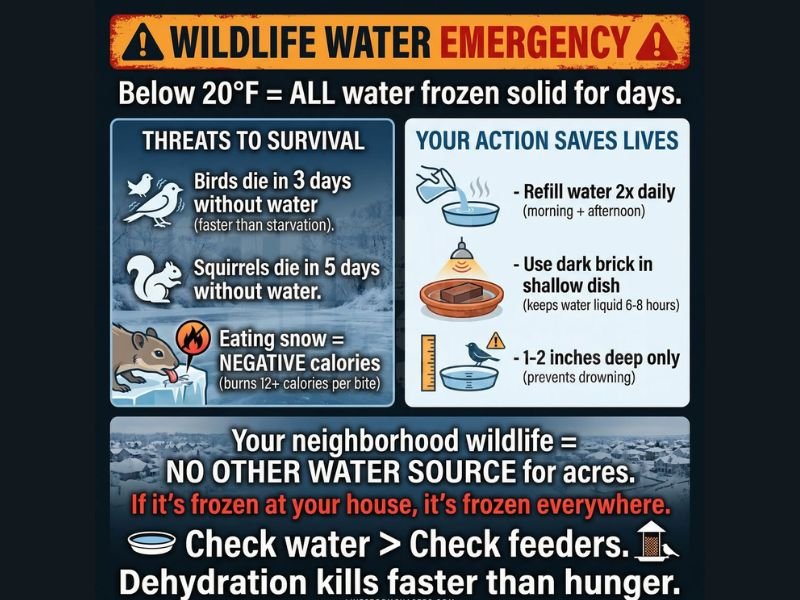
With temperatures remaining below 20°F for extended periods, nearly all exposed water sources across much of North Carolina are frozen solid for days at a time. Wildlife that normally relies on backyard birdbaths, ditches, puddles, and shallow streams is now facing severe dehydration risk.
Unlike food shortages, lack of water becomes life-threatening much faster, especially during cold weather when animals burn extra calories to stay warm.
Why Snow Is Not a Safe Substitute for Water
While snow may appear abundant, wildlife cannot rely on eating snow to hydrate. Consuming snow forces animals to expend more energy melting it internally than they gain from the water itself, creating what experts describe as negative caloric intake.
For birds, dehydration can become fatal in as little as three days, while animals such as squirrels may survive only about five days without water, even if food is available.
Backyard Water Sources Become Critical Lifelines
During prolonged freezes, residential yards often become the only available water source for acres of surrounding habitat. If water is frozen at one home, it is almost certainly frozen everywhere nearby.
Wildlife experts stress that providing liquid water is more urgent than refilling feeders during extreme cold events. Even brief access to unfrozen water can make the difference between survival and death.
Simple Steps That Can Save Wildlife Lives
Shallow water dishes, refilled twice daily, can help keep water available during the coldest stretches. Using dark-colored containers or adding a dark brick can help absorb sunlight and delay freezing for several hours.
Water should remain only 1–2 inches deep to prevent drowning, particularly for birds weakened by cold stress. These small measures can significantly reduce wildlife fatalities during prolonged freezes.
Why This Emergency Matters Now
This cold outbreak is not a brief overnight freeze. With multiple consecutive days below freezing, dehydration risk compounds rapidly. Wildlife does not migrate or relocate quickly during sudden cold snaps, leaving animals trapped in frozen environments with no natural water access.
Residents across Cabarrus County and surrounding areas are urged to check water sources before checking feeders, as dehydration kills faster than hunger in winter conditions.
If you are placing water out for birds or wildlife during this cold stretch, share what you’re seeing in your area. Community action can help reduce losses during this rare and dangerous cold event. Stay with CabarrusWeekly.com for continued weather impacts and public safety updates.