North Carolina’s Ruby-Throated Hummingbirds Typically Arrive March 15–30 as Spring Migration Pushes From Texas and Florida Into the Carolinas
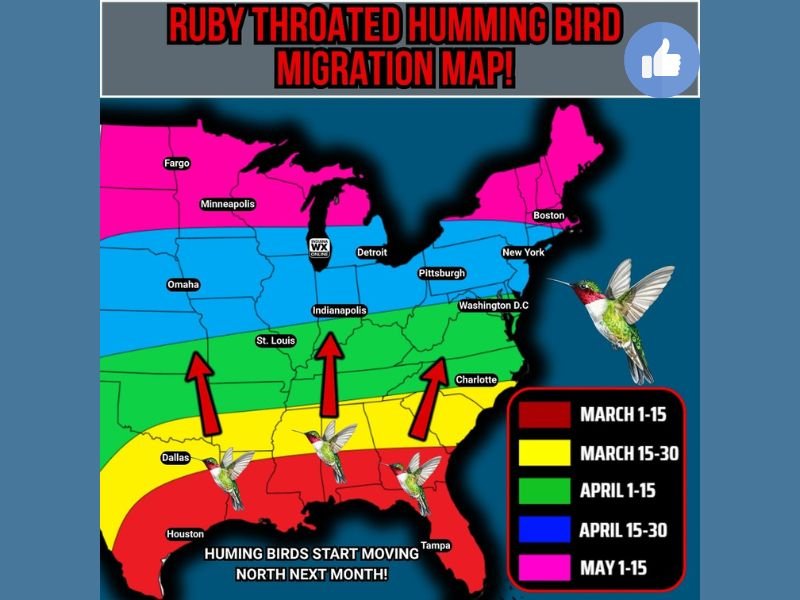
NORTH CAROLINA — A new ruby-throated hummingbird migration timeline suggests spring’s most recognizable visitors will begin pushing north next month, with North Carolina—especially the Charlotte region—typically seeing average arrivals in the March 15–30 window, based on the map’s timing bands.
What the Migration Map Shows for North Carolina
The migration graphic breaks the U.S. into color-coded arrival windows:
- March 1–15 (deep South and parts of the Gulf Coast)
- March 15–30 (band stretching across parts of the Deep South into the southern Carolinas region)
- April 1–15 (central U.S. and mid-latitudes)
- April 15–30 (upper Midwest and parts of the Northeast interior)
- May 1–15 (farther north, including northern New England and upper Great Lakes region)
On the map, the Charlotte area is placed in the March 15–30 zone, which also supports a similar timing expectation for nearby parts of the Carolinas, including Cabarrus County communities.
Where the Birds Start — and How the Northward Push Builds
The map highlights hummingbirds in the southern tier first, with early season presence shown around:
- Florida, including the Tampa area
- Texas, including Houston and the Dallas area
From there, arrows show the northward movement pushing into the central U.S. and eastward states as spring progresses.
What Comes After North Carolina: Midwest and Northeast Timing
For readers tracking migration beyond the Carolinas, the map also lays out typical arrival progression into major cities:
- St. Louis and nearby regions trend later than the Deep South as the band shifts north.
- Indianapolis and Pittsburgh fall into later spring windows compared with North Carolina.
- Washington, D.C., New York, and Boston appear in later timing zones, with the farthest north areas arriving last.
This makes North Carolina one of the earlier “big arrival” regions compared to the northern tier.
What “Average Arrival Time” Means
These are average timing bands, not a guaranteed day-by-day forecast. Migration can shift earlier or later depending on weather patterns, especially the timing of warm surges, cold snaps, and how quickly flowering seasons and insect availability ramp up along the route.
Still, the March 15–30 window is a strong planning target for residents who look forward to the first ruby-throated hummingbird sighting as a yearly spring marker.
CabarrusWeekly.com wants to hear it when you spot your first hummingbird of the season. If you’re in Cabarrus County or the Charlotte area, share your first sighting date and neighborhood details with CabarrusWeekly.com.