Florida to Maine Skywatch: Two Pre-Dawn Rocket Launches This Week Could Light Up the Eastern U.S.
UNITED STATES — Skywatchers along the East Coast may want to set their alarms early this week as two back-to-back rocket launches from Florida’s Kennedy Space Center could create spectacular pre-sunrise light displays across much of the eastern United States.
According to launch information released this week, missions from United Launch Alliance (ULA) and NASA/SpaceX are scheduled just hours apart on consecutive mornings — and both could be visible far beyond Florida.
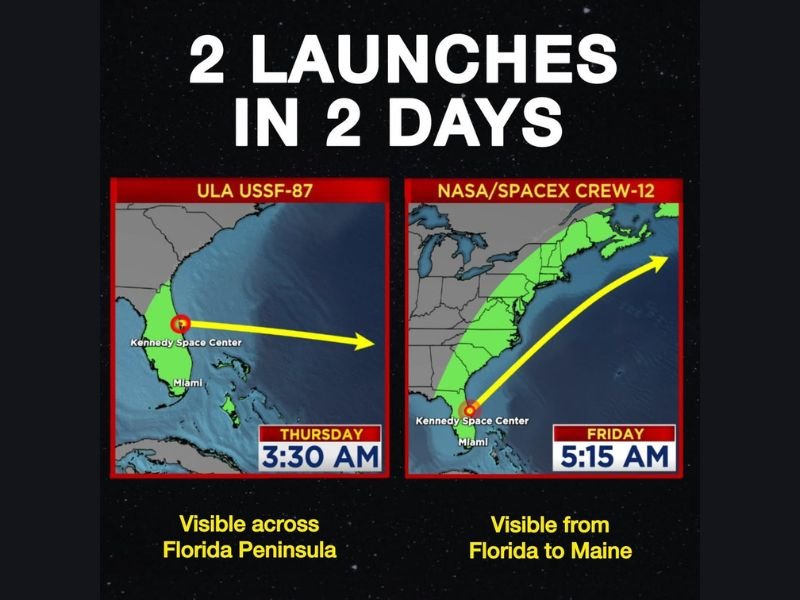
Thursday: ULA USSF-87 Launch at 3:30 A.M.
The first launch is set for 3:30 a.m. Thursday, when ULA’s USSF-87 mission lifts off from Kennedy Space Center.
Visibility projections show the rocket potentially visible across much of the Florida Peninsula, depending on local weather conditions. Clear skies and the right atmospheric lighting just before sunrise can create dramatic effects — including glowing exhaust plumes and bright arcs across the sky. Residents from Miami to Jacksonville may have a chance to see the streak rising over the Atlantic.
Friday: NASA/SpaceX Crew-12 at 5:15 A.M.
Just one day later, at 5:15 a.m. Friday, NASA and SpaceX plan to launch Crew-12 — and this one could be even more widespread in visibility. Forecast maps indicate the rocket may be visible from Florida all the way to Maine, covering much of the Eastern Seaboard.
Pre-sunrise launches are known for producing especially vivid displays as sunlight catches the rocket’s exhaust plume at high altitudes while the ground remains in darkness. Under clear conditions, observers often describe the effect as a glowing “space jellyfish” streaking across the sky.
Why Pre-Sunrise Launches Stand Out
The timing of both launches increases the chance for stunning visuals. When rockets launch before sunrise:
- Upper-atmosphere sunlight illuminates exhaust trails
- Plumes can appear bright white, blue, or even pink
- Trails may linger briefly after liftoff
However, visibility will depend heavily on cloud cover. Even thin cloud layers can obscure portions of the ascent path.
What Viewers Should Know
Those hoping to watch should:
- Look toward the eastern or southeastern sky
- Find a location away from city lights if possible
- Begin watching a few minutes before scheduled liftoff
Launch schedules can change due to weather or technical issues, so checking official mission updates is recommended before heading outside.
If both launches proceed as planned, it will mark a rare stretch of two major pre-dawn rocket liftoffs in just 48 hours, offering a unique opportunity for early-morning sky enthusiasts. For more national updates and events you won’t want to miss, keep following cabarrusweekly.com.