Arizona, California, Nevada and Texas Bracing for Potentially Record-Shattering March Heatwave as Summerlike Temperatures Explode Across the Southwest
UNITED STATES — An exceptional, long-duration and potentially record-breaking March heatwave is taking shape across Arizona, California, Nevada and Texas, with forecast data signaling what meteorologists describe as a full-on summer pattern arriving weeks ahead of schedule.
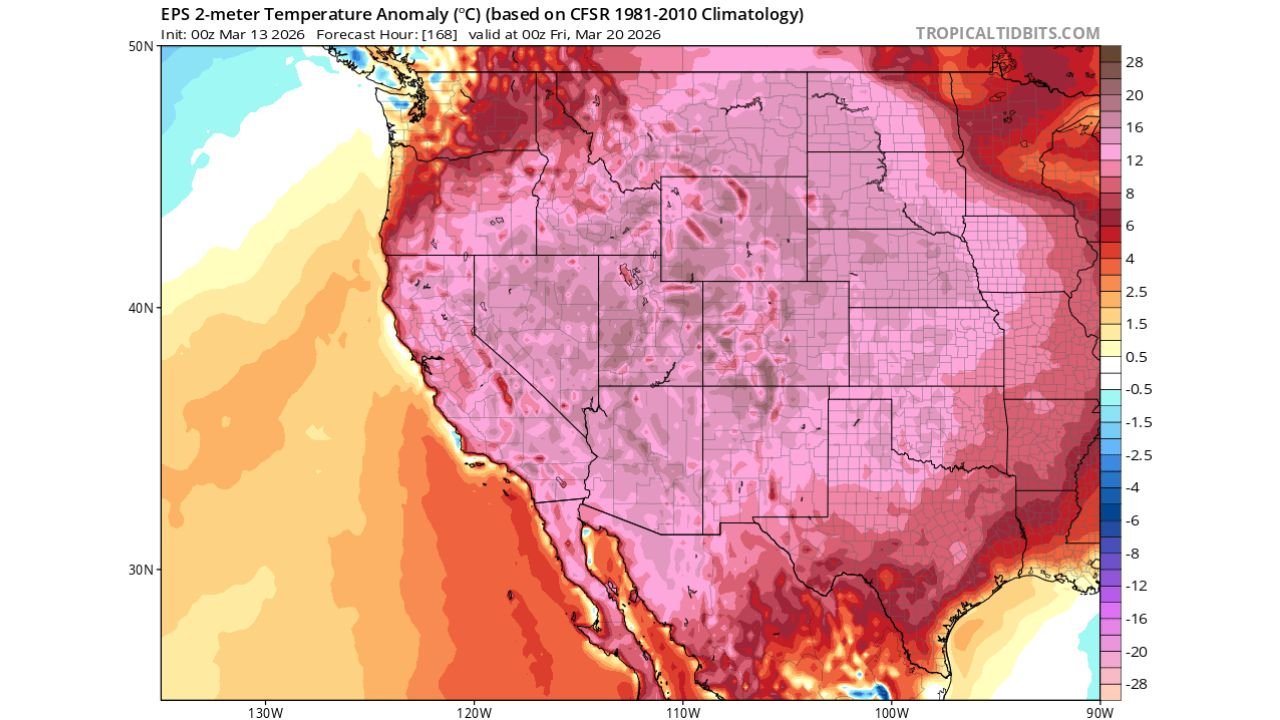
Latest ensemble guidance shows widespread temperature anomalies of 10 to 25+ degrees above normal centered over the Southwest, with the core of the heat expanding eastward into the southern Plains and eventually into broader portions of the central United States next week.
Southwest Ground Zero for the Heat
The most intense anomalies are focused across:
- Southern and central California
- Arizona, including Phoenix and surrounding desert communities
- Southern Nevada
- West and central Texas
Forecast anomaly maps valid around Friday, March 20, show deep pink and red shading across the region — an indication of extreme departures from mid-March climatology.
In practical terms, that means afternoon highs that could resemble late May or even early June rather than early spring.
How Unusual Is This for March?
March typically represents a transitional month across the Southwest, with gradually warming temperatures but still frequent cooler systems.
This setup, however, features:
- Strong upper-level ridging dominating the western United States
- Persistent subsidence (sinking air), which promotes warming
- A prolonged stretch of above-normal temperatures rather than a brief spike
Meteorologists emphasize that some locations could approach daily record highs, and in isolated cases challenge all-time March records if the strongest anomalies verify.
Expansion Beyond the Southwest
While the heat initially centers on the desert Southwest and California interior, model guidance suggests the anomalous warmth will expand:
- East into New Mexico and western Texas
- North into Utah and portions of Colorado
- Gradually into parts of the central Plains
By next week, the broader western half of the country may experience significantly above-normal temperatures, though the magnitude will likely be greatest in Arizona, Nevada and inland California.
What This Means on the Ground
For residents, this early-season heat could bring:
- Increased fire weather concerns in dry areas
- Elevated energy demand for cooling
- Heightened heat stress for vulnerable populations not yet acclimated
Because this warmth arrives so early in the season, infrastructure and individuals may be less prepared compared to typical summer heat events.
Why the Pattern Is So Strong
The driving force behind this heatwave is a robust ridge of high pressure anchored over the West. This type of pattern compresses and warms the air beneath it, suppressing cloud development and allowing strong solar heating.
The persistence of this ridge is what makes the event particularly concerning from a records standpoint. A single hot day can be notable; multiple consecutive days significantly above normal increase the odds of record-breaking outcomes.
Bottom Line
Arizona, California, Nevada and Texas are at the center of what could become one of the most notable March heatwaves in recent memory, with summerlike conditions expanding across the Southwest and into the southern Plains.
If forecast trends hold, this will not be a brief warm spell — but an extended, potentially record-shattering heat event that feels far more like June than March.
CabarrusWeekly.com will continue monitoring the evolution of this developing heatwave and provide updates as new forecast data becomes available.