Colorado Faces Lowest Snowpack on Record as Incoming Heat Wave Threatens Further Decline Across Rockies
COLORADO — A concerning milestone has been reached across the Rocky Mountains, as Colorado is now experiencing its lowest statewide peak snowpack on record, with levels already declining as a new heat wave moves in.
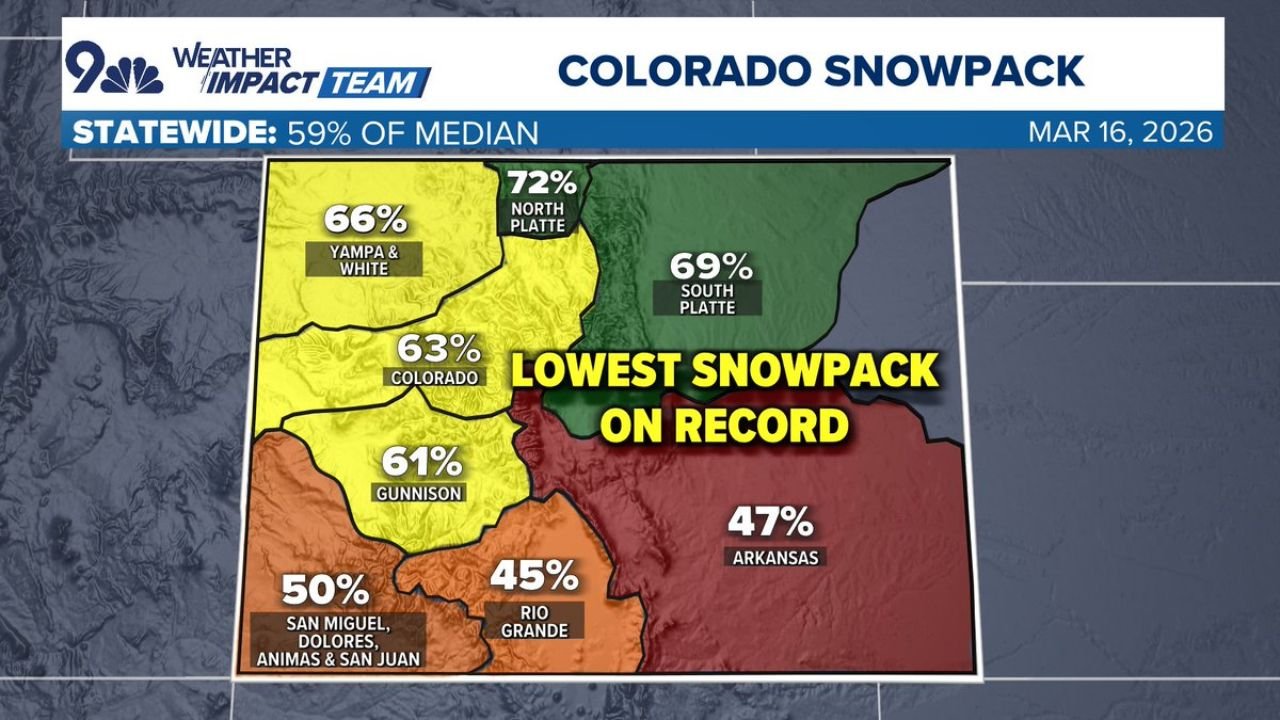
Data shows the statewide snowpack sitting at just 59% of the seasonal median as of mid-March, marking a historic low for this point in the year. Records for comparison date back to 1987, making this one of the most significant deficits ever observed.
Snowpack Levels Critically Low Across Key Basins
The snowpack deficit is widespread across Colorado, with multiple river basins reporting well below-average levels:
- Rio Grande Basin: 45% of median
- Arkansas Basin: 47%
- San Miguel, Dolores, Animas & San Juan: 50%
- Gunnison Basin: 61%
- Colorado Basin: 63%
- Yampa & White: 66%
- South Platte: 69%
- North Platte: 72%
The lowest readings are concentrated in southern and southwestern parts of the state, where snowpack is less than half of normal in some areas.
Peak Snowpack Likely Already Reached
Typically, Colorado’s snowpack continues building into early April. However, this year’s numbers suggest that the peak may have already occurred earlier than usual, raising concerns about water availability heading into spring and summer.
With limited additional snowfall expected in the short term, the current levels may represent the highest point for the season.
Incoming Heat Wave Expected to Accelerate Melt
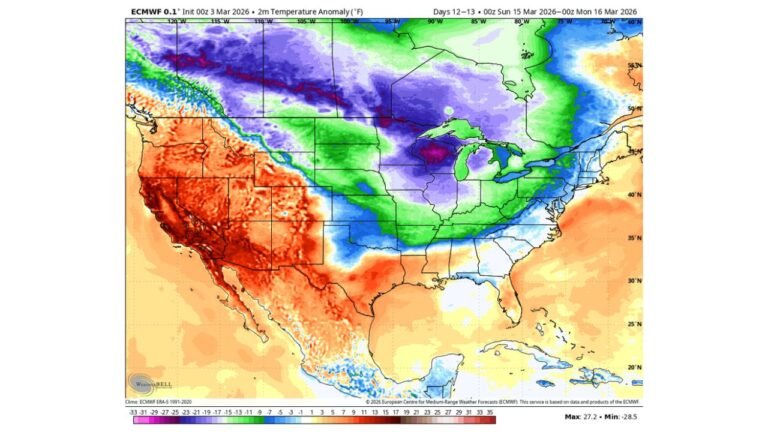
An approaching heat wave is expected to bring warmer-than-normal temperatures across Colorado and the broader western United States, which could accelerate snowmelt in the coming days.
This rapid warming may cause:
- Faster depletion of already limited snowpack
- Reduced runoff efficiency later in the season
- Increased pressure on water resources across the region
The combination of low snow totals and rising temperatures creates a challenging outlook for water supply and drought conditions.
Broader Implications for Water Supply and Drought
Colorado’s snowpack plays a critical role in supplying water to much of the western United States through major river systems.
With levels this low, there is growing concern about:
- Reduced reservoir replenishment
- Strain on agricultural water usage
- Increased drought risk heading into summer
These impacts could extend beyond Colorado, affecting downstream states that rely on snowmelt-fed rivers.
What This Means Beyond the Rockies
While this situation is centered in Colorado, it reflects a broader pattern of increasing weather extremes across the United States, including rapid shifts between cold, heat, and precipitation patterns.
For regions like North Carolina, the direct impact is limited, but the larger atmospheric trends driving these extremes continue to shape weather patterns nationwide.
As conditions evolve, the focus will remain on whether late-season snowfall can provide any recovery — or if the current record-low snowpack will continue to decline.
Stay with CabarrusWeekly.com for ongoing coverage of major weather developments across the United States.