Explosive 968mb Nor’easter Deepens Off Mid-Atlantic Coast as Rare Air Pressure Fuels Powerful Northeast Blizzard
EAST COAST — A rapidly intensifying coastal storm has dropped below 968 millibars off the Mid-Atlantic coastline Monday morning — a pressure level rarely seen outside of powerful winter cyclones — as a full-scale blizzard continues to hammer the Northeast.
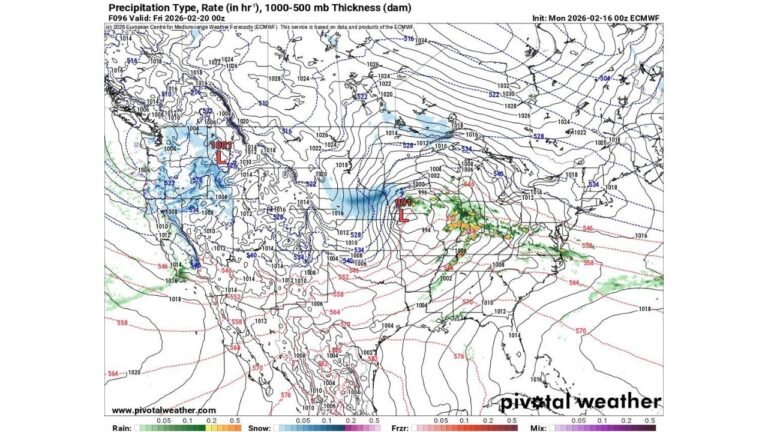
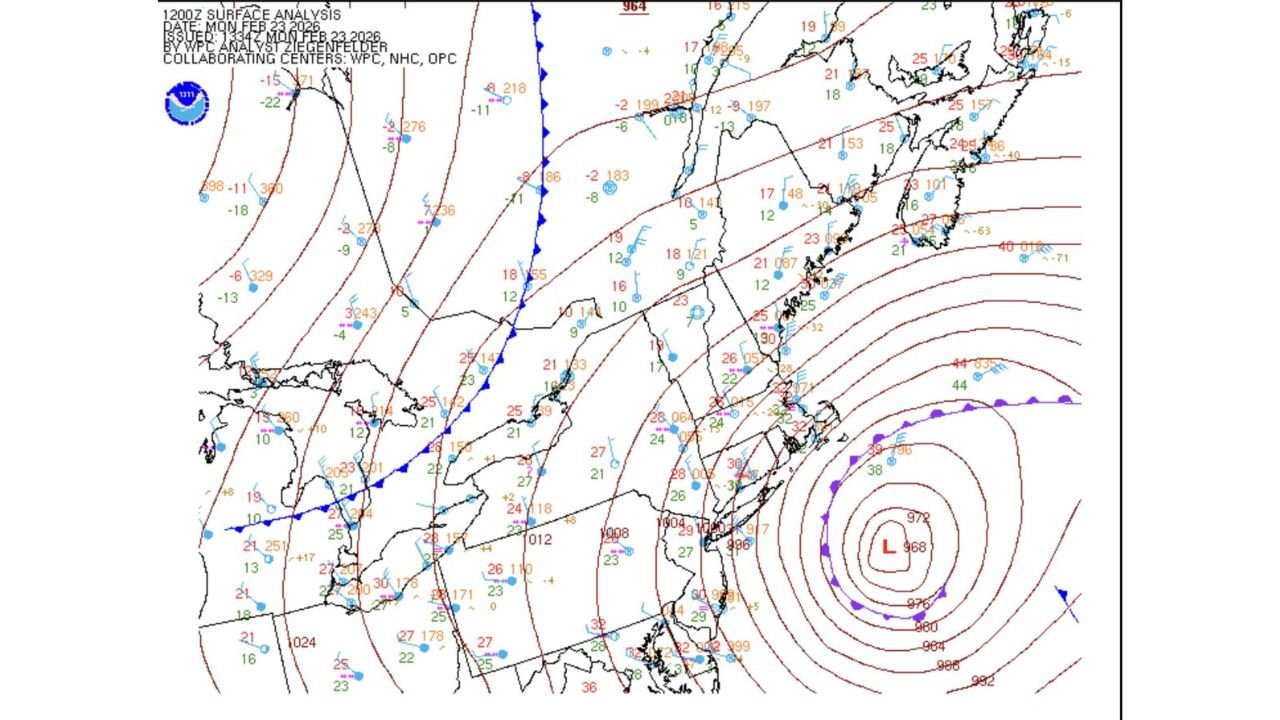
The 12z surface analysis from the Weather Prediction Center shows a tightly wound low-pressure center spinning offshore of New Jersey and eastern Maryland, with central pressure at or below 968mb and still falling.
A Rarely Deepening Coastal Low
For comparison, many strong winter storms track along the East Coast with pressures in the 980s or low 990s millibars. Dropping below 970mb signals a particularly intense system.
On the latest map:
- The low is centered east of Delaware, New Jersey, and Maryland
- Isobars are tightly packed, indicating very strong winds
- Pressure continues to fall, suggesting further strengthening
This deepening cyclone is responsible for the heavy wet snow, blizzard conditions, and widespread power outages reported across parts of New York, New Jersey, Connecticut, Rhode Island, and Massachusetts.
Blizzard Conditions Across Southern New England
The tight pressure gradient between the deep offshore low and higher pressure inland is driving strong winds across:
- New York City and Long Island
- Hartford and Bridgeport, CT
- Providence, RI
- Boston and Worcester, MA
- Cape Cod and Nantucket
These winds are combining with heavy snowfall to create whiteout conditions in some locations. Coastal areas are also experiencing rough surf and large waves as the storm churns offshore.
The combination of heavy wet snow and gusty winds has already led to significant power outages across the Northeast.
Cold Front Sweeping Through the Southeast
Meanwhile, a cold front trailing southward from the storm stretches through the Appalachians and into parts of Alabama, Georgia, and the Florida Panhandle.
Behind the front, colder air is spilling into the Southeast. Temperatures across:
- Tennessee
- North Carolina
- South Carolina
- Georgia
are trending downward as the system pulls northeastward.
While North Carolina is not experiencing blizzard conditions, the pressure pattern illustrates just how powerful this East Coast system has become.
Why 968mb Matters
Atmospheric pressure is a key indicator of storm strength. The lower the pressure, the stronger the storm’s circulation tends to be.
A 968mb reading offshore of the Mid-Atlantic is significant because:
- It reflects explosive cyclogenesis
- It supports damaging wind potential
- It enhances heavy snowfall rates inland
- It increases coastal wave and erosion risks
Storms reaching these pressures are capable of producing widespread impacts across multiple states.
What Comes Next
As the low gradually tracks northeastward, blizzard conditions will slowly ease from south to north. However, lingering strong winds and blowing snow may persist through the day in parts of New England.
Behind the storm, colder and drier air will continue filtering southward into the Carolinas and the Southeast.
For continued updates on major East Coast systems and how they may influence North Carolina’s weather pattern, stay with CabarrusWeekly.com for the latest forecast coverage and storm analysis.