February 29–30 Forecast Drama: Gulf Coast Snow Signals Collide as GFS and Euro Models Diverge on Late-Winter Setup
GULF COAST REGION — An unusual late-winter setup tied to the calendar’s rare February 29 window is drawing attention as two major forecast models show sharply different outcomes for parts of the Deep South.
Why the February 29–30 Timeframe Is Raising Eyebrows
The focus centers on the extended-range period around February 29 into early March 1, a timeframe that exists only during leap years. While the calendar quirk adds novelty, the atmospheric pattern itself is what’s generating debate.
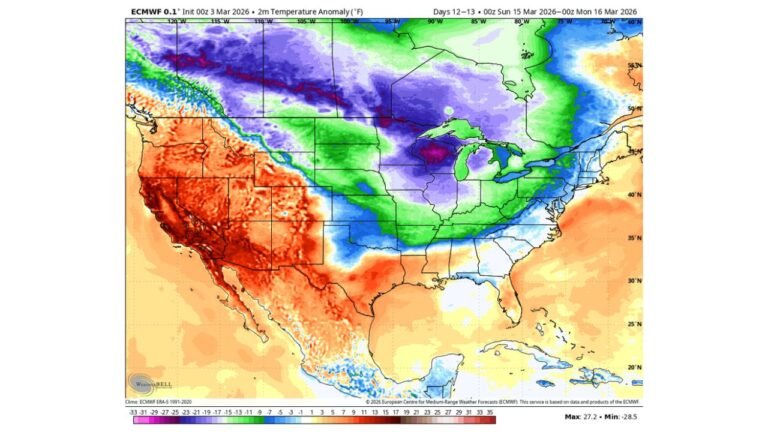
Forecast guidance shows cold air pressing southward while Gulf moisture attempts to surge north, a classic recipe that can produce rain, wintry mix, or snow — depending on exact temperature placement. At this range, small shifts in the track or timing could mean dramatically different impacts.
GFS Model: Limited Snow Footprint with Narrow Banding
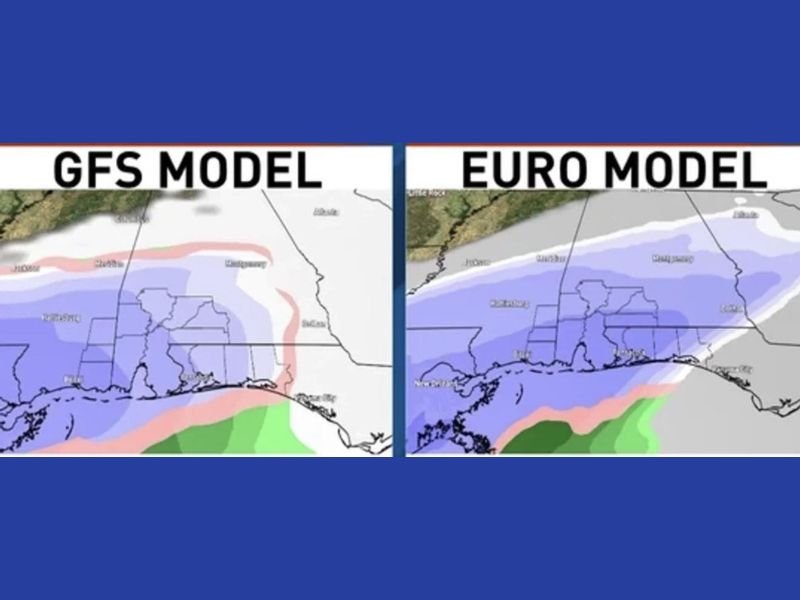
The American GFS model paints a more restrained scenario. In its current depiction, snowfall appears more localized, with lighter blue shading across portions of coastal Louisiana, Mississippi, Alabama, and the Florida Panhandle.
This solution suggests a thinner cold air layer, meaning precipitation type could be marginal in some locations. A slight northward or southward wobble in the temperature line would determine whether areas see cold rain or accumulating snow.
European Model: Broader Gulf Coast Winter Signal
The European (Euro) model presents a more expansive winter look. Its output shows wider coverage of frozen precipitation shading across the central Gulf Coast, extending inland across southern Mississippi, southern Alabama, and into parts of the western Florida Panhandle.
This solution implies stronger cold air entrenchment and better moisture overlap, increasing the theoretical potential for measurable snowfall or wintry precipitation in areas that do not frequently experience it.
What This Model Disagreement Actually Means
When two major global models diverge this clearly in the extended range, it signals high uncertainty rather than a locked-in event. The disagreement is primarily tied to:
• Depth of the cold air mass
• Timing of Gulf moisture return
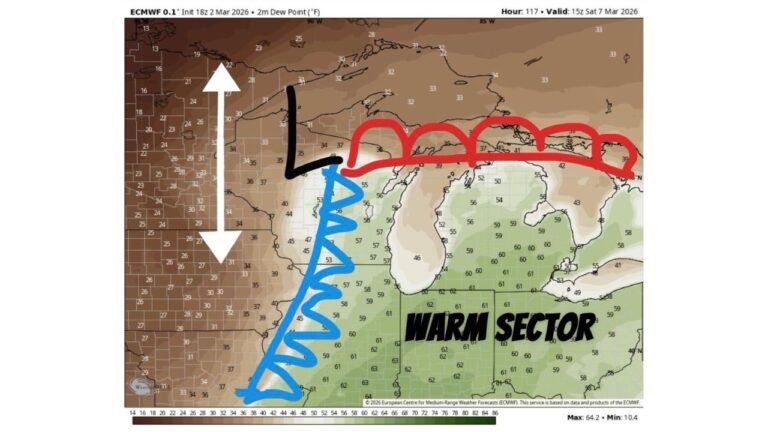
• Exact placement of the surface boundary
At this stage, neither scenario should be treated as a forecast — only as potential guidance. Ensemble data and trend consistency over the coming days will determine whether the colder Euro solution gains support or the GFS warmer interpretation wins out.
The Bottom Line for the Gulf Coast
For now, this remains a long-range signal with low confidence. The ingredients for winter weather — cold air and Gulf moisture — are showing up in model simulations, but their alignment is far from certain.
Residents across coastal Louisiana, Mississippi, Alabama, and the Florida Panhandle should monitor updates as the calendar moves closer to the end of February. Early speculation can shift quickly as new data arrives.
If you’re in the Gulf Coast region and noticing unusual temperature swings or early forecast chatter, share your local conditions and thoughts with us at CabarrusWeekly.com.