Florida Declares State of Emergency as Historic Drought Engulfs Over 85% of the State, From Tallahassee and Jacksonville to Tampa and Miami
FLORIDA — A historic and rapidly worsening drought is gripping the state, with more than 85% of Florida now classified in at least severe drought, prompting officials to declare a state of emergency as wildfire activity surges statewide.
Extreme Drought Dominates North Florida from Tallahassee to Jacksonville
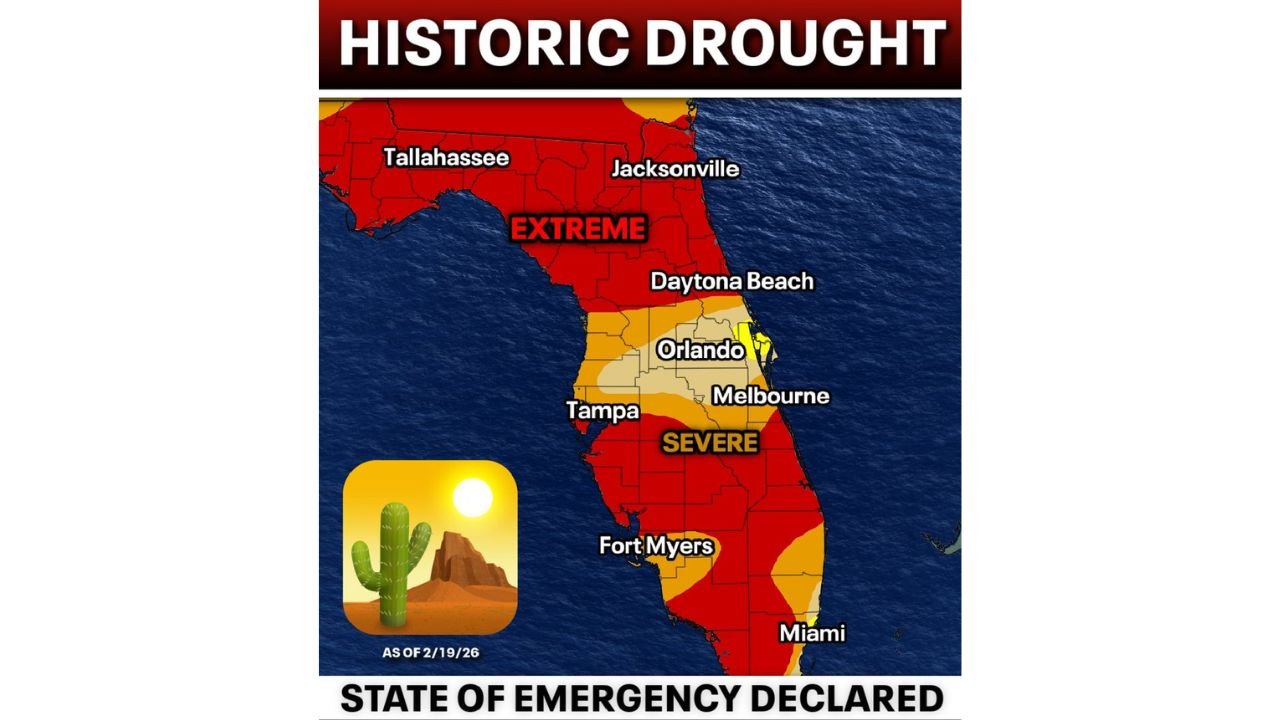
The most intense conditions are centered across North Florida, where Tallahassee, Jacksonville, and surrounding counties are now under extreme drought classification. This level indicates prolonged and significant rainfall deficits, depleted soil moisture, and increasing stress on vegetation and water resources.
The drought map shows widespread red shading across the Panhandle and northeast Florida, highlighting how deeply entrenched the dryness has become. Many areas in this region have seen minimal rainfall since late 2025, creating dangerous fuel conditions for fires.
With little meaningful precipitation in recent months, fire danger continues to escalate daily.
Severe Drought Expands Across Central Florida Including Orlando and Tampa
Central Florida, including Orlando, Tampa, Daytona Beach, and Melbourne, is largely under severe drought conditions, with pockets approaching extreme thresholds.
In some areas near Tampa, rainfall totals since September have ranked among the lowest on record, compounding the long-term moisture deficit. The drought classification in this corridor reflects drying lakes, stressed agriculture, and elevated wildfire risk.
While a small portion of central Florida shows slightly lower intensity, the broader region remains entrenched in dangerous dryness.
South Florida and Fort Myers Region Facing Intensifying Conditions
Further south, communities such as Fort Myers and Miami are also experiencing severe drought conditions. The red shading across much of the southern peninsula indicates that dryness is not confined to one region but spans nearly the entire state.
With over 650 wildfires reported so far in 2026, Florida is already experiencing an active and concerning fire season. Dry brush and strong seasonal winds are creating favorable conditions for rapid fire spread.
34 Counties Under Burn Bans as Wildfire Threat Grows
Currently, 34 of Florida’s 67 counties are under active burn bans, with additional counties likely to be added if rain remains scarce. Burn bans are typically enacted when vegetation moisture levels fall to critical thresholds and fire suppression becomes more difficult.
Officials warn that late February and March could become particularly active months for wildfires if the current pattern persists. Without widespread soaking rainfall, drought severity could deepen further.
The statewide emergency declaration underscores the seriousness of the situation, allowing for enhanced wildfire response coordination and resource allocation.
Outlook: Rainfall Needed to Break the Pattern
Florida’s drought conditions are the worst observed since 2001, highlighting the magnitude of this event. A meaningful reversal will require sustained and widespread rainfall, not isolated showers.
Until that occurs, fire danger will remain elevated across much of the state, particularly in areas currently classified as extreme and severe drought.
Residents across Florida are encouraged to follow local burn restrictions and remain cautious with any outdoor ignition sources. Conditions can change quickly in dry environments, especially during windy afternoons.
If you are experiencing drought impacts or wildfire conditions in your area, share your updates safely at CabarrusWeekly.com to help keep communities informed.