Florida Drought Crisis Deepens as Jacksonville, Gainesville, Orlando, Miami May Need Up to 19 Inches of Rain to Recover
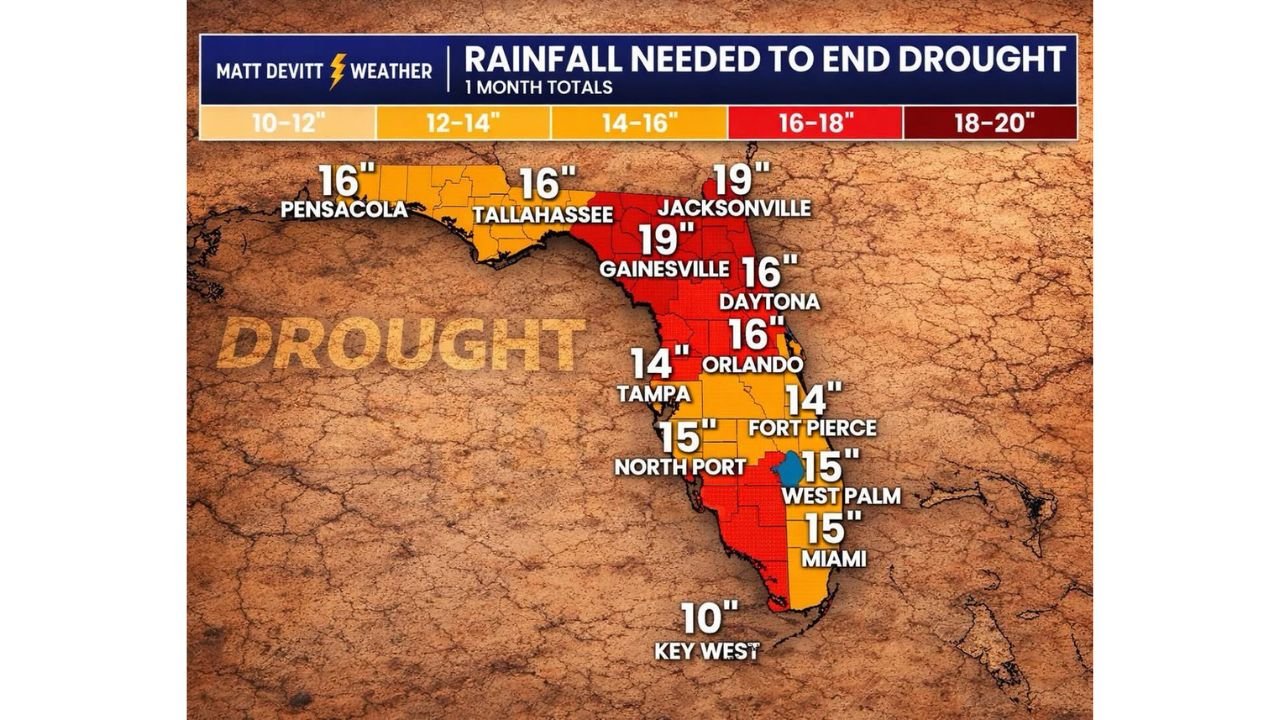
FLORIDA — A worsening drought situation is tightening its grip across the state, with new projections showing that many areas would need between 14 to 19 inches of rainfall over the next month just to eliminate current deficits.
Despite some rain chances appearing in the short-term forecast, the overall outlook suggests little meaningful relief anytime soon, leaving water concerns elevated across much of the region.
Rainfall Deficit Reaching Critical Levels Across the State
The latest data highlights just how severe the moisture shortfall has become across Florida:
- Jacksonville and Gainesville: Up to 19 inches needed
- Daytona Beach and Orlando: Around 16 inches needed
- Tampa and Fort Pierce: Roughly 14 inches required
- West Palm Beach and Miami: Near 15 inches needed
- Pensacola and Tallahassee: Around 16 inches needed
- Key West: Approximately 10 inches needed
These numbers reflect how far behind the state is in seasonal rainfall, with northern and central regions facing the most extreme deficits.
Short-Term Rain Not Enough to Break the Pattern
While scattered rain is expected over the coming days, projections clearly indicate:
- Rainfall will be limited and unevenly distributed
- Totals will fall well short of the 14–19 inch requirement
- Any improvement will likely be temporary rather than drought-ending
This means even with passing showers, the broader drought pattern will remain firmly in place.
Rainy Season Still Too Far Away to Help Immediately
One of the biggest challenges is timing. Florida’s typical rainy season is still about two months away, leaving a long window where:
- High evaporation rates continue to dry out soils
- Water levels may continue to decline
- Vegetation stress and fire risk can increase
Without a sustained wet pattern, conditions could worsen before they improve.
Regional Differences Show Uneven Impact
The drought is not uniform across the state:
- Northern and central Florida are experiencing the most significant deficits
- Southern areas still need substantial rainfall but slightly less compared to the north
- Coastal vs inland differences may emerge depending on localized showers
However, nearly the entire state remains under notable moisture stress.
What This Means Going Forward
If current trends continue, Florida could face:
- Increasing strain on water resources
- Elevated wildfire risk, especially in dry inland zones
- Potential impacts on agriculture and landscaping
- Continued need for water conservation efforts
Outlook Remains Concerning
At this stage, there are no strong signals pointing toward a prolonged, widespread soaking rain event capable of eliminating the deficit.
Until a more consistent pattern develops, Florida is likely to remain in a persistent drought cycle, with only minor and temporary interruptions from scattered rain chances.
Residents across the state should continue to monitor updates closely, as the situation may evolve—but for now, significant rainfall relief remains out of reach.