Florida Drought Index Soars to 354 as Extreme Conditions Grip 87% of the State from Pensacola to Miami
FLORIDA — The state is now facing its most widespread drought since 2001, with the Drought Severity and Coverage Index (DSCI) climbing to 354 out of 500, signaling deep and expansive dryness across nearly the entire peninsula and Panhandle.
Extreme Drought Dominates from Tallahassee to Jacksonville
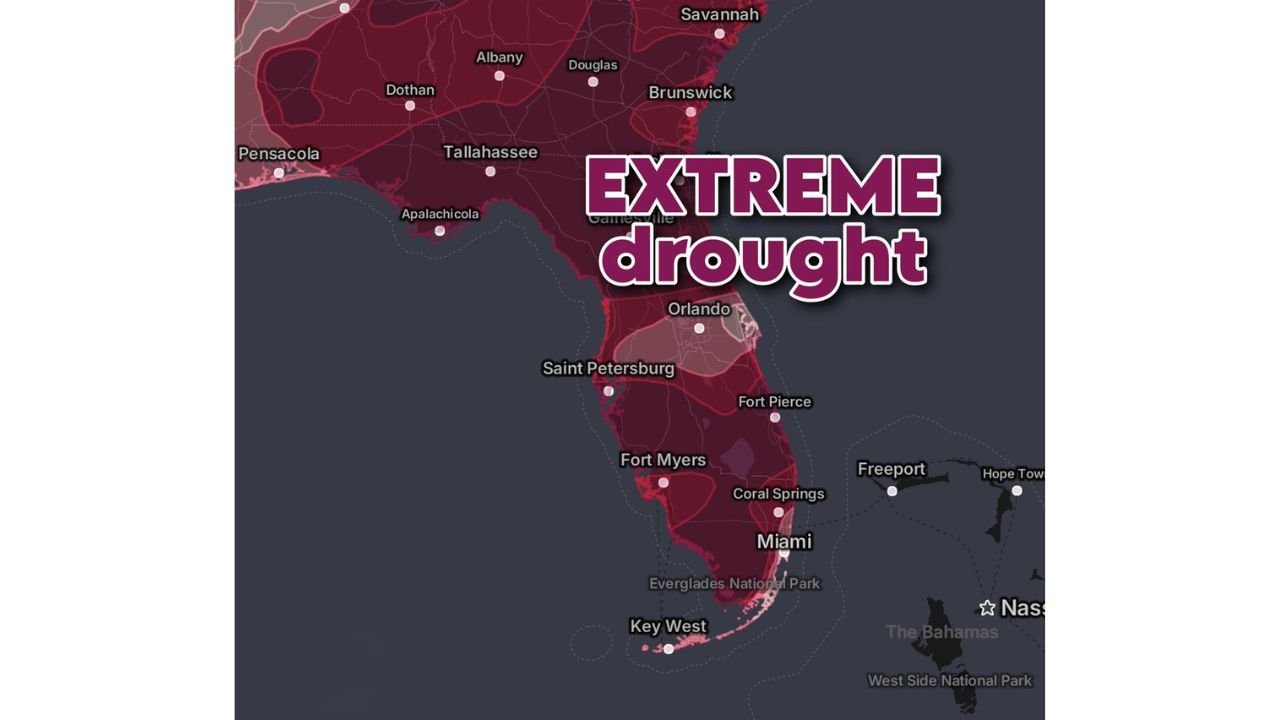
Large portions of North Florida, including Pensacola, Tallahassee, and Jacksonville, are firmly entrenched in extreme drought. The dark red shading across the Panhandle and northern peninsula reflects severe soil moisture depletion and heightened wildfire risk.
With a DSCI reading of 354, Florida is experiencing not just isolated dryness but a broad and intense statewide event. The index combines both coverage and severity, meaning widespread moderate drought can push numbers up — but a reading this high indicates both extensive coverage and extreme intensity.
Severe to Extreme Conditions Stretch Through Central Florida
Central Florida cities including Orlando, Saint Petersburg, and Fort Pierce are also under extreme drought classification, with only very limited pockets showing slightly lower intensity.
According to the latest data, 87.5% of Florida is currently in severe drought, while 67.4% is classified as extreme drought. That means more than two-thirds of the state is in one of the highest drought categories monitored.
Lake levels, groundwater reserves, and agricultural zones across the interior are under increasing stress as rainfall deficits continue to accumulate.
South Florida and the Keys Also Impacted
The drought extends southward through Fort Myers, Coral Springs, Miami, and Key West, with extreme drought conditions reaching the southern tip of the peninsula.
Even areas near Everglades National Park are experiencing significant dryness, raising concerns about wildfire risk and ecosystem stress heading into late winter and early spring.
This event now ranks as the worst and most widespread Florida drought since 2001, underscoring the historic nature of the current pattern.
Wildfire and Water Concerns Growing
With drought this extensive, fire danger remains elevated statewide. Vegetation dryness combined with seasonal winds increases the potential for rapid fire spread.
Water resource management agencies are closely monitoring reservoir levels and aquifer conditions as the dry pattern continues.
Meaningful and widespread rainfall will be required to substantially lower the DSCI reading and ease extreme classifications.
Outlook: Relief Uncertain Without Sustained Rain
Short-term showers will not be enough to reverse drought severity at this scale. Sustained, soaking rainfall over multiple weeks would be necessary to bring meaningful improvement.
Until then, Florida remains in a critical drought phase, with index values and coverage percentages highlighting the seriousness of the situation.
If you are seeing drought impacts in your area, share your local conditions and updates at CabarrusWeekly.com to help others stay informed.