Heavy Snow and Sleet Overrun Central Indiana Before Dawn, Slippery Roads Expected in Indianapolis, Bloomington and Dayton Through 8 AM
CENTRAL INDIANA — Heavy snow and sleet pushed into the region during the early morning hours Monday, creating rapidly deteriorating travel conditions across Indianapolis, Bloomington and extending east toward Dayton, Ohio.
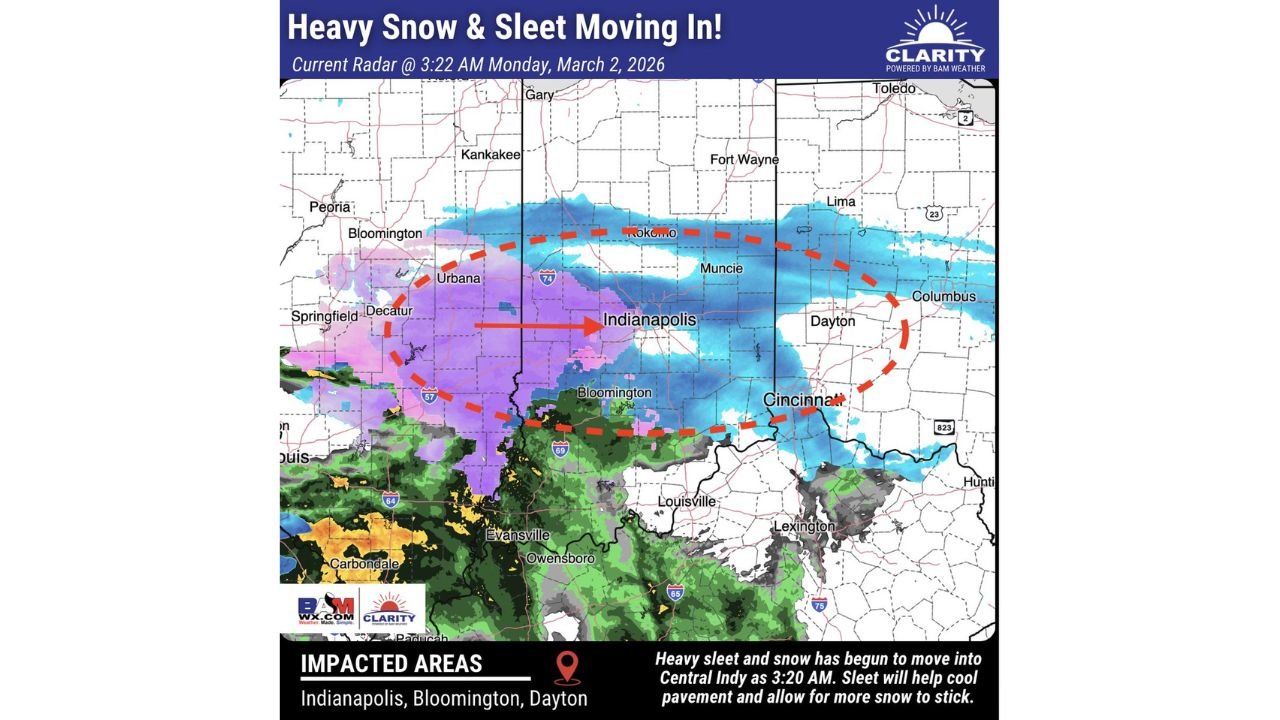
Radar imagery around 3:20 AM Monday, March 2, 2026 shows a solid band of wintry precipitation stretching from western Indiana across central portions of the state and into western Ohio.
Snow and Sleet Mixing Across the Metro
The heaviest precipitation band is centered over Indianapolis, with snow falling steadily and sleet mixing in at times.
Communities impacted include:
- Indianapolis
- Bloomington
- Urbana
- Muncie
- Dayton
- Areas near Cincinnati
Sleet is playing a key role in this event. As it mixes with snow, it helps cool pavement temperatures more quickly, increasing the likelihood that accumulation will stick to untreated surfaces.
Pavement Temperatures Dropping Below Freezing
One of the most concerning elements of this system is the drop in pavement temperatures. With readings slipping below freezing before sunrise, snow is expected to adhere to:
- Untreated roads
- Overpasses and bridges
- Side streets
- Parking lots
Primary highways may remain passable if treated, but untreated routes could become slick quickly.
Heaviest Band West of Indianapolis
The radar indicates a deeper purple shading west of Indianapolis, including areas near Decatur and Urbana, signaling heavier snowfall rates.
Farther south toward Evansville and Owensboro, precipitation transitions to heavier rain with embedded thunderstorms, marking the southern edge of the wintry mix.
The snow-sleet band extends east into western Ohio, impacting Dayton and potentially creating hazardous early-morning travel conditions there as well.
Impacts Expected Through 8 AM
Forecast messaging suggests that the highest risk period will last through approximately 8 AM, coinciding with the morning commute in central Indiana.
Hazards may include:
- Reduced visibility during heavier bursts
- Slushy accumulations on untreated roads
- Ice pellets creating compacted slick layers
Even light accumulation can create significant travel disruptions when pavement temperatures are below freezing.
What This Means for North Carolina Readers
While this system is centered over Indiana and western Ohio, it highlights how transitional early-March systems can still produce impactful winter weather across the Midwest.
For Cabarrus County and surrounding areas in North Carolina, similar late-season wintry setups remain possible when cold air lingers near the surface while precipitation spreads northward.
CabarrusWeekly.com will continue tracking notable weather systems across the country as the winter-to-spring transition unfolds.