How the Great Blizzard Buried New York, Boston, and Philadelphia Under Feet of Snow and Paralyzed the Northeast
UNITED STATES — One of the most devastating winter storms in American history unfolded when a powerful coastal system stalled along the Eastern Seaboard, unloading extraordinary snowfall totals from Pennsylvania to Maine and shutting down some of the nation’s largest cities.
The Great Blizzard overwhelmed infrastructure, stranded thousands, and produced snowfall amounts that remain legendary more than a century later.
Snowfall Totals That Rewrote the Record Books
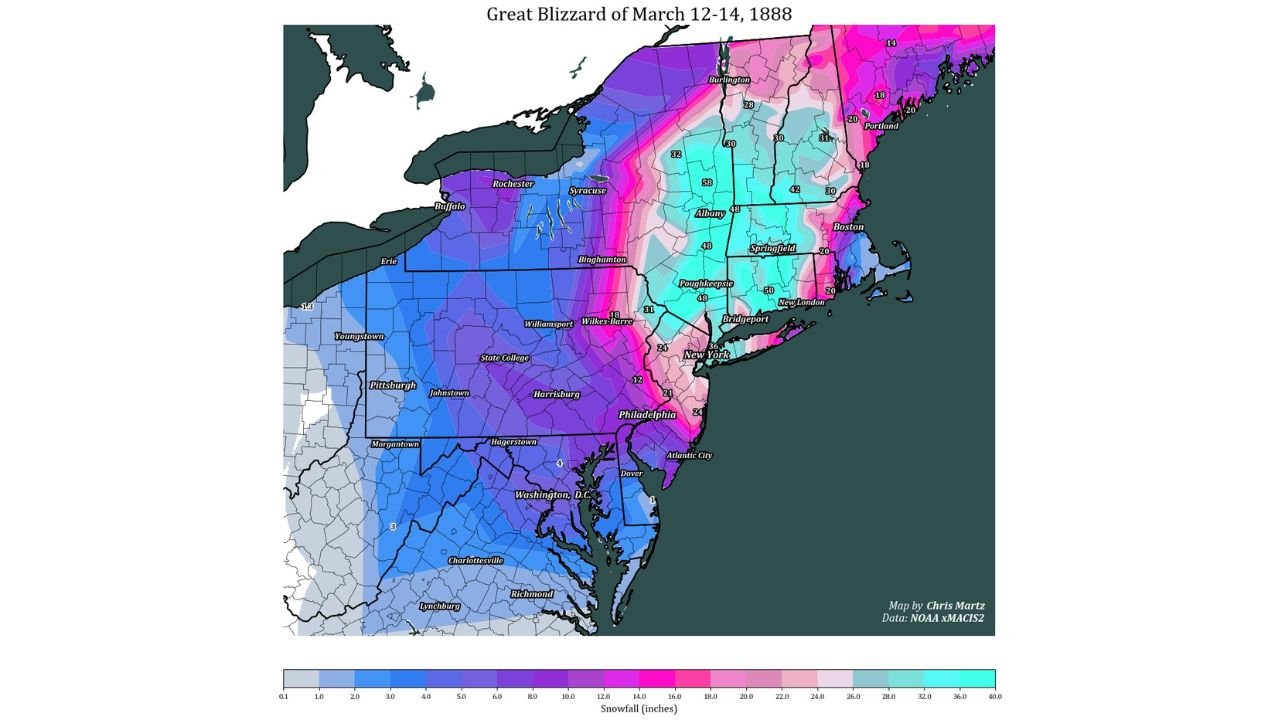
Snowfall maps from the storm show an astonishing swath of 20 to 40 inches stretching across portions of the Northeast.
Among the hardest-hit areas:
- Albany, New York: Around 48 inches
- Poughkeepsie, New York: Near 48 inches
- Springfield, Massachusetts: Approximately 50 inches
- Burlington, Vermont: Around 30 inches
- Boston, Massachusetts: Around 20 inches
- New York City: Roughly 20+ inches
- Philadelphia, Pennsylvania: Around 21 inches
In parts of upstate New York and western New England, totals exceeded three feet, with localized areas pushing toward four feet.
Meanwhile, cities such as Syracuse, Rochester, Buffalo, and Binghamton were also buried under significant snowfall, with widespread double-digit totals across Pennsylvania and New York.
Mid-Atlantic and Interior Impacts
The storm’s reach extended well beyond New England.
Heavy snow blanketed:
- Harrisburg and State College, Pennsylvania
- Wilkes-Barre, Pennsylvania
- Washington, D.C.
- Portions of Maryland and northern Virginia
Even areas farther south such as Richmond and Charlottesville, Virginia, experienced measurable snowfall, though totals tapered compared to the Northeast core.
Western Pennsylvania, including Pittsburgh and Johnstown, also received substantial accumulation, reinforcing the broad footprint of the storm.
Why the Storm Was So Extreme
The blizzard’s intensity stemmed from a powerful coastal low that tracked up the Eastern Seaboard while pulling in abundant Atlantic moisture.
Cold air locked in across the interior Northeast, allowing heavy, wind-driven snow to fall for an extended period.
The combination of:
- Prolonged snowfall
- High winds
- Rapid accumulation rates
created whiteout conditions and massive snowdrifts that crippled transportation networks.
Major cities like New York, Boston, and Philadelphia were effectively paralyzed as rail lines shut down and streets became impassable.
Was Climate Change Responsible?
Because the storm occurred in the late 19th century, long before modern industrial emissions, it stands as a clear example that extreme winter storms have occurred naturally in the historical climate record.
While today’s climate discussions often focus on warming trends, this event highlights that powerful nor’easters and high-impact blizzards have long been part of the atmospheric variability of the Eastern United States.
A Benchmark Winter Storm in U.S. History
More than a century later, the Great Blizzard remains a benchmark event for the Northeast.
Its snowfall totals across New York, Pennsylvania, Massachusetts, Vermont, Connecticut, Rhode Island, and Maine continue to be referenced whenever major winter storms threaten the region.
Understanding how and where the heaviest snow fell helps meteorologists compare modern storms to one of the most extreme winter events ever recorded.
For continued coverage of historic and modern weather events, stay with CabarrusWeekly.com.