Kansas Cities Smash All-Time March Heat Records as Kansas City, Wichita, Topeka, Manhattan and Salina Hit Unprecedented Highs Dating Back to 1800s
KANSAS — An extraordinary surge of early-season heat has rewritten history across Kansas, where multiple cities have set all-time March temperature records in a rare and unprecedented event.
Five Major Cities Break Longstanding Records
A cluster of cities including Kansas City, Wichita, Topeka, Manhattan, and Salina all recorded new monthly March high temperature records, many surpassing benchmarks that date back to the late 1800s.
This marks the first time on record that all five locations have reached such extreme temperatures this early in the year, highlighting the exceptional nature of this heat wave.
Temperatures Surge Into the Mid-90s
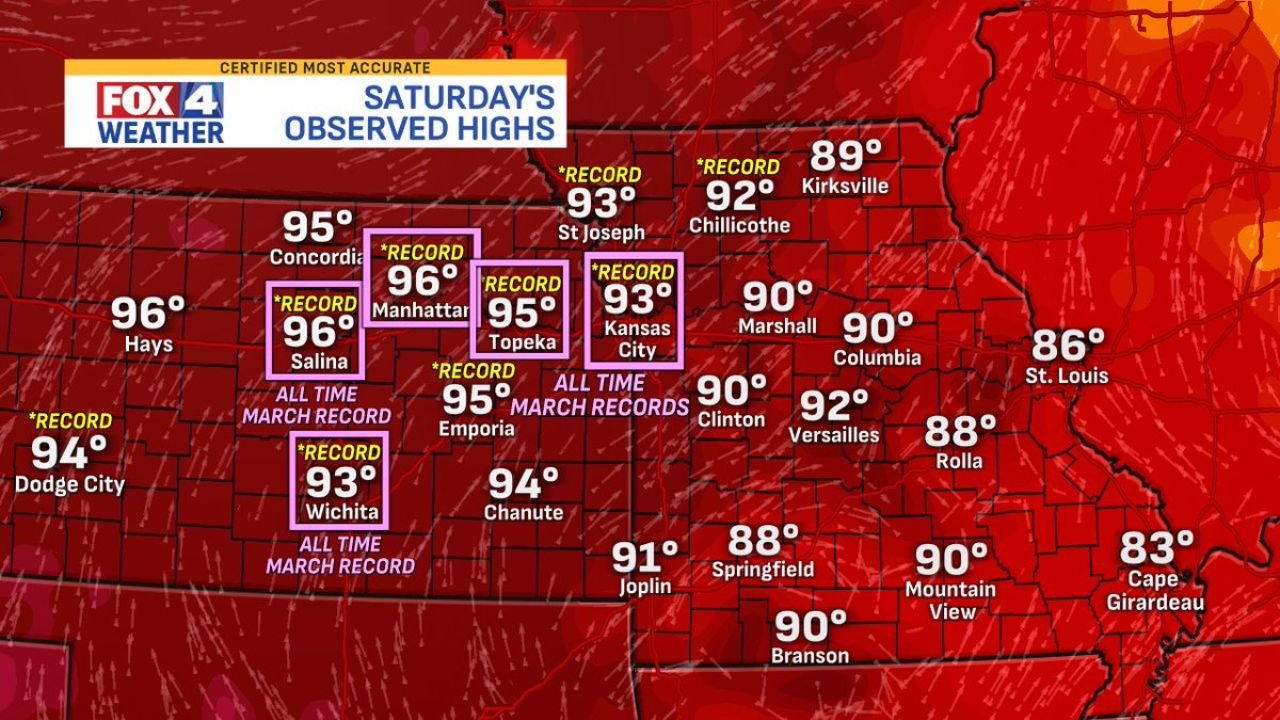
Observed highs across the region reached well into the 90s, with several cities hitting or exceeding 95°F.
- Salina: 96°F (All-time March record)
- Manhattan: 96°F (Record)
- Topeka: 95°F (Record)
- Kansas City: 93°F (All-time March record)
- Wichita: 93°F (All-time March record)
These values are more typical of late May or June, not mid to late March.
Widespread Heat Extends Across Kansas and Missouri
The extreme heat was not limited to just a few cities. Much of Kansas and western Missouri experienced widespread temperatures in the upper 80s to mid-90s.
Locations such as Emporia (95°F), Dodge City (94°F), Concordia (95°F), and St. Joseph (93°F) also reported record or near-record conditions.
Even areas farther east, including parts of Missouri, saw temperatures climbing into the upper 80s and low 90s, reinforcing how expansive this heat event has become.
A Historic Event With Deep Climate Significance
What makes this event particularly notable is not just the heat itself, but the number of records broken simultaneously across multiple long-standing climate stations.
Many of these records had stood for over a century, meaning this level of warmth in March is exceptionally rare.
Meteorologists emphasize that seeing all-time March records fall across multiple cities on the same day is highly unusual and indicative of a powerful and persistent heat pattern.
Why This Heat Was So Extreme
The record-breaking temperatures were driven by a combination of strong upper-level ridging, dry air, and intense sunshine, allowing heat to build rapidly throughout the day.
Additionally, warm air originating from the southern Plains and desert Southwest helped push temperatures even higher across Kansas.
This setup created ideal conditions for extreme heating, especially across open plains where solar heating is maximized.
What Happens Next
While some moderation in temperatures is expected in the coming days, the impact of this heat wave will linger.
Such early-season heat can influence soil moisture, agriculture, and water demand, while also setting the stage for more volatile weather patterns as the atmosphere adjusts.
The broader pattern remains active, meaning additional weather extremes—including storms or temperature swings—could follow.
Stay with CabarrusWeekly.com for continued updates on this historic March heat wave. If you experienced these record temperatures in your area, share your observations with the CabarrusWeekly.com community.