March 2–3, 2012 Tornado Outbreak: Over 70 Twisters Tear Across the Central and Southern U.S., Killing 41 and Causing $3 Billion in Damage
UNITED STATES — March 2–3, 2012 stands as one of the most significant early-season severe weather outbreaks in modern history, as more than 70 tornadoes swept across the Central and Southern United States in a destructive two-day span.
Of those tornadoes, 25 were rated EF2 or stronger, including two violent EF4 tornadoes. The outbreak claimed 41 lives, injured several hundred more, and produced over $3 billion in damage.
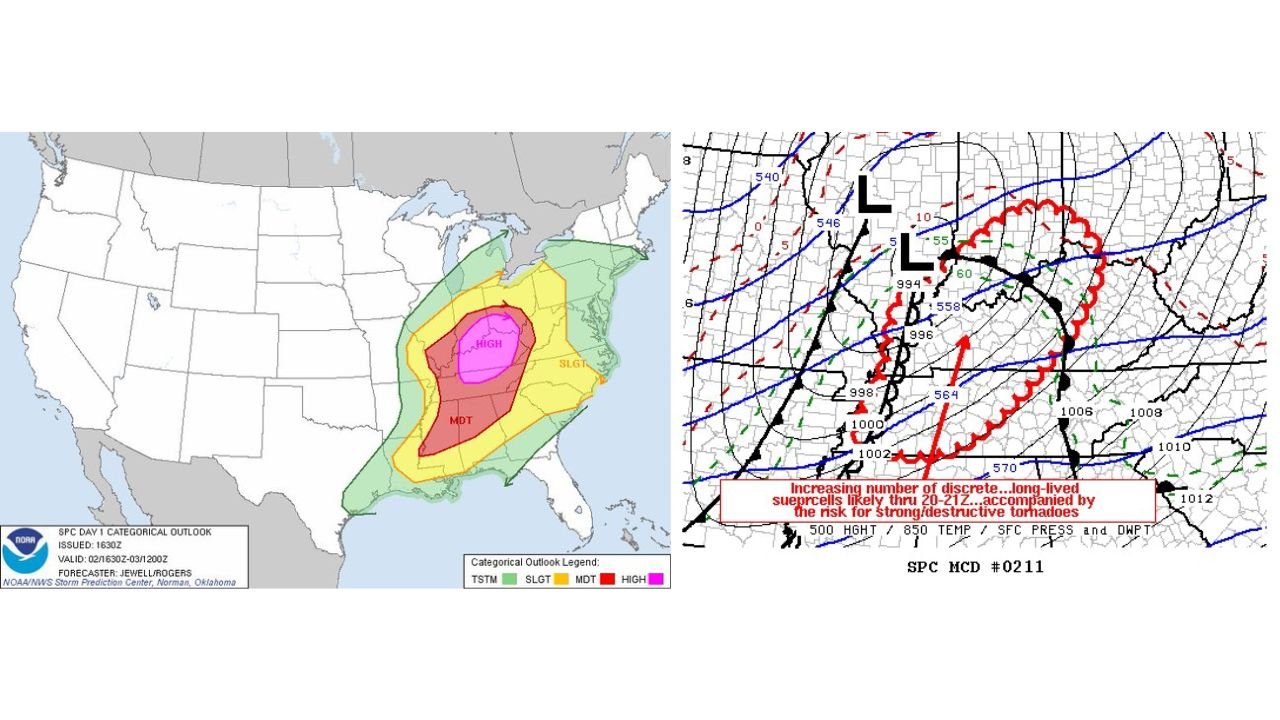
High Risk Issued Across the Mid-South and Ohio Valley
Forecast maps from March 2, 2012 show a rare “High Risk” designation centered over portions of:
- Kentucky
- Southern Indiana
- Southern Ohio
- Tennessee
- Parts of Illinois and Mississippi
Surrounding that high-risk core was a broad moderate and slight risk area extending from the Deep South into the Great Lakes region.
Such a high-risk outlook is uncommon and signals the potential for widespread, intense tornado activity.
Atmospheric Setup Fueled Long-Lived Supercells
Surface and upper-air analysis from that day reveal a powerful low-pressure system tracking from the Plains into the Midwest. A strong low-level jet transported rich Gulf moisture northward, while colder air aloft enhanced instability.
Meteorologists noted:
- Increasing numbers of discrete, long-lived supercells
- Strong wind shear supportive of rotating storms
- A high potential for strong to destructive tornadoes
The environment proved highly favorable for sustained, tornadic thunderstorms.
Violent Tornadoes Strike Kentucky and Indiana
Among the most devastating impacts occurred in:
- Henryville, Indiana
- West Liberty, Kentucky
- Southern Indiana communities
- Parts of Tennessee and Ohio
The EF4 tornadoes carved long tracks through populated areas, destroying homes, schools and businesses.
Satellite imagery from the period shows an expansive storm system stretching from the Gulf Coast through the Ohio Valley, illustrating the scale of the outbreak.
More Than 70 Tornado Reports
Storm report maps from March 2–3 highlight dozens of tornado tracks scattered across:
- Arkansas
- Mississippi
- Tennessee
- Kentucky
- Indiana
- Ohio
- Alabama
- Georgia
The outbreak was not isolated to one state but instead spanned a large portion of the central and eastern United States.
Economic and Human Toll
By the time the storms ended, the damage exceeded $3 billion, making it one of the costliest outbreaks of that year.
The 41 fatalities and hundreds of injuries underscored the intensity of the event and the danger posed by early-season severe weather in the South and Ohio Valley.
Why March 2012 Still Matters
Early March is a transitional time in the United States, when winter patterns begin shifting toward spring. The 2012 outbreak demonstrated how quickly severe weather can escalate when:
- Strong upper-level dynamics align
- Gulf moisture surges northward
- Surface lows track through the Midwest
For residents across the Southeast and Mid-South — including communities in North Carolina — the event serves as a reminder that significant tornado outbreaks are possible well before peak spring.
CabarrusWeekly.com continues to highlight major weather events from history to help readers better understand the patterns and risks that shape severe weather season each year.