March 2026 Sets All-Time Record as Warmest March in United States History at 7 Degrees Above Normal From Los Angeles and Phoenix to Atlanta and Washington DC
UNITED STATES — The numbers are in — and they are historic. March 2026 is on track to become not only the warmest March ever recorded in United States history, but quite possibly the warmest month compared to its seasonal average of any month ever measured across the country. Pending final data confirmation, the national average temperature for March 2026 came in at a remarkable 7 degrees above the long-term average — a departure from normal so large and so widespread that it rewrites the record books not just for March, but potentially for all months in the entire historical climate record.
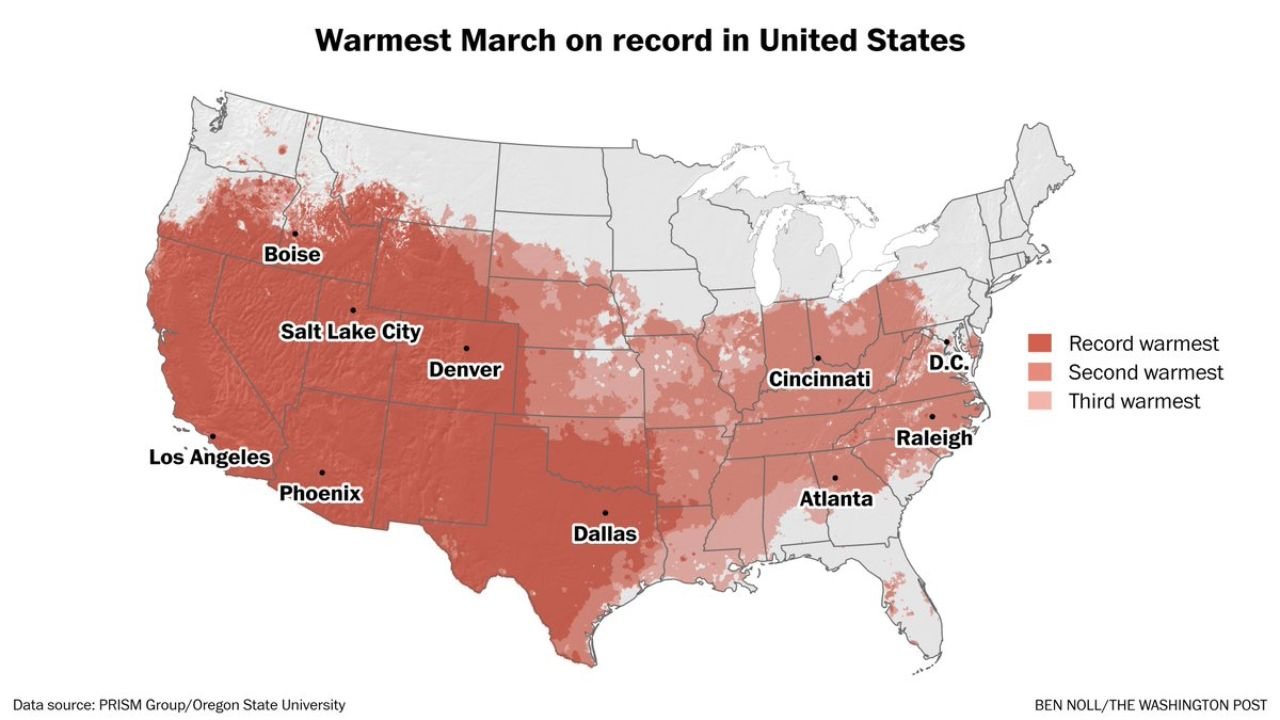
Data for this analysis is sourced from the PRISM Group at Oregon State University.
What 7 Degrees Above Average Actually Means
A single degree of departure from the monthly average across an entire nation is considered a significant and noteworthy climate event. Two degrees is exceptional. Three degrees begins to enter historic territory.
Seven degrees above average for an entire country across an entire month has no precedent in the United States temperature record. To achieve a 7-degree national average departure, temperatures across the country must run dramatically above normal across nearly every region simultaneously — not just in one area, not just for a few days, but broadly and persistently for the entire 31-day period.
What makes this departure even more remarkable is the context in which it is being measured. March is supposed to be a transition month — temperatures gradually climbing from winter toward spring, typically only a few degrees warmer than February across most of the country. A 7-degree departure in March means that much of the United States experienced temperatures more consistent with late May or early June during what should have been a late-winter month.
The Geographic Footprint of Record Warmth
The map of March 2026 temperature records tells a sweeping and almost coast-to-coast story of historic heat.
Record warmest March temperatures — the darkest red on the map — cover an enormous geographic footprint stretching from the Pacific Coast through the entire Southwest, Southern Plains, Southeast, and Mid-Atlantic. The specific cities sitting in record warmest territory include:
| City | State | March 2026 Status |
|---|---|---|
| Los Angeles | California | Record warmest March |
| Phoenix | Arizona | Record warmest March |
| Salt Lake City | Utah | Record warmest March |
| Boise | Idaho | Record warmest March |
| Denver | Colorado | Record warmest March |
| Dallas | Texas | Record warmest March |
| Atlanta | Georgia | Record warmest March |
| Raleigh | North Carolina | Record warmest March |
| Cincinnati | Ohio | Record warmest March |
| Washington DC | District of Columbia | Record warmest March |
The record warmest zone covers essentially the entire western United States from California through the Rockies and Southwest, sweeps across Texas and the Southern Plains, covers the entire Southeast from Louisiana through the Carolinas, and extends up the East Coast through the Mid-Atlantic and into the DC corridor.
Second warmest March on record covers portions of the Pacific Northwest, parts of Florida, and scattered areas across the Midwest — meaning virtually no part of the continental United States escaped significantly above-normal March temperatures.
The only areas that avoided the most extreme warmth were portions of the Northern Plains, the Great Lakes, and parts of the Northeast — where temperatures were still above normal but did not reach record or near-record territory.
The “Warmest Month Compared to Average” Distinction
The most historically significant aspect of March 2026 is not simply that it broke March temperature records across most of the country. It is the claim that it may represent the warmest monthly departure from average of any month ever recorded in United States history.
This distinction matters because it places March 2026 in a category that transcends seasonal records. Every month has its own average and its own record warmest departure. July 2012 was an extraordinarily hot month. February 2017 was shockingly warm. But March 2026’s 7-degree national departure appears to surpass the anomaly magnitude of every previous month in the modern temperature record — making it not just a March record but a record for all time.
To understand why this is so unusual, consider that the months most prone to large temperature departures are typically winter months — when a single strong ridge of high pressure can push temperatures dramatically above normal across a large area during a cold-baseline month. March is neither a cold-baseline month nor a warm-baseline month. Achieving a 7-degree departure in March requires a level of atmospheric anomaly that is simply extraordinary under any seasonal framework.
Why This Happened — The Atmospheric Setup
The March 2026 warmth was not random. It was the product of a persistent and anomalously strong ridge of high pressure that dominated the western and central United States for most of the month — a feature that blocked the normal progression of storm systems and cold air outbreaks that typically punctuate March across the country.
This blocking pattern allowed temperatures to build and sustain well above normal levels for week after week — without the cold shots that normally interrupt warm spells and keep monthly averages in line with seasonal norms. When high pressure dominates for extended periods, clear skies allow maximum solar heating during the day while nighttime temperatures also remain elevated — pushing both daytime highs and overnight lows well above their historical averages simultaneously.
The result was a month where 17 states broke their all-time March maximum temperature records — with California and Arizona reaching 112°F and Minnesota hitting 88°F — while the national average departure climbed to a level that has no parallel in the historical record.
What This Means Beyond the Record Books
A 7-degree national March temperature departure carries consequences that extend well beyond the discomfort of unseasonable warmth.
Snowpack across the western United States melted weeks ahead of schedule. The mountain ranges of California, Nevada, Utah, Colorado, and Idaho — which depend on late-season snowpack to feed reservoirs and rivers through the dry summer months — lost critical water storage during March that cannot be recovered. Drought conditions heading into summer 2026 across the West are significantly more severe than they would have been with a normal March.
Wildfire season began dramatically early. The combination of record heat, low humidity, and early vegetation drying pushed fire weather conditions into territory normally not seen until May or June across the Southwest and Southern Plains. Red Flag Warnings were issued across multiple states during what should have been a low fire risk month.
Spring agriculture was disrupted across multiple regions. Crops and orchards that broke dormancy weeks ahead of schedule due to the record warmth face frost damage risk as temperatures eventually return to seasonal norms in April — a pattern that can devastate fruit crops and early plantings that committed to growth during the anomalous warmth.
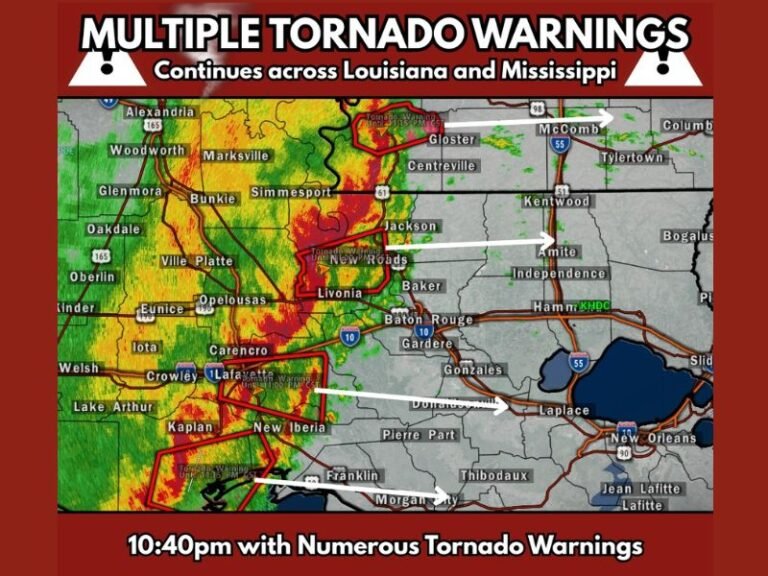
The severe weather season launched earlier and more intensively than normal. The same atmospheric instability created by anomalously warm surface temperatures against cold upper-level air drove one of the most active early-season severe weather patterns on record across the Plains and Midwest — producing the generational and unprecedented consecutive severe weather days that have defined the final days of March and the opening of April 2026.
Forecast Confidence Level
High confidence on March 2026 being the warmest March on record for the United States — the temperature departures across the country are far too large and too widespread to be reversed by final data processing.
High confidence on the 7-degree national departure figure** — this reflects the PRISM Group analysis from Oregon State University and is consistent with individual station data from across the country.
Medium confidence on the “warmest month compared to average overall” designation** — this claim is pending final data confirmation. While the departure magnitude strongly supports this conclusion, official confirmation awaits the complete dataset.
The Bottom Line
March 2026 is the warmest March ever recorded in United States history — and pending final data confirmation, it is likely the warmest monthly departure from average of any month ever measured across the country. A 7-degree above-average national temperature anomaly for an entire month has no precedent in the modern climate record. The record warmest zone covers an enormous swath of the country from Los Angeles, Phoenix, Salt Lake City, and Denver through Dallas, Atlanta, Raleigh, Cincinnati, and Washington DC. The consequences of this extraordinary month — accelerated snowpack loss, early wildfire season, agricultural disruption, and an explosive early severe weather season — will be felt across multiple sectors of American life well into the summer and beyond. March 2026 is not just a weather record. It is a climate milestone.
Stay ahead of record-breaking weather and climate events as they unfold. Visit cabarrusweekly.com for daily weather coverage, historic temperature analysis, and storm updates from across the United States — because knowing early is the difference that matters.