Michigan Faces Three Separate Low Pressure Systems This Week on Tuesday, Thursday, and Saturday as Repeated Rapid Pressure Changes May Cause Fatigue, Achy Joints, and Other Symptoms in Sensitive Residents
MICHIGAN, UNITED STATES — Michigan is heading into one of the most atmospherically active weeks of the spring season. Three separate low pressure systems are forecast to move through the Great Lakes region in rapid succession — on Tuesday, March 31, Thursday, April 2, and Saturday, April 4, 2026 — bringing repeated rounds of unsettled weather and, for residents sensitive to sudden barometric pressure changes, a potentially difficult stretch of days ahead.
This forecast was posted March 30, 2026 at 5 PM EDT.
Three Systems in Five Days — What That Means
Having one low pressure system move through Michigan in a week is routine. Having three separate systems in five days is a different situation entirely — both from a weather standpoint and from a human health perspective.
Each low pressure system that moves through a region causes barometric pressure to drop ahead of it and rise behind it. When pressure rises and falls repeatedly over a short period, the atmosphere is essentially putting the body through a meteorological workout — and for millions of Americans who are sensitive to barometric pressure changes, that can mean a week of real physical discomfort.
Here is how the three-system parade sets up across Michigan:
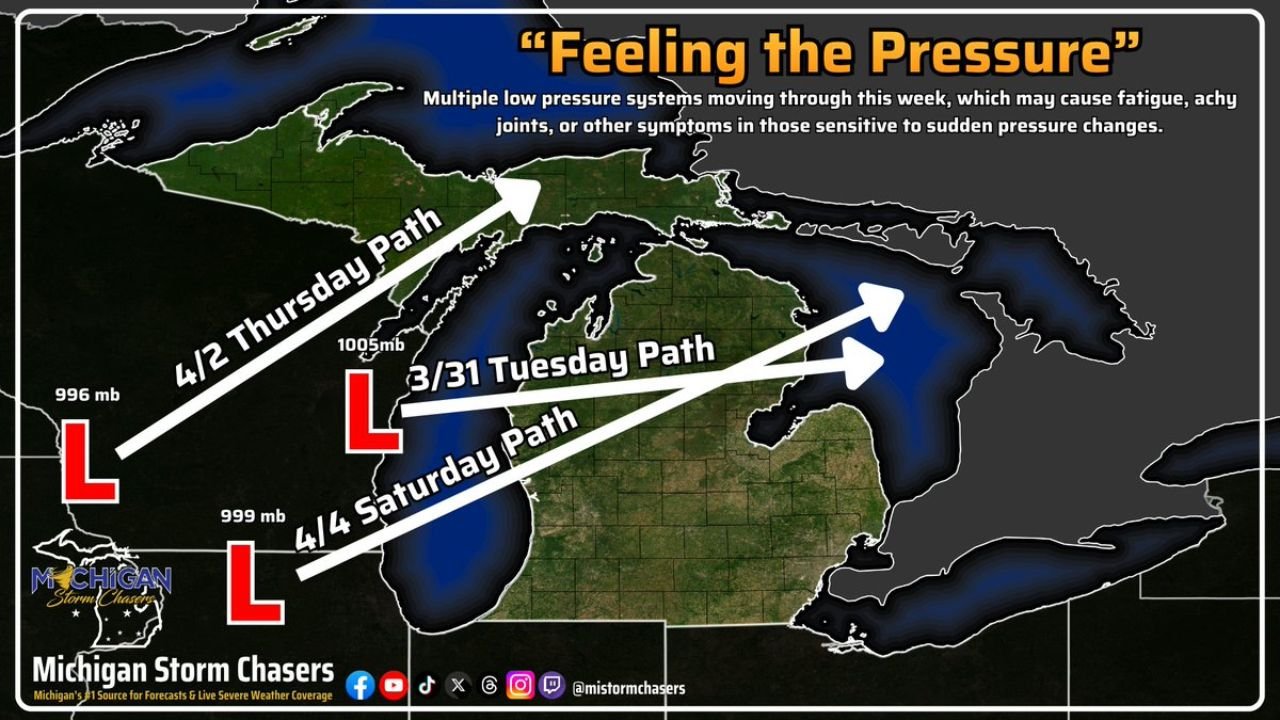
Tuesday, March 31 — The first low pressure system, tracking at 1005 millibars, moves through the Great Lakes on a northeast path. This is the weakest of the three systems but still enough to trigger a noticeable pressure drop across Michigan ahead of its passage and a pressure rise behind it.
Thursday, April 2 — The second and strongest system arrives, tracking at 996 millibars — nearly 10 millibars lower than Tuesday’s system. A lower pressure reading means a more intense system, stronger winds, and a more pronounced pressure drop for residents across the region. This system takes a more northward path through the Great Lakes.
Saturday, April 4 — The third system rounds out the week at 999 millibars, moving through on a path similar to Tuesday’s system. By the time this third low moves through, Michigan residents will have experienced pressure rising and falling multiple times within the same week.
Low Pressure System Tracker — Michigan This Week
| System | Date | Pressure | Path |
|---|---|---|---|
| System 1 | Tuesday, March 31 | 1005 mb | Northeast through Great Lakes |
| System 2 | Thursday, April 2 | 996 mb | Northward through Great Lakes |
| System 3 | Saturday, April 4 | 999 mb | Northeast through Great Lakes |
Why Rapid Pressure Changes Affect the Human Body
Barometric pressure is the weight of the atmosphere pressing down on everything at the surface — including the human body. When that pressure drops, the change can affect joints, sinuses, muscles, and overall energy levels in people who are particularly sensitive to these shifts.
Achy joints are one of the most commonly reported symptoms during rapid pressure changes. When barometric pressure drops, the tissues surrounding joints can expand slightly, increasing pressure on nerves and causing discomfort — particularly for people with arthritis or previous joint injuries.
Fatigue is another frequently reported effect. Pressure changes can affect oxygen availability at the surface level and disrupt sleep patterns, leaving some people feeling unusually tired during extended periods of low pressure.
Headaches and migraines can also be triggered by rapid pressure drops in individuals who are prone to them. The change in pressure affects the pressure balance between the sinuses and the surrounding atmosphere, which can trigger or worsen headache symptoms.
Sinus pressure and congestion often worsen during low pressure periods as the pressure differential between the air inside the sinuses and the outside atmosphere changes.
It is important to note that if symptoms are severe or persistent, consulting a medical professional is always the appropriate first step — weather-related discomfort can sometimes mask or overlap with other medical conditions that require proper diagnosis and treatment.
Forecast Confidence Level
High confidence on all three low pressure systems moving through Michigan this week — the timing and track of each system is well-established in forecast data as of Monday morning.
High confidence on the Thursday system being the strongest of the three** — the 996mb reading represents a notably more intense low than the Tuesday and Saturday systems.
Medium confidence on exact pressure readings at any given Michigan location — the values shown represent the central pressure of each low, and actual pressures at specific cities will vary depending on how close the storm track passes.
What Michigan Residents Should Know This Week
If you are sensitive to barometric pressure changes, this week requires extra attention to rest, hydration, and managing activities on the heaviest weather days. Tuesday, Thursday, and Saturday are all days where pressure will be actively changing — not just dropping once and recovering, but cycling through multiple rises and falls in rapid succession.
Joint pain sufferers may want to plan lighter physical activity on Tuesday, Thursday, and Saturday when pressure drops are most active. Warm compresses, staying well-hydrated, and avoiding prolonged exposure to damp, cold conditions can help manage weather-related joint discomfort.
Migraine and headache sufferers should keep their usual remedies accessible through the week and consider tracking pressure changes against symptom patterns — many people find that identifying their personal pressure trigger threshold helps them manage symptoms more proactively.
The Thursday system deserves the most attention from a weather standpoint — at 996 millibars it is the strongest of the three and will likely bring the most significant wind, rain, and pressure drop of the week across Michigan.
Plan outdoor activities around the system timing — Tuesday, Thursday, and Saturday will all bring periods of rain and unsettled conditions. Monday, Wednesday, and Friday offer the best windows for outdoor plans between the three systems.
The Bottom Line
Michigan is facing a three-system low pressure parade this week — Tuesday March 31 at 1005mb, Thursday April 2 at 996mb, and Saturday April 4 at 999mb. Each system brings its own round of unsettled weather and, more unusually, repeated rapid barometric pressure changes that can cause real physical symptoms in sensitive residents. Fatigue, achy joints, headaches, and sinus pressure are all possible during a week of this atmospheric intensity. Plan accordingly, rest when needed, and always consult a medical professional if symptoms feel beyond typical weather-related discomfort. This week is not a normal one for Michigan’s atmosphere — and your body may well notice it.
Stay ahead of every storm system before it arrives. Visit cabarrusweekly.com for daily Great Lakes weather coverage, low pressure tracking, and storm updates from across the United States — because knowing early is the difference that matters.