Midwest, Great Lakes, New York and North Carolina Snow Surge While California, Utah and Colorado Face Severe Winter Snow Drought Divide
NORTH CAROLINA — The 2025–2026 winter season is closing with a dramatic contrast across the United States, as snowfall patterns reveal a sharp divide between the snow-rich East and the snow-starved West.
Midwest and Eastern U.S. Lead Above-Average Snowfall
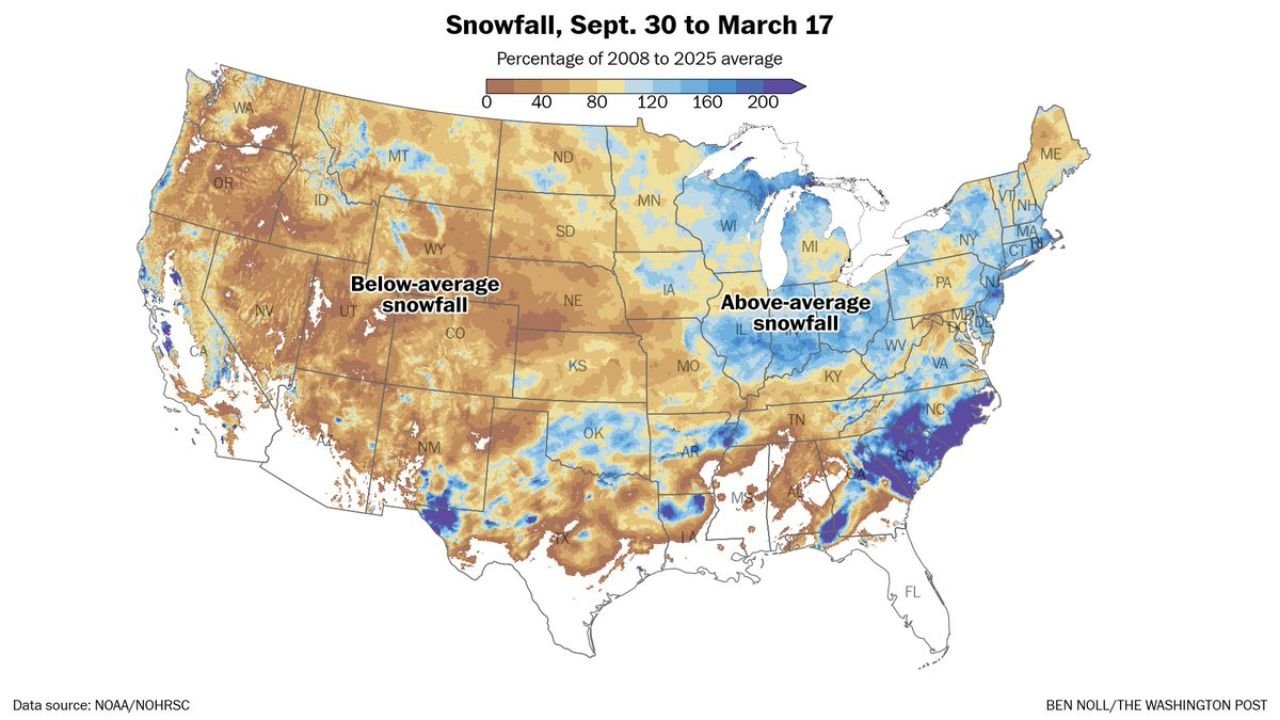
Final seasonal data shows that large portions of the Midwest, Great Lakes, and Northeast experienced above-average snowfall, with some regions significantly exceeding normal totals.
Key areas of above-average snowfall include:
- Illinois, Indiana, Ohio, and Michigan: Widespread above-normal snow totals
- Pennsylvania, New York, and New England: Strong snowfall season with consistent winter storms
- Parts of the Mid-Atlantic and Appalachians: Enhanced snowfall extending into West Virginia and Virginia
Notably, parts of the Carolinas, including North Carolina, also saw localized areas of above-average snowfall, particularly in eastern sections impacted by coastal systems.
Western U.S. Faces Significant Snow Drought
In stark contrast, the western half of the country experienced a major snowfall deficit, with widespread below-average snow across California, Nevada, Utah, Arizona, and Colorado.
The snow drought was especially pronounced in:
- Utah and Colorado: Core mountain regions seeing reduced snowpack
- California and Nevada: Persistent lack of significant winter storms
- Arizona and New Mexico: Limited snowfall across higher elevations
This pattern raises concerns for water supply heading into spring and summer, as mountain snowpack is a critical source of runoff for much of the West.
Population vs Land Area Highlights Uneven Impact
Despite only 23 percent of the U.S. land area experiencing above-average snowfall, approximately 35 percent of the population lived in regions that saw higher-than-normal snow totals.
This indicates that snowfall was concentrated in more densely populated areas, particularly across the Midwest and East, amplifying its societal impact.
It also marks the highest population exposure to above-average snowfall since the 2020–2021 winter season, highlighting how impactful the season has been despite uneven geographic distribution.
Unusual Contrast Highlights Extreme Seasonal Pattern
One of the most striking aspects of this winter was the unusual geographic imbalance. In some cases, parts of Florida recorded measurable snowfall, while typically snow-prone areas in the West struggled to accumulate.
This rare contrast underscores the influence of broader atmospheric patterns that favored storm tracks across the central and eastern United States, while leaving the West largely dry.
What This Means Moving Into Spring
The implications of this snowfall pattern extend beyond winter. The western snow drought could contribute to:
- Reduced water availability during warmer months
- Increased wildfire risk due to dry conditions
- Lower reservoir recharge across key regions
Meanwhile, the Midwest and Eastern U.S. may benefit from better soil moisture conditions as snowmelt progresses.
For North Carolina, the above-average snowfall in parts of the state reflects a more active winter storm track, though impacts varied significantly by location.
As outlined in the official CabarrusWeekly.com format guidelines , this seasonal summary highlights how uneven winter conditions can shape weather impacts across the country.
Stay with CabarrusWeekly.com for continued seasonal analysis, and share how this winter compared in your area as we transition into spring.