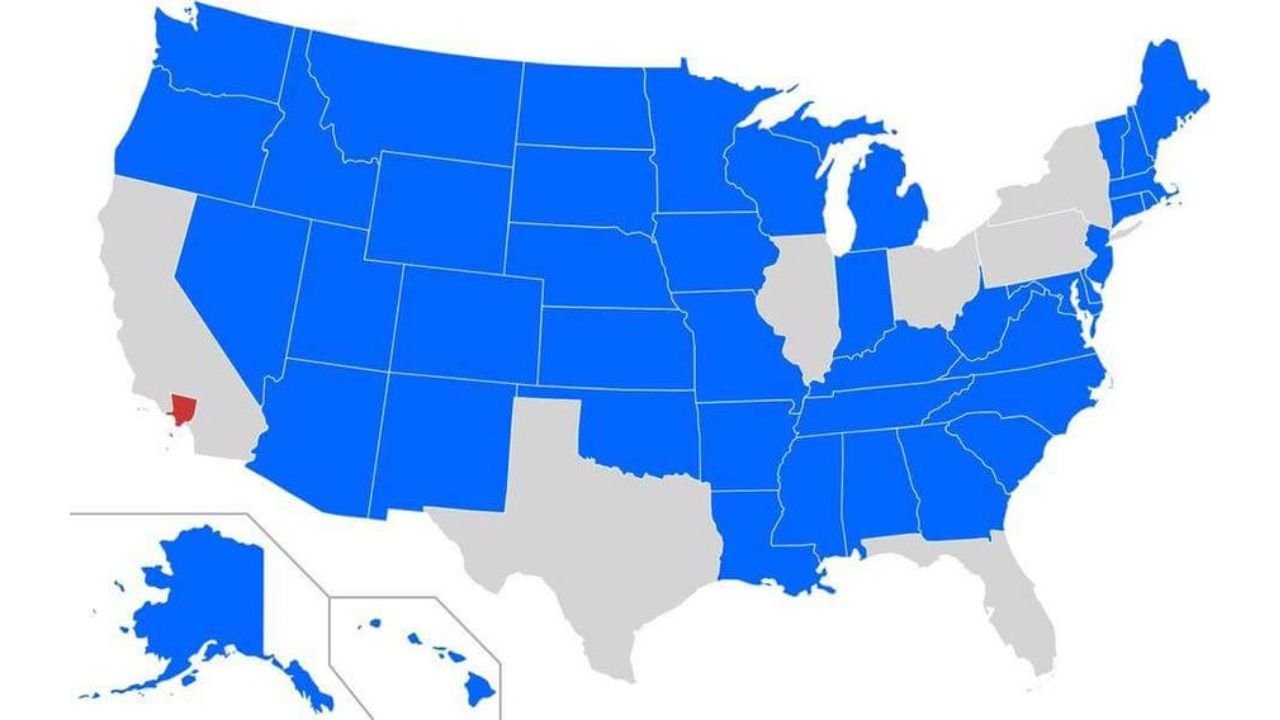
More Than Half of U.S. States Have Smaller Populations Than Los Angeles County Including Alaska Wyoming Vermont and Others
UNITED STATES — A striking population comparison is drawing attention nationwide, showing that a large number of U.S. states actually have fewer residents than Los Angeles County alone, one of the most densely populated regions in the country.
The visualization highlights just how concentrated population growth has become in major urban areas, especially in Southern California.
Los Angeles County Stands Larger Than Entire States
Los Angeles County, located in California, has a population of roughly 10 million people, making it larger than many entire states combined.
What stands out in the data is that a majority of U.S. states fall below that number, emphasizing how population is heavily clustered in a few metro regions.
Dozens of States Fall Below LA County Population
The map highlights numerous states across different regions that have smaller populations than Los Angeles County. These include:
- Alaska
- Wyoming
- Vermont
- North Dakota
- South Dakota
- Delaware
- Montana
- Rhode Island
- Maine
- New Hampshire
- Hawaii
- West Virginia
- Idaho
- Nebraska
- New Mexico
- Kansas
- Mississippi
- Arkansas
- Nevada
- Utah
- Iowa
- Connecticut
- Oklahoma
- Oregon
- Kentucky
- Louisiana
- Alabama
- South Carolina
These states span from the Great Plains to New England and the Deep South, showing that this is not limited to one specific region.
Why Population Is So Uneven
Several factors explain why Los Angeles County alone surpasses so many states:
- Economic concentration – Major industries like entertainment, technology, and trade attract millions
- Urban density – Cities like Los Angeles pack large populations into relatively smaller areas
- Migration patterns – People continue moving toward metro hubs for jobs and opportunities
Meanwhile, many states listed have:
- Large rural areas
- Lower population density
- Slower growth trends
A Growing Urban-Rural Divide
This comparison reflects a broader national trend:
- Urban regions are growing rapidly
- Rural and smaller states are growing slowly or even declining
The gap between highly populated counties and entire states is becoming more noticeable each year.
What This Means for the Future
Population imbalances like this can impact:
- Political representation
- Economic development
- Infrastructure planning
- Resource allocation
As urban centers continue expanding, regions like Los Angeles County may play an even larger role in shaping national trends.
Final Takeaway
The fact that a single county in California holds more people than dozens of U.S. states is a powerful reminder of how uneven population distribution has become across the country.
It’s not just a statistic—it’s a reflection of where people are choosing to live, work, and build their futures.
Stay with CabarrusWeekly.com for more data-driven insights and nationwide trends that shape everyday life across the United States.