North Texas Turning the Corner: Brutal January Cold Unlikely to Return as Region Moves Past Winter’s Harshest Stretch
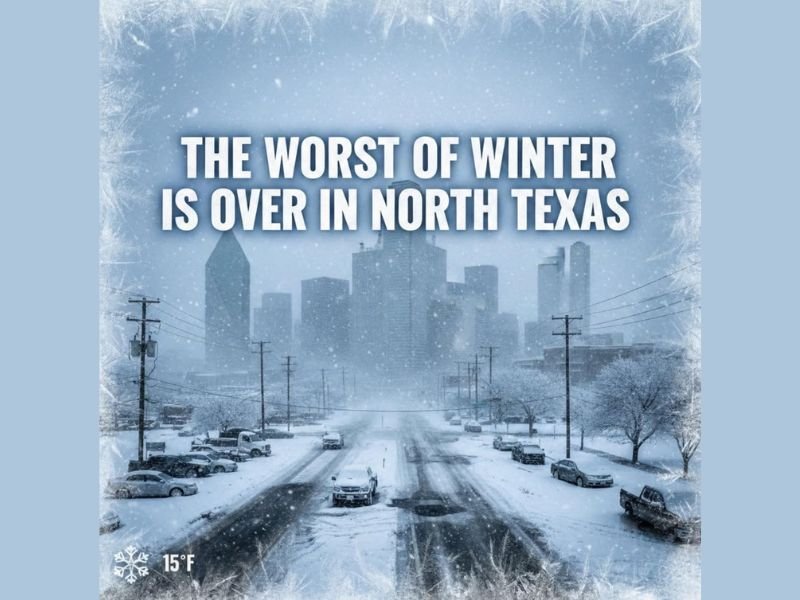
NORTH TEXAS — After enduring a harsh stretch of late-January cold, the region appears to be moving beyond the most intense phase of winter, with no strong signals pointing toward a repeat of that deep freeze. While colder nights are still possible before spring officially arrives, the pattern suggests the most severe cold of the season is likely behind us.
Late-January Arctic Blast Unlikely to Repeat
The late-January cold snap brought widespread freezing temperatures and significant winter impacts across North Texas. However, current pattern trends indicate the atmosphere is shifting away from the kind of setup that delivered those extreme conditions.
Forecast guidance suggests that while occasional chilly nights may develop under clear skies, the probability of another prolonged Arctic outbreak is significantly lower. This marks a noticeable transition compared to the heart of winter.
A Few More Freezes Still Possible
Residents should not pack away winter precautions just yet. Climatology indicates the average last freeze in North Texas occurs around March 12, leaving roughly a month where isolated overnight freezes remain possible.
These freezes, however, would likely be brief and radiational in nature — meaning they occur under calm, clear conditions rather than from a powerful Arctic front. That distinction matters. Short-lived nighttime freezes are far less disruptive than multi-day deep cold events.
Gradual Seasonal Transition Underway
As the calendar advances toward late February and early March, sun angle increases and daylight hours lengthen. Even when cool air masses move through, they tend to moderate more quickly compared to mid-winter systems.
This gradual seasonal shift reduces the likelihood of sustained extreme cold. While winter is not officially over, the overall trajectory favors milder air masses becoming more dominant across North Texas.
What This Means for Residents
For homeowners, this pattern shift reduces the risk of widespread pipe-freezing events or extended icy travel conditions like those experienced during January’s cold outbreak. Gardeners and early spring planners should still monitor overnight forecasts, as brief freezes can impact sensitive vegetation. However, the odds of another prolonged hard freeze event are diminishing.
Bottom Line
The most punishing stretch of winter appears to be in the rearview mirror for North Texas. While a few cold mornings are still possible before the typical last freeze date in mid-March, a repeat of late January’s intense cold is increasingly unlikely.
If you’ve noticed temperatures trending milder in your area or are preparing for the spring transition, share your local observations with us at CabarrusWeekly.com.