Powerful Magnitude 7.3 Earthquake Strikes Pacific Ring of Fire Near Vanuatu With No Tsunami Warning Issued for United States Coastlines
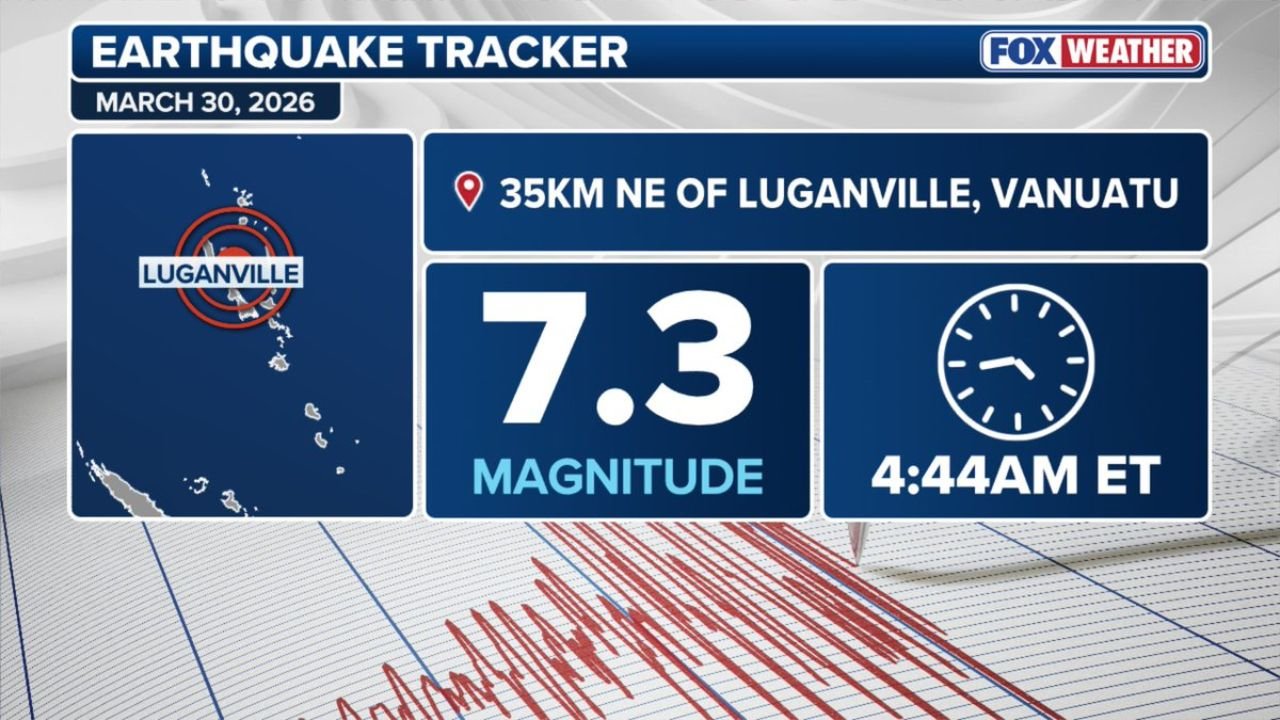
VANUATU, PACIFIC OCEAN — A powerful magnitude 7.3 earthquake struck the Pacific Island nation of Vanuatu on Monday, March 30, 2026, rattling one of the most seismically active stretches of the Pacific Ring of Fire. The earthquake was centered 35 kilometers northeast of Luganville, Vanuatu, and struck at 4:44 AM ET — shortly before 8 PM local Vanuatu time. No tsunami warnings have been issued for United States coastlines following the event.
What Happened and Where
The earthquake struck along the Pacific Ring of Fire — the massive arc of seismic and volcanic activity that circles the Pacific Ocean and is responsible for approximately 90 percent of the world’s earthquakes. Vanuatu sits in one of the most geologically intense sections of this zone, where the Pacific and Australian tectonic plates grind against each other with enormous force.
A magnitude 7.3 earthquake is classified as a major earthquake — powerful enough to cause serious structural damage near the epicenter, trigger landslides, and generate tsunamis under the right conditions. The quake’s location 35 kilometers northeast of Luganville places the epicenter in open ocean waters northeast of Espiritu Santo island, Vanuatu’s largest island and home to Luganville, the country’s second largest city.
What This Means for the United States
The most immediate question for Americans following a major Pacific earthquake is always the same — is there a tsunami threat to US coastlines?
The answer following this event is no. No tsunami warnings, watches, or advisories have been issued for any United States coastline including Hawaii, Alaska, California, Oregon, or Washington following the magnitude 7.3 Vanuatu earthquake.
Tsunami generation from a major earthquake depends on several factors — the depth of the quake, the type of fault movement, and the displacement of the ocean floor. While the specific depth data for this event is still being assessed, the absence of any tsunami warning for US shores means monitoring agencies have determined the quake did not generate a wave capable of causing significant impacts across the Pacific.
Why the Ring of Fire Matters to Americans
The Pacific Ring of Fire is not a distant concern for the United States. Alaska, Hawaii, California, Oregon, and Washington all sit directly along or adjacent to the Ring of Fire — the same seismic zone that produced Monday’s magnitude 7.3 quake near Vanuatu.
The Cascadia Subduction Zone off the coasts of northern California, Oregon, Washington, and British Columbia is one of the most closely watched fault systems in the world — capable of producing earthquakes of magnitude 8.0 or greater and the tsunamis that would accompany them. The Juan de Fuca Plate continues to slide beneath the North American Plate in this zone, building stress that seismologists know will eventually release in a major seismic event.
Monday’s Vanuatu earthquake is a reminder that the Ring of Fire is always active — and that preparedness along US Pacific coastlines is not a precaution for a distant future event but an ongoing necessity.
Earthquake Quick Facts
| Detail | Information |
|---|---|
| Magnitude | 7.3 |
| Location | 35km NE of Luganville, Vanuatu |
| Date | Monday, March 30, 2026 |
| Time | 4:44 AM ET |
| Seismic Zone | Pacific Ring of Fire |
| Tsunami Warning — US Coastlines | None issued |
| Tsunami Warning — Hawaii | None issued |
| Tsunami Warning — Alaska | None issued |
Forecast Confidence Level
High confidence on the magnitude 7.3 reading and epicenter location — these are confirmed seismic readings from monitoring agencies.
High confidence on no tsunami threat to US coastlines — no warnings, watches, or advisories have been issued for any US territory following this event.
Ongoing assessment — aftershocks are common following a major earthquake of this magnitude. Residents near seismically active zones should remain aware that aftershock activity near the epicenter in Vanuatu may continue in the hours and days following the main event.
What US Residents in Earthquake and Tsunami Risk Zones Should Always Have Ready
Events like Monday’s Vanuatu earthquake are reminders that seismic preparedness is an ongoing responsibility for millions of Americans living along the West Coast and in Hawaii and Alaska.
Know your tsunami evacuation route if you live or work near the Pacific coastline in California, Oregon, Washington, Hawaii, or Alaska. Tsunami evacuation maps are available through your local emergency management office and should be reviewed before an event — not during one.
Have a go-bag ready with at least 72 hours of supplies including water, food, medications, important documents, and a battery-powered radio. Major earthquakes can disrupt infrastructure for days to weeks.
Drop, cover, and hold on remains the recommended action during earthquake shaking — get under a sturdy table or desk, protect your head and neck, and hold on until the shaking stops. Do not run outside during shaking.
Sign up for local emergency alerts in your city or county so you receive real-time tsunami warnings and earthquake notifications directly to your phone.
The Bottom Line
A powerful magnitude 7.3 earthquake struck the Pacific Ring of Fire near Luganville, Vanuatu on Monday, March 30, 2026 at 4:44 AM ET. No tsunami warnings have been issued for any United States coastline including Hawaii, Alaska, or the West Coast. The event is a stark reminder that the Ring of Fire — the same seismic zone that runs along America’s entire Pacific coastline — is one of the most geologically active regions on Earth and that earthquake and tsunami preparedness remains an essential responsibility for millions of Americans.
Stay ahead of natural disasters and severe weather events before they impact your area. Visit cabarrusweekly.com for breaking natural disaster coverage, weather alerts, and emergency preparedness updates from across the United States — because knowing early is the difference that matters.