Spring Pattern Takes Hold as Southeast High Pressure Steers 4–7+ Inches of Rain from Texas Through Arkansas, Tennessee and Into the Ohio Valley
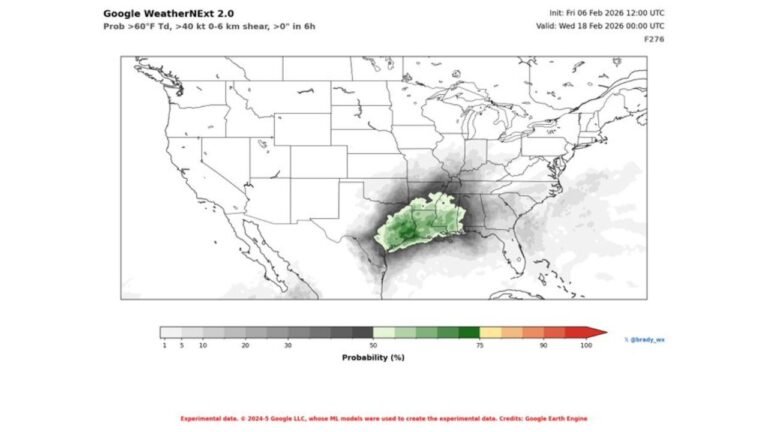
SOUTHEAST UNITED STATES — A developing spring pattern is beginning to lock into place, with high pressure centered over the Southeast steering repeated storm systems toward the Upper Gulf Coast and the middle of the country.
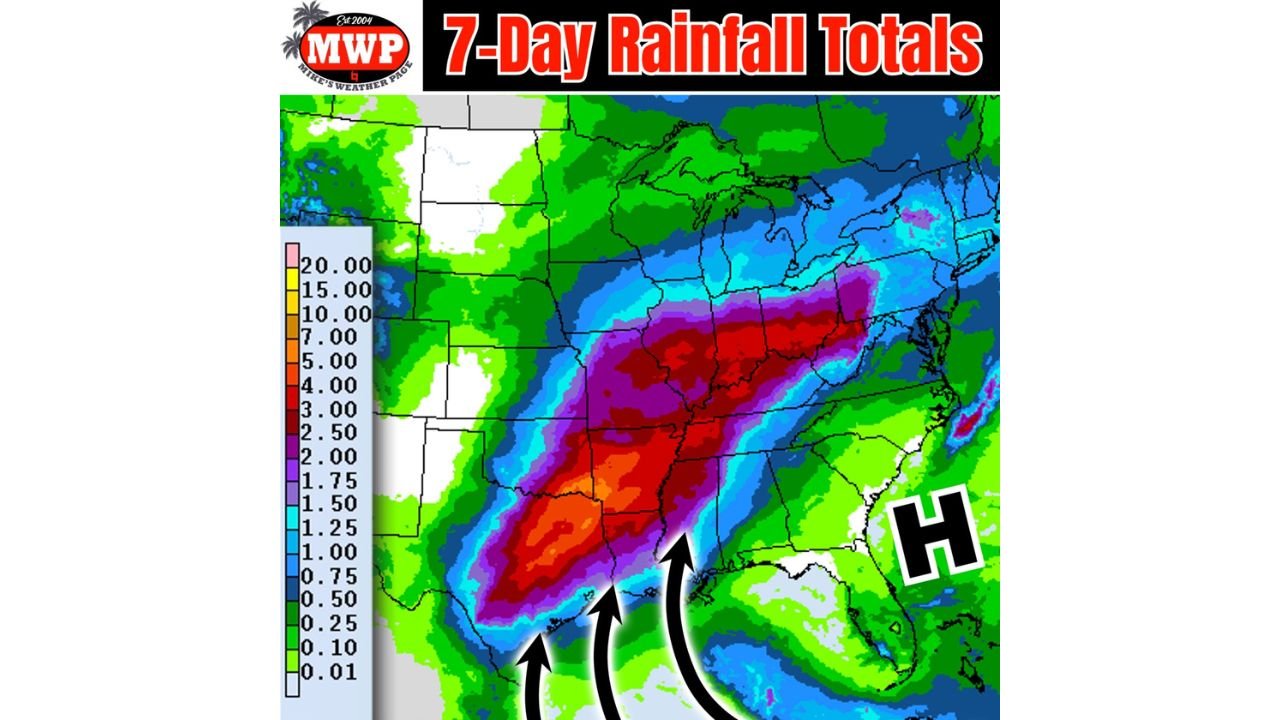
The result: a pronounced 7-day rainfall corridor stretching from Texas through Arkansas, Mississippi, Tennessee, Kentucky and into the Ohio Valley, with widespread totals of 4 to 7 inches and isolated areas approaching even higher amounts.
Heavy Rain Axis from Texas to Kentucky
The 7-day rainfall projection highlights a concentrated swath of deep red and orange shading indicating the heaviest totals. The core of that axis includes:
- Eastern and central Texas
- Southern and central Arkansas
- Northern Louisiana
- Western and middle Tennessee
- Western Kentucky
- Parts of southern Illinois and southern Indiana
Localized pockets in eastern Texas and Arkansas show potential for 6 to 7+ inches, while a broader area of 3 to 5 inches extends northeast into the Ohio Valley.
High Pressure Over the Southeast Driving the Setup
A large area of high pressure over Georgia, the Carolinas and Florida is playing a key role in shaping this pattern.
Instead of allowing storm systems to track east across the Deep South, the ridge is:
- Deflecting storms northwestward
- Steering Gulf moisture into Texas and the Mid-South
- Focusing repeated rounds of rainfall over the same corridor
This configuration helps determine who receives the “big rains” and who remains relatively drier.
Upper Gulf Coast Feeding Moisture North
Arrows on the map indicate strong moisture transport from the Upper Gulf of Mexico into Texas, Louisiana and Arkansas.
As daytime temperatures warm and spring instability increases, that moisture will fuel multiple rounds of showers and thunderstorms. With the storm track remaining consistent, rainfall totals can quickly add up.
Areas on the western and northern edge of the heavy band — including parts of Oklahoma and Missouri — are also expected to see moderate accumulations.
Lighter Totals Across the Southeast Coast
Meanwhile, portions of:
- Georgia
- South Carolina
- Eastern North Carolina
- Florida
appear to receive lighter rainfall totals compared to the core heavy-rain corridor, due in part to the positioning of the high-pressure ridge.
What This Means Moving Forward
Seven-day totals of 4 to 7 inches over a broad area raise concerns for:
- Localized flooding
- River rises
- Saturated soils
- Travel disruptions during heavy downpours
If storms train repeatedly over the same communities in Texas, Arkansas, Tennessee or Kentucky, isolated flash flooding cannot be ruled out.
For North Carolina residents, including Cabarrus County, the pattern suggests a more indirect impact locally, but any shift in the high-pressure placement could alter rainfall distribution.
CabarrusWeekly.com will continue monitoring this evolving spring setup as the storm track and heaviest rainfall corridor become more defined in the coming days.