Stevens Fire East of Hooker, Oklahoma Sends Thick Smoke Across Panhandle as Farmers and Fire Crews Battle Fast-Moving Flames
OKLAHOMA PANHANDLE — A fast-moving wildfire known as the Stevens Fire east of Hooker tore across portions of the Oklahoma Panhandle, sending thick smoke columns into the sky and forcing farmers and emergency crews into urgent action.
Stevens Fire Burns East of Hooker with Heavy Smoke and Active Flame Fronts
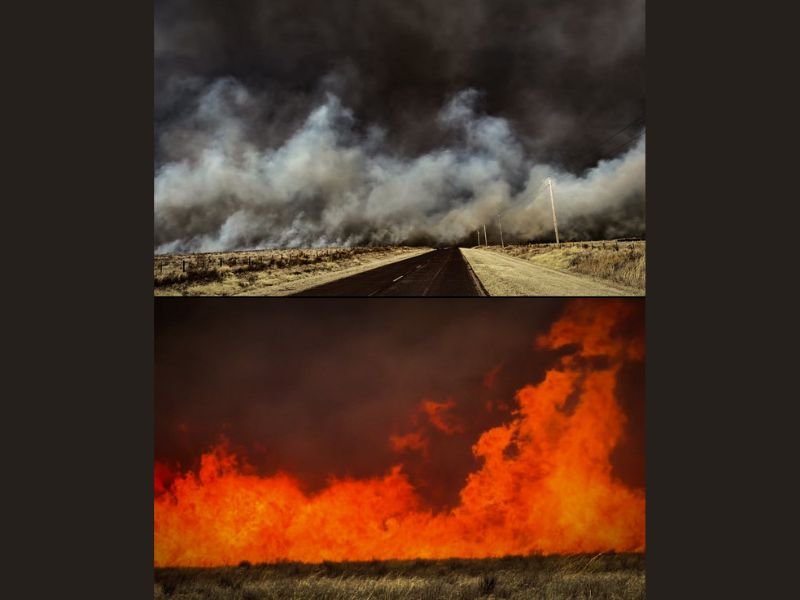
Images from the scene show intense flame walls stretching across dry grasslands, with dark smoke plumes rising high above rural roadways. One scene captures a roadway disappearing into dense smoke, underscoring the reduced visibility and hazardous driving conditions near the fire zone.
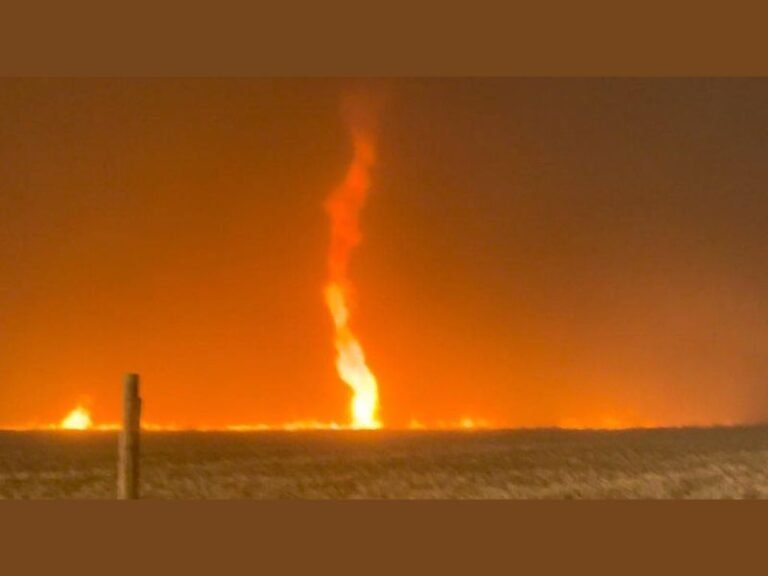
The wildfire appears to be fueled by dry vegetation and open terrain typical of the Panhandle. Flames were observed advancing rapidly across fields, with orange fire lines visible along the horizon.
Farmers and Firefighters Work to Protect Livestock and Property
Multiple scenes depict farm equipment operating in smoky fields, likely assisting in fire breaks or defensive measures to protect crops and livestock. In rural wildfire events, local farmers often use tractors and plows to create containment lines ahead of advancing flames.
Emergency vehicles, including sheriff’s units and fire apparatus, were positioned near affected areas as crews worked to control the spread. Firefighters were seen staging equipment along open roadways while monitoring shifting smoke and flame behavior.
The coordinated response highlights the urgency of protecting lives, homes, barns, and livestock, especially in agricultural regions where fast-moving grass fires can overrun property in minutes.
Rapid Fire Spread Across Open Panhandle Terrain
The Oklahoma Panhandle’s flat, open landscape can allow wildfires to spread quickly when winds increase. Grassland fuels ignite easily and can carry fire long distances under the right conditions.
Photos show flame fronts racing low across fields while smoke thickens overhead, a visual indicator of strong heat release and active fire behavior. Rural highways cutting through the affected area were partially engulfed in smoke, suggesting rapidly changing conditions. While official damage assessments were not immediately available, the scenes indicate a significant fire footprint east of Hooker.
Community Impact and Ongoing Concerns
The emotional toll of wildfire events in rural communities can be substantial. Many residents rely on land, livestock, and farming operations for their livelihood, making wildfire threats especially devastating. Fire crews and local responders continued efforts to contain the blaze as smoke lingered across the region. As with many grassland fires, conditions can shift quickly depending on wind speed and direction.
Residents in the Oklahoma Panhandle should remain alert for updated guidance from local emergency management officials and avoid traveling through active smoke zones. If you are in or near the affected areas east of Hooker, share updates and observations with CabarrusWeekly.com as we continue to monitor wildfire conditions and community impacts.