Texas, Oklahoma, Kansas, Nebraska See Massive Temperature Anomalies as Heat Surges Into Canada and Arctic
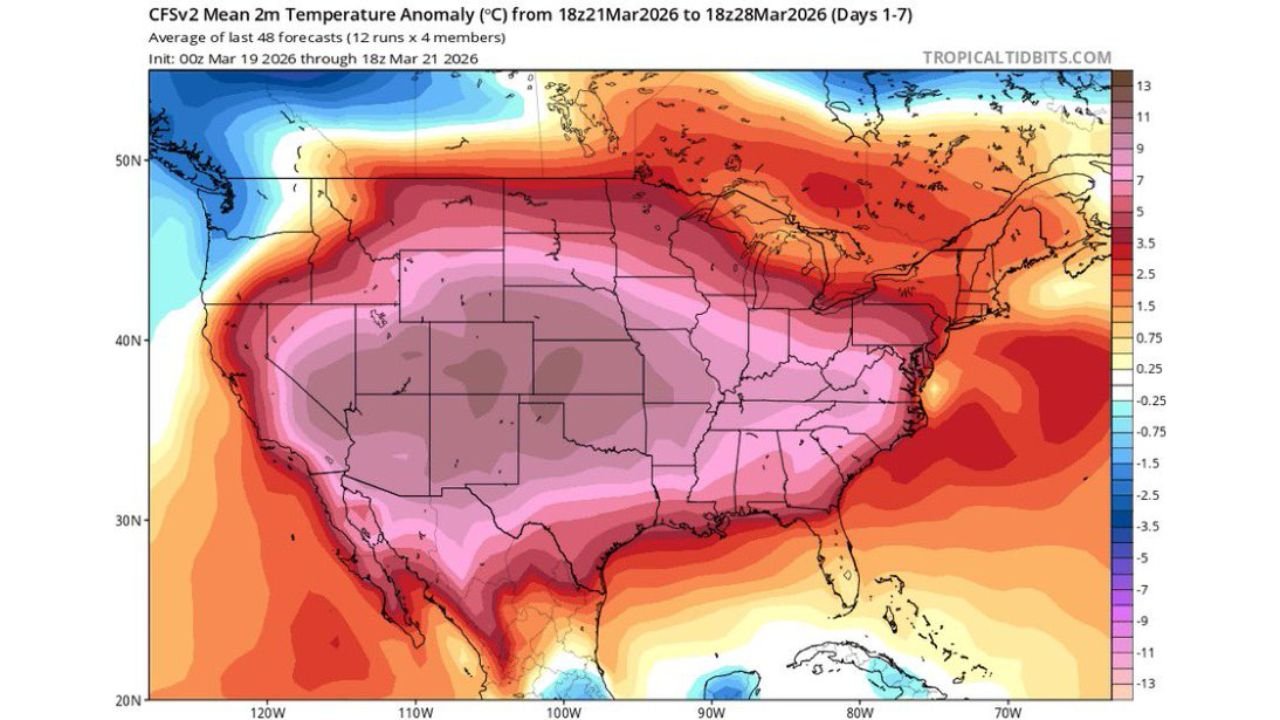
UNITED STATES — A powerful and unusually widespread warm pattern is taking over large parts of the country, with forecast data showing significant temperature anomalies centered across Texas, Oklahoma, Kansas, and Nebraska, while the warmth expands northward into Canada and even the Arctic.
This is not a localized event — it is a continent-wide anomaly pattern that highlights a major atmospheric shift heading into late March.
Central U.S. Becomes the Core of the Warm Anomaly
The most intense heat anomalies are focused across:
- Texas
- Oklahoma
- Kansas
- Nebraska
These regions are seeing temperatures running well above seasonal averages, with some areas pushing into 10 to 20+ degrees above normal.
The data clearly shows a large dome of warmth centered over the Plains, signaling a strong upper-level ridge dominating the pattern.
Warmth Spreads Into the Midwest and Southeast
Beyond the Plains, the anomaly expands outward:
- Warmer-than-normal conditions extend into the Midwest, including parts of Missouri, Iowa, and Illinois
- The pattern also stretches toward the Southeast, impacting states like Arkansas, Louisiana, Mississippi, Alabama, and Georgia
While the intensity may decrease slightly outside the core, the overall footprint of warmth remains extensive.
Significant Northward Push Into Canada
One of the most notable aspects of this setup is how far north the warmth is reaching:
- Large parts of southern Canada, including Ontario and Quebec, are experiencing above-normal temperatures
- The anomaly continues deeper into central Canada, showing the strength and reach of this pattern
This kind of northward expansion is a key indicator of a strong and amplified atmospheric regime.
Arctic Regions Show Strong Warming Signals
The anomaly maps also highlight exceptional warming across the Arctic:
- Widespread positive anomalies dominate Arctic regions
- Temperatures are running significantly above average for this time of year
This reinforces ongoing concerns about rapid warming in high-latitude regions, which can influence global weather patterns.
Global Pattern Reflects Broader Warming Trend
Looking beyond North America:
- Much of the Northern Hemisphere is experiencing above-normal temperatures
- Europe and Asia also show widespread warm anomalies
- Cooler regions are limited and scattered
This indicates that the current pattern is part of a larger-scale atmospheric shift, not just a regional event.
Why This Level of Warmth Raises Concerns
While warmer weather may seem beneficial in the short term, this kind of anomaly can have serious impacts:
- Early vegetation growth, increasing vulnerability to late-season cold snaps
- Stress on soil ecosystems, affecting nutrient cycles
- Wildlife disruptions, particularly in migration and breeding cycles
- Increased instability potential, setting the stage for active spring weather
Such patterns can lead to imbalances that ripple across ecosystems and weather systems alike.
What to Watch Next
As this warm regime continues:
- The interaction between warmth and incoming weather systems could fuel severe weather outbreaks
- Shifts in the jet stream may lead to rapid pattern changes, including sharp cool-downs or storm development
For now, the central U.S. — especially Texas, Oklahoma, Kansas, and Nebraska — remains at the heart of this expanding and impactful temperature anomaly event.
Stay with CabarrusWeekly.com for continued coverage as this evolving weather pattern develops across the United States and beyond.