Explosive March Heat Wave Peaks Across Texas, Oklahoma, Kansas and California With 100°F Readings and Widespread Record High Threat
NORTH CAROLINA — A massive early spring heat wave is now peaking across the United States, delivering unusually intense temperatures from the Southwest through the Plains and into parts of the East.
100°F Heat Surges Into Texas and Oklahoma
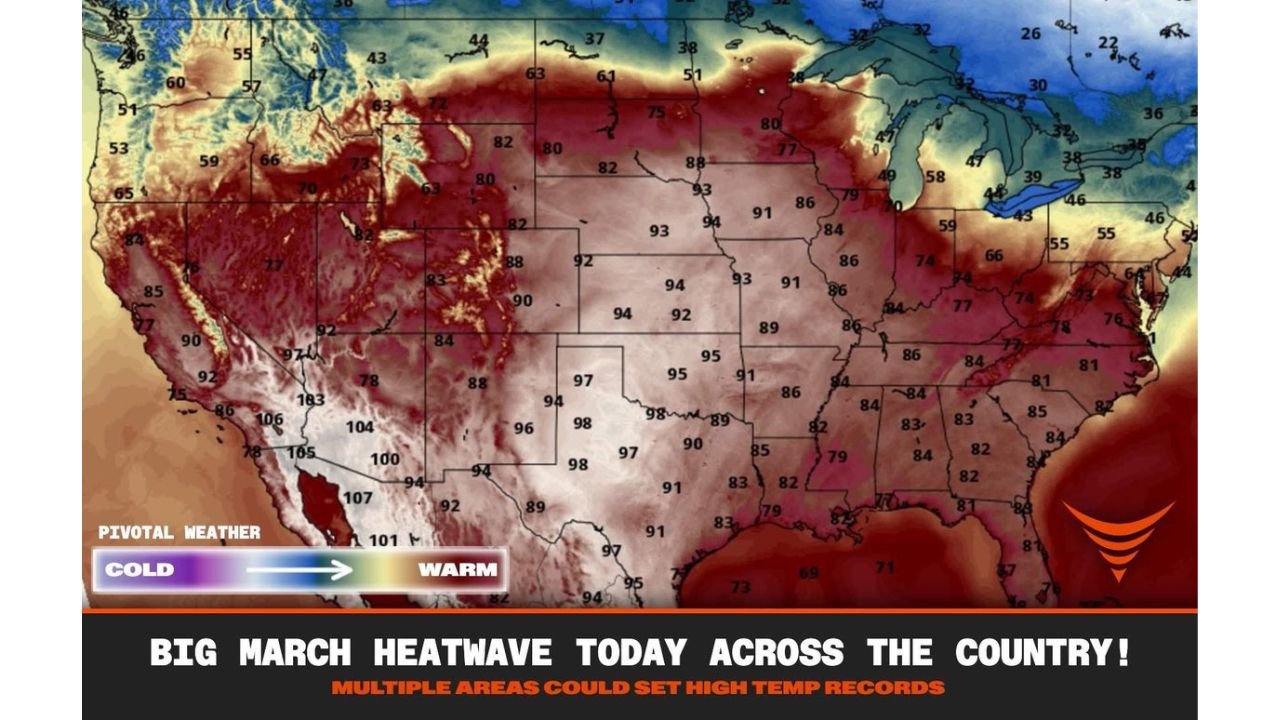
The most striking part of this event is unfolding across Texas and Oklahoma, where temperatures are pushing into the upper 90s and even near or above 100°F. Areas from Oklahoma City into western Oklahoma and the Texas Panhandle are at the center of this extreme heat zone.
This level of heat is highly unusual for March and represents conditions more typical of early summer. The presence of dry air and strong sunshine is allowing temperatures to rise rapidly during the day, increasing the intensity of the heat.
Plains and Central U.S. Locked in Widespread 90s
A large portion of the central United States, including Kansas, Nebraska, Colorado, and parts of South Dakota, is seeing widespread highs in the 90s.
Temperature anomaly data shows these areas running 25 to 40 degrees above normal, highlighting just how extreme this pattern is for late March. The heat is expansive, covering thousands of miles with very little interruption.
This broad coverage is one of the defining features of the event, as it is not limited to isolated hotspots but instead affects an entire region simultaneously.
Southwest Continues to Bake Under Persistent Heat Dome
The heat dome remains firmly anchored over the Southwest, including California, Arizona, Nevada, and Utah, where temperatures are consistently reaching the 90s and low 100s.
Parts of southern California and Arizona are seeing readings exceed 100°F, reinforcing the intensity and persistence of this pattern. The terrain and dry conditions in these regions are amplifying the heat, making it even more extreme.
Midwest and Southeast Experience Significant Warmth
The heat extends eastward into the Midwest and Southeast, where temperatures are climbing into the 80s and upper 80s across states such as Missouri, Illinois, Arkansas, Tennessee, Alabama, Georgia, and the Carolinas.
Even though these regions are not reaching triple digits, the temperatures remain well above seasonal averages, contributing to a nationwide warm anomaly.
North Carolina is experiencing above-normal warmth, with highs trending into the 80s, signaling a noticeable shift toward early spring heat.
Northern Tier Remains Cooler but Surrounded by Heat
Cooler air is still present across parts of the Upper Midwest, Great Lakes, and northern New England, where temperatures remain in the 40s and 50s.
However, this cooler zone is relatively limited and surrounded by much warmer conditions to the south and west, emphasizing how dominant the heat pattern has become across the country.
Record Highs Likely Across Multiple Regions
With temperatures reaching extreme levels across such a large area, multiple locations are expected to set or tie record highs.
Forecasters note that this could be one of the most widespread March heat events in recent years, with impacts ranging from increased energy demand to early-season stress on agriculture and water resources.
Additionally, the dry nature of the heat across the Plains may worsen existing drought conditions, particularly in areas already experiencing limited rainfall.
A Rare and Powerful Early Season Heat Event
This heat wave stands out not only for its intensity but also for its scale and timing. March typically represents a transition period, but this event is accelerating seasonal conditions dramatically.
The combination of a strong upper-level ridge, dry air, and clear skies has created an environment capable of sustaining prolonged and record-breaking heat across multiple regions simultaneously.
As the pattern begins to evolve after the weekend, some moderation is expected, but the impact of this event will likely be remembered as one of the most notable early spring heat waves in recent memory.
Stay with CabarrusWeekly.com for continued updates on this developing weather pattern. If you are experiencing unusually high temperatures in your area, share your conditions with the CabarrusWeekly.com community.