Arkansas Drought Crisis Deepens as Nearly 93 Percent of State Falls Into Severe to Exceptional Conditions With 25 Inches of Rain Needed
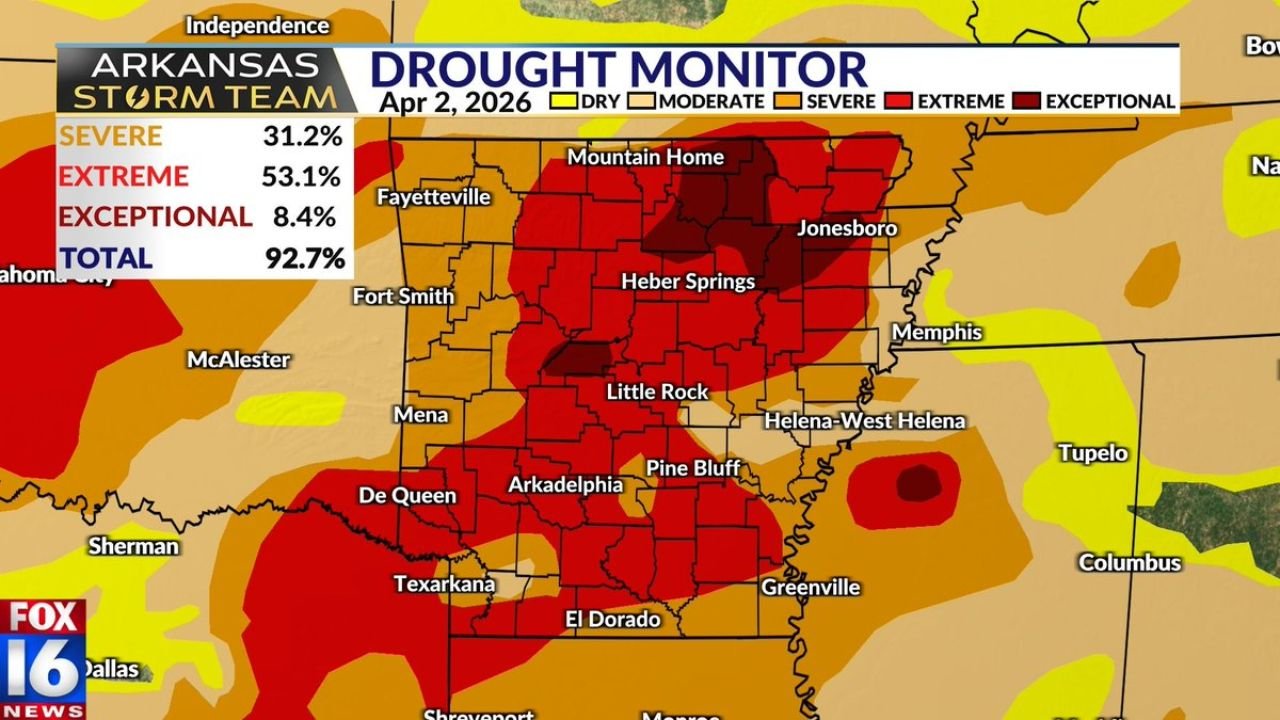
ARKANSAS — Drought conditions have rapidly intensified across the state, with nearly 93 percent of Arkansas now classified under severe to exceptional drought levels following another week of limited rainfall.
Drought Coverage Expands Across Nearly Entire State
Latest monitoring data shows a dramatic increase in drought coverage, rising from roughly 75 percent to over 92 percent of the state now impacted by severe, extreme, or exceptional drought conditions.
Large portions of central, southern, and northeastern Arkansas — including areas near Little Rock, Pine Bluff, Jonesboro, and El Dorado — are now experiencing the highest levels of drought intensity, with widespread red and dark red indicators covering much of the map.
Extreme and Exceptional Drought Taking Hold
Within the broader drought footprint, a significant portion of the state is now categorized under extreme and exceptional drought, the most serious classifications.
These conditions indicate major moisture deficits, stressed vegetation, and increasing strain on water resources, especially as dry weather persists without meaningful rainfall events.
Recovery Requires Significant Rainfall Totals
Forecast projections highlight just how severe the moisture deficit has become. To return to more normal conditions, Arkansas would need approximately 20 to 25 inches of rainfall over the next three months, with some southern areas requiring even higher totals exceeding 25 inches.
This level of rainfall is far above typical short-term expectations, underscoring how deeply entrenched the drought has become across the region.
Dry Pattern Raises Concerns for Summer Heat
The persistence of dry soil conditions may also have longer-term impacts. With limited moisture in the ground, there is an increased likelihood that heat will build more efficiently heading into summer, potentially leading to hotter-than-normal conditions across Arkansas in the coming months.
Dry soils tend to amplify heat, as less energy is used for evaporation and more is retained as surface warming.
Limited Rainfall So Far Keeps Conditions Worsening
Despite occasional rain chances, many areas across Arkansas have failed to receive consistent or accumulating rainfall, allowing drought conditions to expand rapidly week over week.
The lack of widespread, soaking precipitation has been a key factor driving the sharp increase in drought severity across the state.
As Arkansas continues to face worsening drought conditions, residents are encouraged to conserve water where possible and stay updated on changing forecasts.
If you’re seeing impacts from drought in your area, including dry fields or water concerns, share your experience with CabarrusWeekly.com to help highlight conditions across the state.