North Carolina, South Carolina and Southeast Face Worsening Drought as Charlotte Region Sees No Rain for 10+ Days With Extreme Deficits Growing
CHARLOTTE, NORTH CAROLINA — Drought conditions are rapidly intensifying across North Carolina, South Carolina, and the broader Southeast, as a dangerous combination of prolonged heat and a complete lack of rainfall over the next 7 to 10 days continues to dry out soils and worsen conditions across the region.
Drought Expanding Across the Carolinas
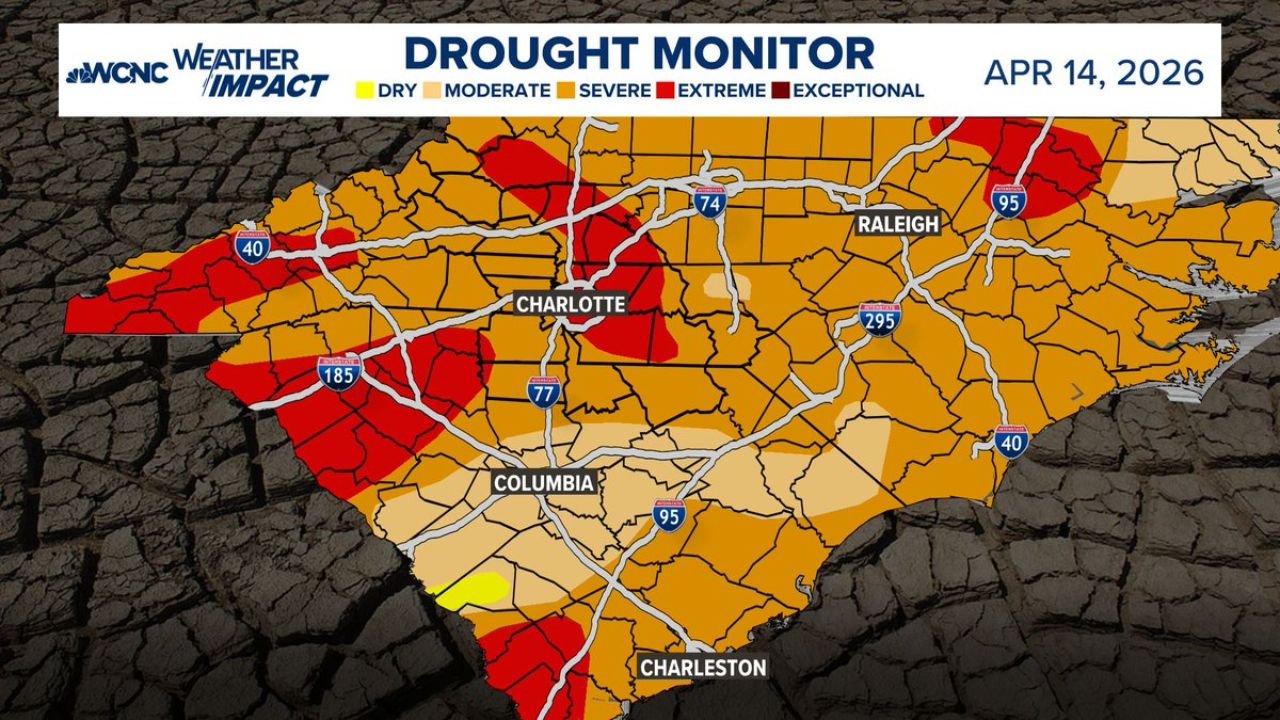
The latest drought monitor data shows a widespread coverage of moderate to severe drought, with pockets of extreme drought developing across parts of western and central North Carolina and northern South Carolina.
Key areas impacted include:
- Charlotte metro and surrounding counties
- Columbia and central South Carolina
- Raleigh and much of eastern North Carolina
- Charleston and coastal South Carolina
Large portions of the region are now firmly in severe (D2) to extreme (D3) drought categories, with conditions continuing to deteriorate due to the lack of meaningful rainfall.
No Rain in Sight Making Conditions Worse
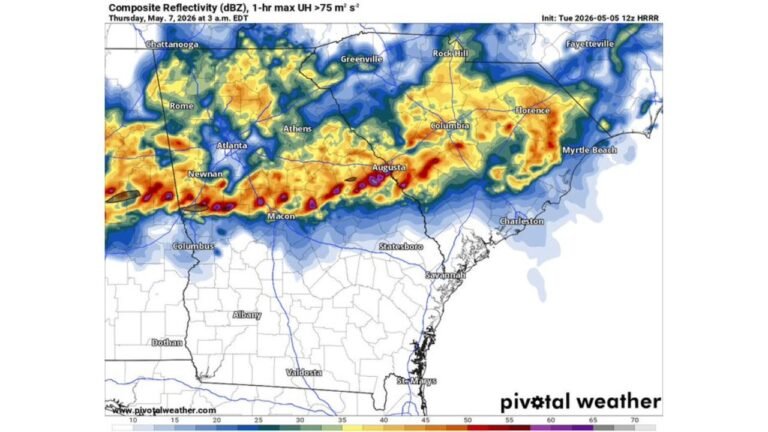
Forecast trends indicate little to no rainfall expected over the next 7 to 10 days, a critical period as the spring growing season is already underway.
This means:
- Soil moisture will continue to drop
- Agricultural stress will increase
- Fire danger may gradually rise
- Water deficits will deepen further
Without any significant pattern change in the short term, drought conditions are expected to expand and intensify daily across the region.
Charlotte Area Facing Major Rainfall Deficits
The Charlotte region highlights just how severe the situation is becoming.
Estimated rainfall needed to eliminate drought conditions:
- Charlotte:
- 12.34 inches needed in 1 month
- 19.22 inches needed over 3 months
- Statesville:
- 9.91 inches (1 month)
- 17.44 inches (3 months)
- Morganton:
- 13.35 inches (1 month)
- 21.32 inches (3 months)
- Boone:
- 9.85 inches (1 month)
- 17.59 inches (3 months)
These numbers show that even multiple rounds of rain would be needed to reverse current conditions, not just a single storm system.
Long-Term Rain Deficits Continue to Add Up
Looking at the past 12 months, rainfall trends in Charlotte reveal a pattern of persistent dryness, especially in recent months.
Notable deficits include:
- February: nearly -2 inches
- March: around -2.60 inches
- April: already running below normal
While a few months like May and August previously showed surplus rainfall, the overall trend has shifted back toward dryness, contributing to the current drought expansion.
Why This Drought Is Becoming More Concerning
Several factors are combining to accelerate drought conditions:
- Above-average temperatures increasing evaporation
- Lack of incoming storm systems
- High pressure dominating the Southeast weather pattern
- Growing season demand increasing water usage
This combination creates a feedback loop where dry soils heat faster, leading to even less moisture retention and worsening drought conditions.
When Could Relief Arrive
At this point, no meaningful rainfall is expected in the next 1 to 2 weeks, and any potential drought relief would likely require:
- A major pattern shift
- Multiple widespread rain events
- Sustained precipitation over several weeks
Until that happens, drought conditions are expected to continue expanding across North Carolina, South Carolina, and nearby states.
Bottom Line
The Southeast, especially the Carolinas and Charlotte region, is entering a critical drought phase, with no rain in sight and major deficits already in place. With double-digit inches of rainfall needed to recover, the situation will not improve quickly, and impacts will continue to grow through the coming weeks.
Stay with CabarrusWeekly.com for ongoing updates as this developing drought situation continues to evolve.