California, Arizona and Nevada See Winter Heat Surge While Australia’s Outback Bakes in Summer as Global Temperature Contrast Sharpens
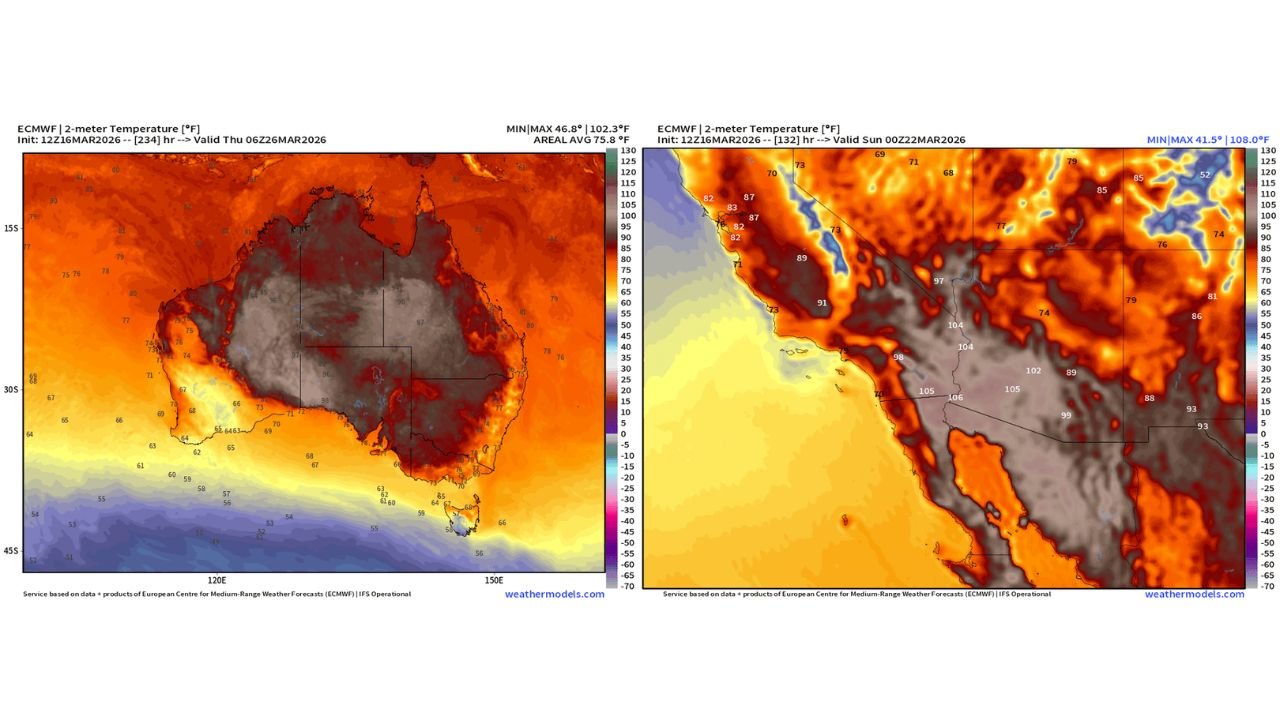
UNITED STATES — A striking global weather contrast is unfolding, with intense heat building across parts of the western United States including California, Arizona, and Nevada, while Australia’s Outback remains locked in peak summer conditions.
The side-by-side comparison highlights how dramatically seasons can differ across the globe at the same time, with North America still transitioning through late winter patterns while Australia experiences extreme summer heat.
Western United States Warming Rapidly Despite Late Winter Timing
Across the Southwest United States, temperatures are climbing well above typical late-March levels, particularly in:
- California’s interior valleys
- Arizona deserts including Phoenix
- Southern Nevada including Las Vegas
Forecast data shows widespread readings pushing into the 90s and even exceeding 100°F in some desert regions, signaling an early-season heat surge.
This warming trend is being driven by a stable weather pattern that is allowing heat to build across the region without significant interruption.
Desert Regions Lead the Heat With Triple-Digit Temperatures
The most intense heat is centered over the Sonoran Desert, spanning:
- Southern Arizona
- Southeastern California
- Northern Mexico
In these areas, temperatures are projected to reach between 100°F and 108°F, marking one of the hottest periods so far this year.
Even surrounding regions, including parts of New Mexico and inland California, are seeing temperatures rise into the 80s and 90s, well above seasonal averages.
Australia’s Outback Remains Under Intense Summer Heat
At the same time, Australia’s interior regions, particularly the Outback, are experiencing extreme summer heat conditions.
Large portions of central Australia are seeing temperatures in the mid-90s to near 100°F range, with some locations exceeding those values during peak daytime heating.
Coastal regions remain slightly cooler, but the inland heat remains widespread and persistent across the continent.
Global Seasonal Contrast Becomes More Apparent
This simultaneous pattern highlights the seasonal divide:
- Australia is nearing the end of summer, with intense heat still dominating inland regions
- The United States is transitioning from winter to spring, yet already seeing significant heat build in the Southwest
The contrast is especially visible when comparing the deep heat across Australia’s interior with the rapid warming underway across the deserts of the western U.S.
What This Means for the Coming Weeks
The warming trend across the western United States suggests that early-season heat events may become more frequent as spring progresses.
Meanwhile, the broader global pattern reflects how different regions can experience extreme weather simultaneously, even under opposite seasonal cycles.
For North Carolina and the Southeast, this pattern has limited immediate impact, but it signals larger atmospheric shifts that can influence future weather trends across the country.
Stay with CabarrusWeekly.com for continued updates on major weather developments across the United States and beyond.