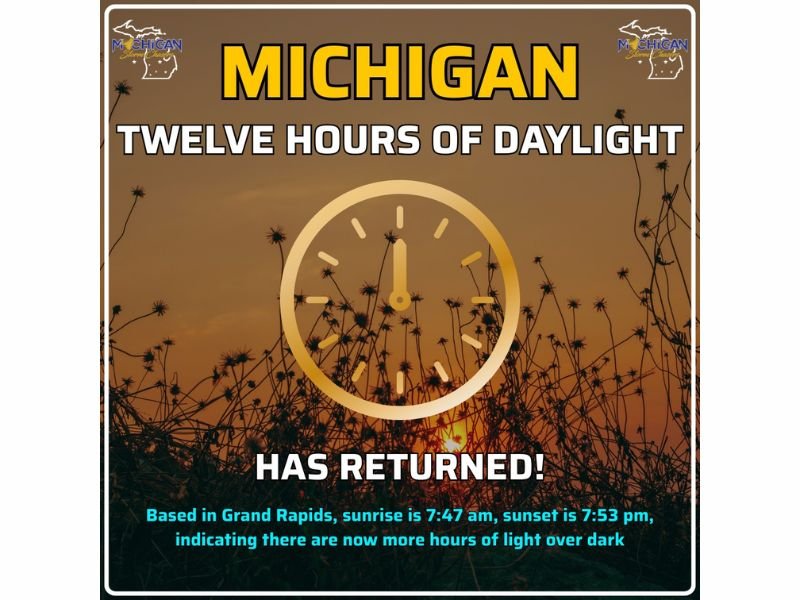
Michigan Reaches 12+ Hours of Daylight in Grand Rapids as Longer Days Signal Spring Shift Across the United States
MICHIGAN — A clear seasonal milestone has been reached as daylight hours now exceed nighttime across parts of the United States, signaling a strong transition into spring.
Grand Rapids Crosses the 12-Hour Daylight Mark
As of March 19, 2026, locations like Grand Rapids, Michigan are now experiencing more than 12 hours of daylight, a key indicator that spring is firmly taking hold.
Sunrise in Grand Rapids occurred at 7:47 AM EDT, while sunset is set for 7:53 PM EDT, giving the region a noticeable shift toward longer, brighter days. This marks the point where daylight officially overtakes darkness, a change many residents eagerly anticipate after winter.
What This Means for the Months Ahead
This increase in daylight is not just temporary. The region will now continue to see extended daylight hours lasting through at least September, meaning progressively longer evenings and earlier sunrises as spring transitions into summer.
The growing daylight is driven by the Earth’s tilt and orbit, which allows the Northern Hemisphere to receive more direct sunlight during this time of year.
Seasonal Shift Impacts Daily Life
With more daylight available, residents across Michigan and surrounding states can expect noticeable changes in daily routines and outdoor activity levels.
Longer days often bring increased opportunities for outdoor recreation, travel, and evening activities. It can also influence agriculture, gardening, and even energy usage patterns as reliance on artificial lighting decreases.
A Broader Signal of Spring Across the U.S.
While this milestone is highlighted in Michigan, the same trend is unfolding across much of the United States. Regions across the Midwest, Northeast, and even the Southeast—including North Carolina—are experiencing steadily increasing daylight hours. This transition is one of the clearest natural signals that winter is fading and a more active weather season is beginning.
Looking Ahead to Peak Summer Daylight
As the calendar moves closer to June, daylight hours will continue to increase, eventually reaching their peak around the summer solstice. At that point, many northern states will experience their longest days of the year, with significantly extended evening daylight.
As noted in the seasonal outlook , this shift toward longer days plays a key role in shaping weather patterns, temperatures, and overall seasonal transitions.
North Carolina Also Seeing Longer Days
For North Carolina, this means a steady increase in daylight as well, with longer evenings and improving outdoor conditions becoming more noticeable each week.
While not as far north as Michigan, the state is still benefiting from the same seasonal progression, bringing more sunlight and warmer conditions as spring advances. Stay connected with CabarrusWeekly.com for more updates on seasonal changes, weather trends, and what to expect as we move deeper into spring.