58 Percent of Florida Counties Under Burn Ban as 39 of 67 Counties Face Critical Wildfire Danger as of April 22
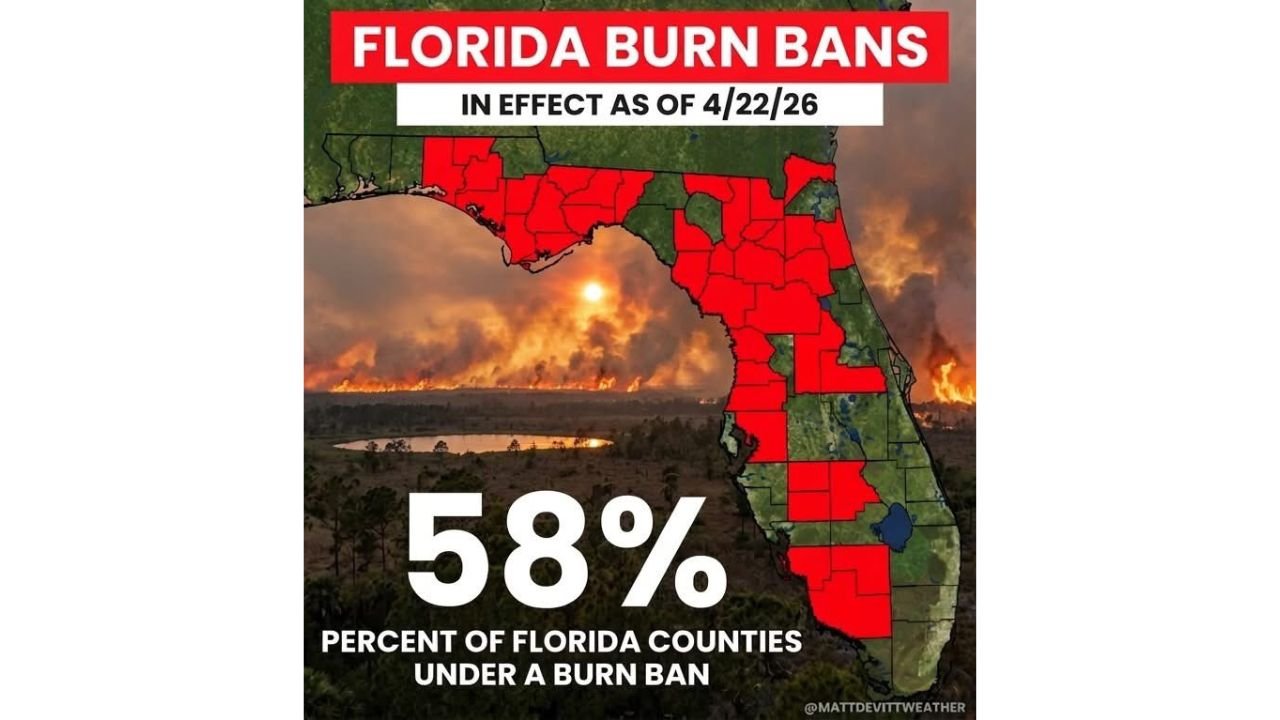
FLORIDA — A wildfire crisis is tightening its grip across the Sunshine State, with 39 out of 67 Florida counties — 58 percent of the entire state — now operating under active burn bans as of April 22, 2026, as drought-fueled fire danger reaches critical levels from the Panhandle through Central Florida and deep into the southwest peninsula.
Burn Bans Blanket More Than Half the State
The burn ban footprint as of April 22 is sweeping and alarming. Active bans stretch across the Panhandle and cut southward through North Central Florida, with the heaviest concentration of red counties forming a near-continuous band from the upper Gulf Coast through the Central Florida corridor and into the Southwest Florida peninsula. The sheer breadth of the ban coverage — covering 58 percent of all Florida counties — reflects just how widespread and severe the drought and fire danger conditions have become across the state.
With 39 counties under active restrictions, Florida is experiencing one of its most significant wildfire risk periods in recent spring seasons, driven by months of well-below-normal rainfall across large portions of the state.
Three Critical Behaviors That Can Spark a Wildfire
With burn bans in effect across more than half the state, authorities are emphasizing three specific behaviors that residents must avoid immediately:
Outdoor burning of any kind is prohibited in all ban counties — including yard debris, trash, and agricultural burns. Parking on dry grass poses a serious and often overlooked ignition risk, as hot vehicle exhaust systems can ignite dry vegetation underneath a parked car within seconds. Improper cigarette disposal — including tossing cigarettes from vehicles or onto dry ground — is another leading cause of wildfire ignition during extreme dry conditions.
| Prohibited Behavior | Why It Matters |
|---|---|
| Outdoor burning | Direct ignition source in dry vegetation |
| Parking on dry grass | Hot exhaust can ignite grass within seconds |
| Improper cigarette disposal | Leading cause of roadside and wildland fire starts |
Drought Conditions Fueling the Crisis
The underlying driver of Florida’s expanding burn ban coverage is an extended and significant drought that has gripped large portions of the state through the spring of 2026. Critically low soil moisture, dried-out vegetation, and low relative humidity across the affected counties have created tinderbox conditions where a single ignition source can rapidly escalate into a dangerous and fast-moving wildfire.
Until meaningful and widespread rainfall returns to break the drought pattern across Florida, burn ban conditions are expected to remain in place or potentially expand across additional counties.
Stay with CabarrusWeekly.com for live burn ban and wildfire risk updates across Florida.