Wind Chill Map Shows a Brutal East-Coast Cold Shot Thursday, With Cabarrus County Stuck in the Low-20s “Feels-Like” Range
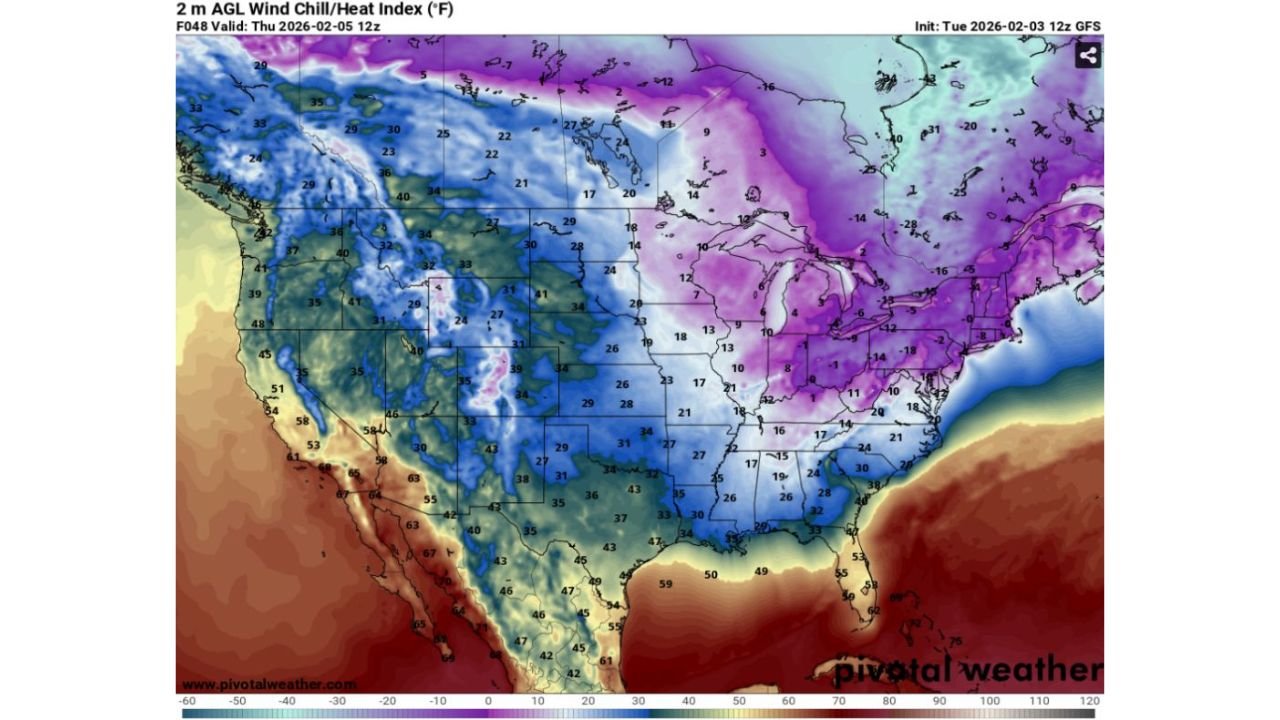
NORTH CAROLINA — A nationwide wind chill projection for Thursday morning (Feb. 5) highlights just how sharply the cold air is pressing across the eastern half of the country—and while the most extreme values are focused from the Great Lakes into the Northeast, the Carolinas are still squarely in the uncomfortable zone. For Cabarrus County and the greater Charlotte-region corridor, the map signals wind chills in the low 20s at the coldest part of the morning, with even colder “feels-like” readings not far to the north and west.
What the Map Is Showing
This is a wind chill/heat index display—meaning it’s focused on how cold it feels when wind is factored in, not just the air temperature alone. The timestamp on the graphic points to Thursday morning, when cold air is typically most effective and winds can turn a cold start into something that feels biting and raw.
In plain terms: even if the thermometer says “upper 20s,” a steady breeze can knock the “feels-like” number down into the low 20s—and that’s where the Cabarrus County region appears to land on this setup.
Cabarrus County’s Window: Low-20s Wind Chills at Daybreak
For North Carolina, the map places much of the Piedmont and areas near the NC/SC line in the low-to-mid 20s for wind chills during the Thursday morning window. That’s not the kind of cold that usually makes national headlines—but it is the kind of cold that hits hard if you’re outside early, waiting on a bus, scraping frost off a windshield, or working outdoors.
In practical terms for Cabarrus County, the most likely impacts include:
- A sharp, stinging chill during the commute window
- Fast cooling on exposed skin when winds pick up
- Higher risk of slick spots if any moisture is around on bridges and shaded roads
- Greater strain on heating systems during the early-morning hours
Why the East Looks “Targeted” on This Setup
The reason this pattern feels so intense is because the coldest air is concentrated over a massive portion of the eastern U.S. at once. On the same map, wind chills plunge far below freezing across the Great Lakes and into the Northeast, where readings appear to drop into single digits, zero, and below zero—and in some areas, far below that.
That matters because when the core of the cold is that strong up north, the Carolinas often sit on the southern edge of the same air mass. The cold relaxes as you go south, but the chill can still be significant—especially when winds stay up through the morning.
The Bigger Picture: Brutal Cold Up North, Chilly But Manageable Here
One thing the map makes clear: North Carolina is not in the worst of it, but we’re also not escaping it.
While Cabarrus County is dealing with a low-20s “feels-like” morning, the most dangerous cold is focused farther north where wind chills drop into negative territory. That’s when frostbite concerns ramp up quickly and even short outdoor exposure can become risky.
For Cabarrus County readers, the key takeaway is that this is more of a high-impact comfort and safety morning than a “life-threatening cold” situation—unless you’re outdoors for long stretches.
What to Do If You’re Out Early Thursday
A low-20s wind chill is the kind of cold that can sneak up on you, especially if you step outside thinking, “It’s North Carolina—how bad can it be?” A few small steps make a real difference:
- Dress for the wind, not just the temperature (a wind-blocking outer layer helps)
- Cover hands and ears if you’ll be outside more than a few minutes
- Warm up your car safely (never in a closed garage) and allow extra time for frost
- Check on pets and limit time outside early in the morning
- Watch bridges and overpasses if you’re driving before sunrise
What We’ll Be Watching Next for Cabarrus County
The most important detail moving forward is whether the wind stays active when the cold is at its peak. A calm, cold morning can feel tolerable. A breezy, cold morning can feel downright harsh—even if the actual temperature doesn’t look extreme on paper.
CabarrusWeekly.com will keep tracking whether the coldest air pushes deeper into North Carolina and how long the wind chill stays locked in through the morning commute. If you’re noticing unusually sharp cold, frozen outdoor pipes, or slick early-morning roads in your part of Cabarrus County, share what you’re seeing—local reports help everyone plan smarter.