New Power Outage Severity Index Reveals Ice Storms Cause More Damaging Outages Than Thunderstorms With Michigan Hitting Level 5 During the March 15 to 22, 2026 Winter Storm Event
UNITED STATES — A new Power Outage Severity Index is changing how meteorologists, utilities, and emergency managers evaluate storm damage, with a critical finding that challenges conventional thinking: peak outage numbers are overrated. According to the research, it is outage duration, not peak customer counts, that determines how truly devastating a power outage event is. The index further reveals that ice storms consistently cause more severe power outages than thunderstorm-forced events.
Why Duration Matters More Than Peak Numbers
Traditional power outage reporting focuses on the peak number of customers without power at any single moment during a storm. But this metric misses the full picture. A thunderstorm might knock out power to 500,000 customers for two hours while an ice storm knocks out power to 150,000 customers for nine days. The Outage Severity Index captures this distinction by factoring in how long customers remain without power, giving a more accurate representation of the true human and economic impact of each event.
March 15 to 22, 2026: The Event That Defines the Index
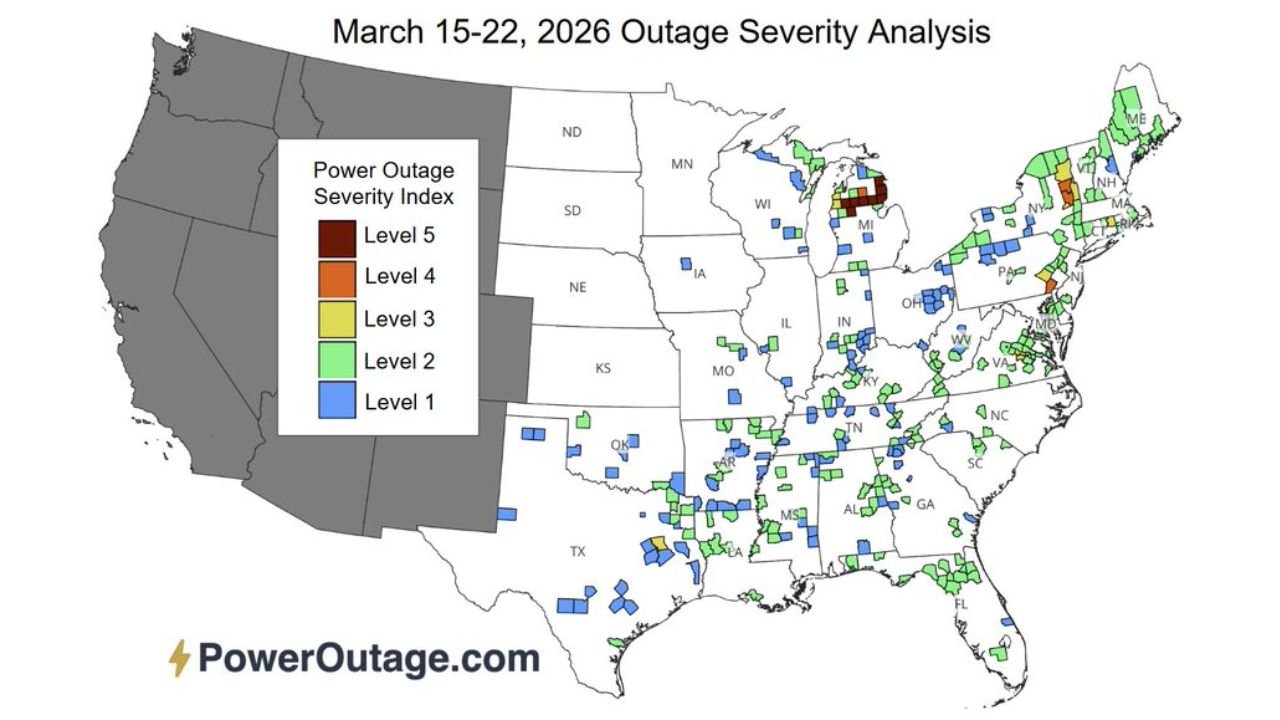
The March 15 through 22, 2026 winter storm event serves as a clear demonstration of the index in action. The severity analysis map shows:
| Severity Level | Areas Affected |
|---|---|
| Level 5 (Most Severe) | Michigan |
| Level 4 | Vermont, New Hampshire, and portions of the Gulf Coast |
| Level 2 | Wisconsin, Indiana, Ohio, Kentucky, Tennessee, Virginia, Maryland, New York, New England, Mississippi, Alabama, Georgia |
| Level 1 | Widespread across the broader eastern United States |
Michigan recorded the highest Level 5 severity rating during this event, reflecting not just the number of customers who lost power but the extended duration over which those customers remained without electricity during the winter storm.
Ice Storms vs. Thunderstorms: A Critical Distinction
The research behind the Outage Severity Index shows a consistent and important pattern. While thunderstorms can produce dramatic peak outage numbers, power restoration after thunderstorm events typically happens within hours to a day. Ice storms, by contrast, coat power lines, transformers, and trees with heavy ice that takes days to clear, delaying restoration efforts and leaving customers without heat, refrigeration, and communication for extended and potentially dangerous periods.
This distinction has major implications for emergency preparedness, as communities in ice storm-prone regions of the Midwest, Great Lakes, and Northeast may need significantly longer-duration backup power and emergency supplies than communities in thunderstorm-prone regions.
Stay with CabarrusWeekly.com for continued coverage of weather research and preparedness information affecting communities across the United States.