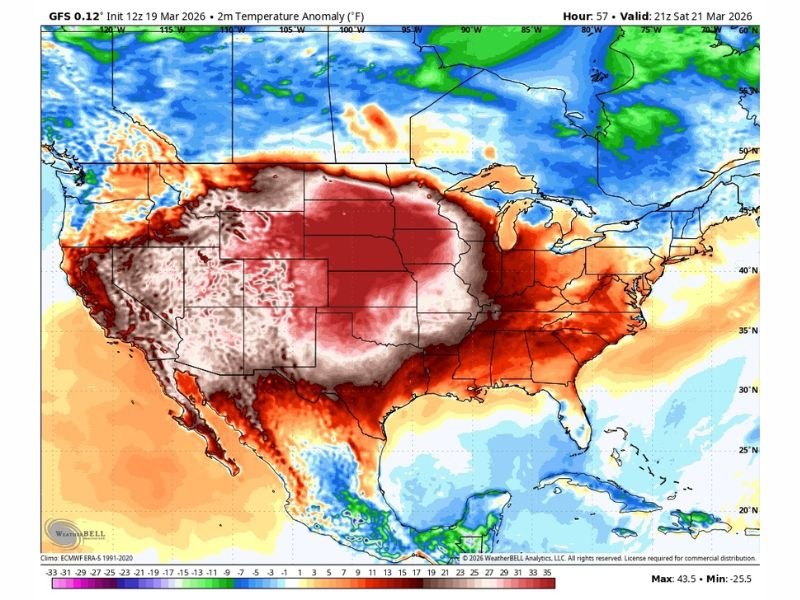
Texas, Oklahoma, Kansas, Nebraska, Missouri, Arkansas, Louisiana Facing Record-Breaking March Heat Surge as Mid-Summer Temperatures Explode Across Central and Eastern U.S.
NORTH CAROLINA — An unusually intense and widespread heat surge is building across the United States, with millions expected to experience temperatures more typical of mid-summer rather than March.
Massive Heat Dome Expanding Across the Central and Eastern U.S.
Latest forecast models show a powerful and expansive heat dome developing over the central United States, rapidly spreading eastward into the Mississippi Valley, Southeast, and parts of the Mid-Atlantic.
Temperature anomaly maps indicate extreme departures from normal, with some areas running 25 to 40 degrees above average. This level of warmth is highly unusual for March and signals a major pattern shift across the country.
States in the Core of the Extreme Heat Zone
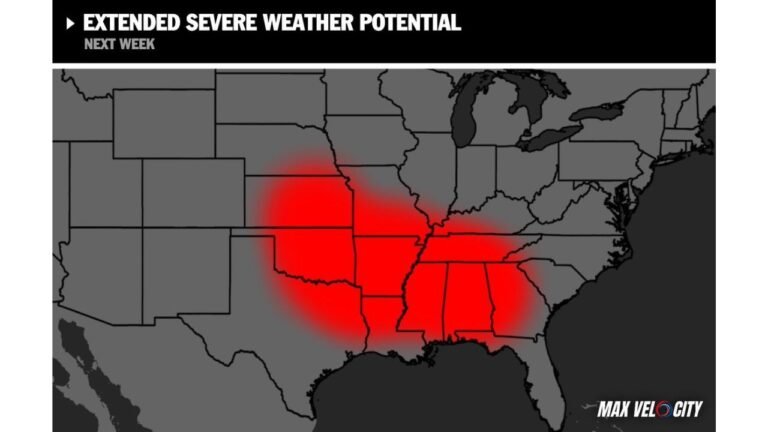
The most intense heat is expected to impact a broad region stretching from the Plains into the Southeast. This includes Texas, Oklahoma, Kansas, Nebraska, Missouri, Arkansas, Louisiana, Mississippi, Alabama, Georgia, Tennessee, Kentucky, and North Carolina.
In these areas, temperatures could surge into summer-like levels, with some locations potentially approaching or exceeding daily record highs. The combination of strong sunshine, warm air advection, and a stable upper-level pattern is fueling this rapid warming.
Why This March Heat Event Is So Unusual
March typically brings transitional weather, but this setup is far from normal. The atmosphere is aligning in a way that allows intense heat to build and persist over a large portion of the country.
The presence of a strong ridge of high pressure is effectively trapping warm air, creating what meteorologists often refer to as a heat dome. This setup suppresses cloud formation and allows temperatures to climb rapidly day after day.
Midwest and Northern Areas Near the Temperature Gradient
While the central and southern states bake under this heat, regions farther north—including parts of the Upper Midwest and Great Lakes—remain closer to cooler air masses.
This sharp contrast creates a strong temperature gradient, which can also enhance weather volatility along the boundary between warm and cooler air. However, the dominant story remains the exceptional warmth covering much of the central and eastern U.S.
North Carolina and Southeast Bracing for Summer-Like Conditions
For North Carolina and surrounding southeastern states, this pattern means a significant departure from typical early spring weather. Residents can expect noticeably warmer days, with temperatures trending well above seasonal norms.
The early arrival of such warmth could accelerate seasonal changes, including plant growth and pollen activity, while also increasing the risk of early-season heat stress, especially during prolonged warm spells.
Records Could Fall as Heat Peaks
With anomalies this strong, record-breaking temperatures are a real possibility across multiple states. Cities throughout the Plains, Mississippi Valley, and Southeast may challenge or surpass long-standing March records.
This type of widespread heat event is not only rare for this time of year but also indicative of a broader atmospheric pattern capable of producing extreme and persistent conditions.
What Comes Next as Pattern Evolves
Meteorologists are closely monitoring how long this heat dome will persist and whether it will shift or weaken in the coming days. While some moderation is possible, the overall pattern suggests continued above-normal temperatures across large portions of the U.S. in the near term.
As referenced in the latest forecast analysis , this event highlights the growing potential for more extreme weather swings as seasonal transitions become increasingly volatile. Stay with CabarrusWeekly.com for continuing coverage of this developing heat event, and share how these unusual March temperatures are impacting your area.