Ag Belt Turns Drier Mid-May With Good Planting Opportunities Ahead but Frost Risk Remains a Concern With Below Normal Temperatures
UNITED STATES — A drier pattern is developing across much of the Ag Belt heading into mid-May, bringing plentiful opportunities for planting across the central United States. However, the key caveat for producers is an ongoing frost risk tied to cooler than normal temperatures that will accompany the dry stretch.
What the 7-Day QPF Percent of Normal Shows
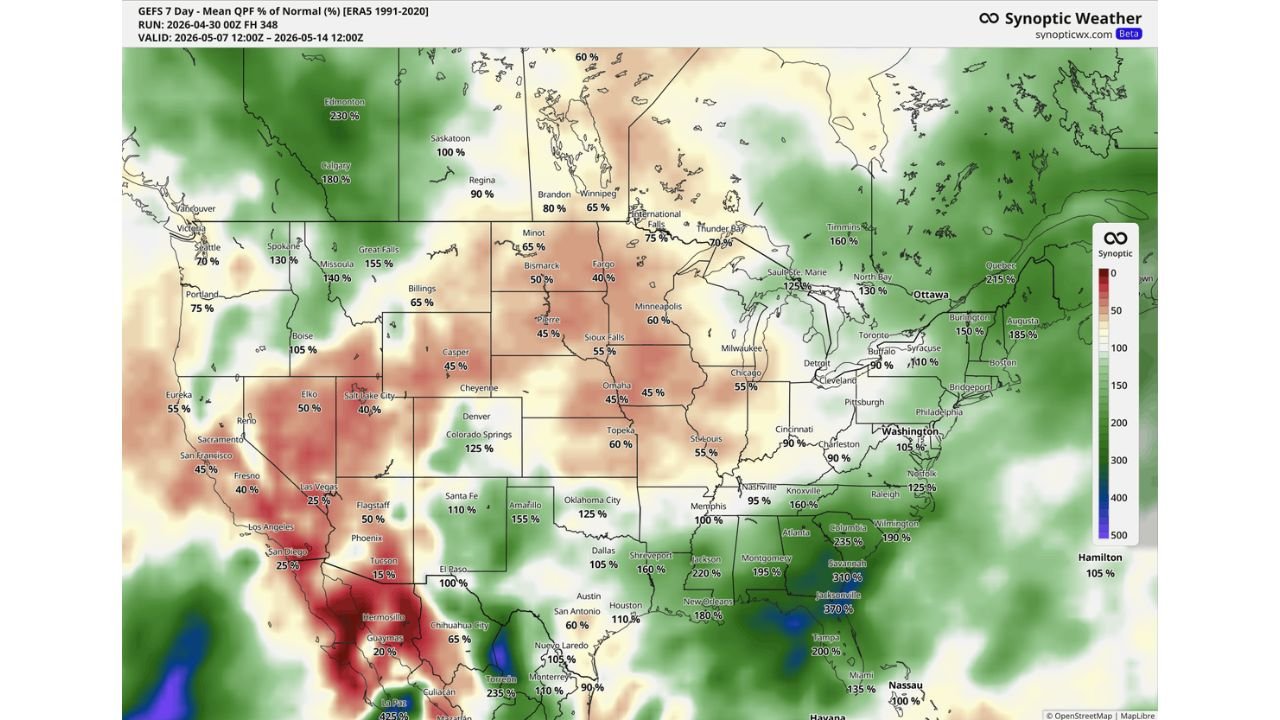
GEFS 7-day mean QPF percent of normal data, valid from May 7 through May 14, 2026, shows the following rainfall picture across key agricultural regions:
Below Normal — Dry Conditions Favorable for Planting:
- Bismarck: 50%
- Fargo: 40%
- Pierre: 45%
- Casper: 45%
- Sioux Falls: 55%
- Omaha: 45%
- Topeka: 60%
- Chicago: 55%
- Minneapolis: 60%
- St. Louis: 55%
- Dallas: 105% — near to slightly above normal
- Oklahoma City: 125%
Well Above Normal — Wetter Areas:
- Jacksonville, Florida: 370%
- Savannah: 310%
- Montgomery: 195%
- Columbia, SC: 235%
- Wilmington: 190%
- Shreveport: 160%
- Jackson: 220%
- New Orleans: 180%
- Tampa: 200%
- Knoxville: 160%
- Raleigh: 160%
The core of the Ag Belt across the northern and central Plains and Midwest sits firmly in the below normal to well below normal precipitation category during this window, confirming the drier and more favorable planting conditions expected through mid-May.
The Frost Risk Remains the Key Watch Item
While the drier pattern is welcome news for planting progress, cooler than normal temperatures accompanying this setup mean frost risks will persist across the Ag Belt through mid-May. Producers should monitor overnight lows closely and remain prepared for frost events even as field conditions improve for planting operations.
The Southeast Tells a Very Different Story
In sharp contrast to the dry Ag Belt, the Southeast is running significantly wetter than normal during this same period. States including Florida, Georgia, South Carolina, North Carolina, Mississippi, Louisiana, and Tennessee are all seeing QPF values well above the 150 to 370 percent range — indicating a much more active and rainy pattern for that region through mid-May.
Stay with CabarrusWeekly.com for continuing updates on the mid-May planting weather outlook and frost risk across the Ag Belt.