Central Florida Rainy Season Historically Starts Around May 24 With Daily Downpours as All 3 Key Ingredients Are Not Yet in Place
CENTRAL FLORIDA — Central Florida’s rainy season historically begins around the third week of May, with the average start date landing on May 24 when cold fronts stop reaching the peninsula and daily afternoon downpours become the norm. As of early May 2026, all three key ingredients required to trigger the rainy season are not yet fully in place across the region.
Three Ingredients Needed — None Confirmed Yet
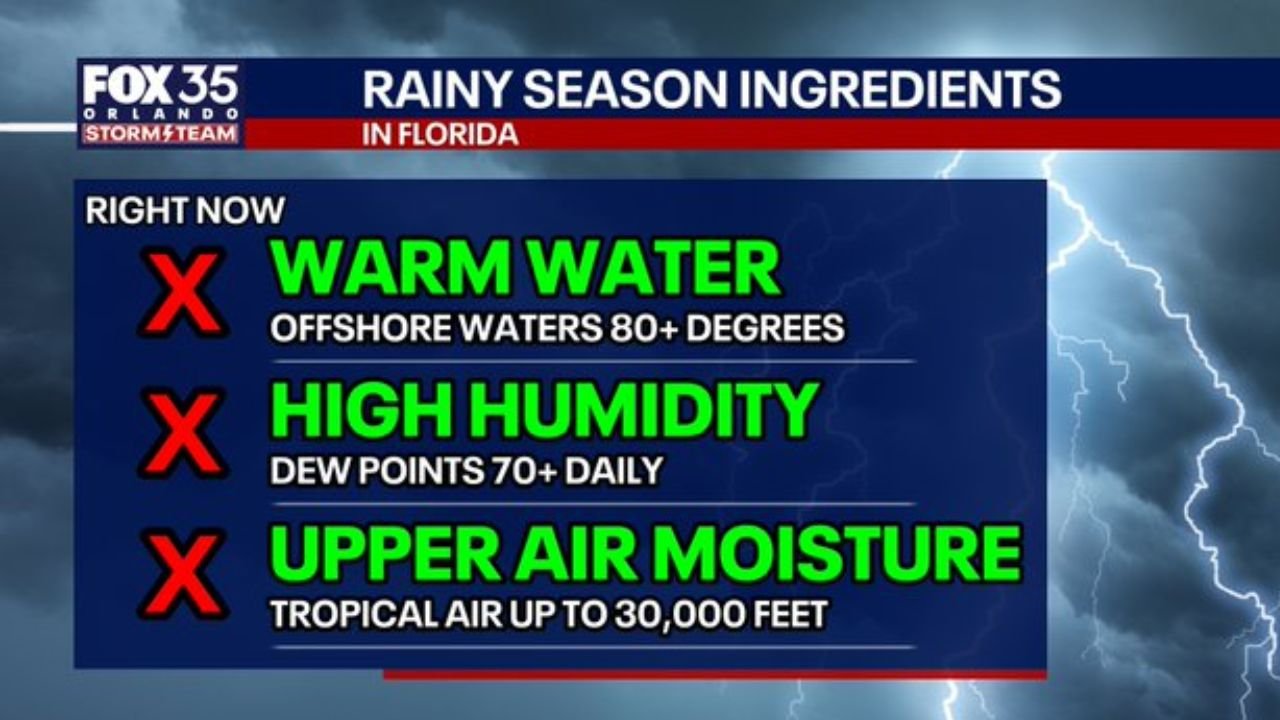
The rainy season in Florida requires a specific combination of atmospheric conditions to lock in. Right now all three remain absent:
| Ingredient | Requirement | Current Status |
|---|---|---|
| Warm Water | Offshore waters at 80 degrees or above | Not yet reached |
| High Humidity | Dew points at 70 degrees or above daily | Not yet established |
| Upper Air Moisture | Tropical air up to 30,000 feet | Not yet in place |
Gulf and Atlantic water temperatures need to warm further before the daily sea breeze convection pattern that drives Florida’s rainy season can fully establish itself.
What the Rainy Season Actually Looks Like
Once the rainy season begins, Central Florida transitions into a pattern of daily downpours with no more cold fronts influencing the weather. The timing and location of storms varies day to day and week to week depending on sea breeze boundaries and local atmospheric conditions. There is no fixed time each day when storms will fire — it depends on where the sea breeze collides each afternoon.
El Nino and the Rainy Season — Not a Guaranteed Slam Dunk
A developing El Nino can make Florida’s rainy season wetter than normal, but the connection is not as straightforward as it is sometimes presented. The signal is real but not guaranteed, and the impact on any individual storm day remains highly variable.
Current Rainfall Through Sunday Night
While the rainy season has not yet started, the current storm system is bringing some beneficial rain to the broader Southeast. Model blend guidance through Sunday night shows:
- Alabama and Mississippi core — 2 to 5 inches
- Georgia and the Carolinas — 0.5 to 2 inches
- Central and South Florida — under 0.5 inches
South Florida remains on the dry side of the current pattern as the system stays well to the north and west of the peninsula.
Stay with CabarrusWeekly.com for continuing updates on Central Florida’s rainy season outlook and daily weather through May.