Oklahoma and Kansas Remembered 74 Tornadoes, 46 Dead, 800 Injured and 1.5 Billion Dollars in Damage From the Catastrophic May 3 1999 Outbreak
OKLAHOMA CITY, OKLAHOMA — On May 3, 1999, one of the most violent tornado outbreaks in American history tore through Oklahoma and Kansas in less than 21 hours, producing 74 tornadoes, killing 46 people, injuring 800 more, damaging or destroying more than 8,000 homes, and causing nearly 1.5 billion dollars in property damage.
74 Tornadoes in Less Than 21 Hours Across Oklahoma and Kansas
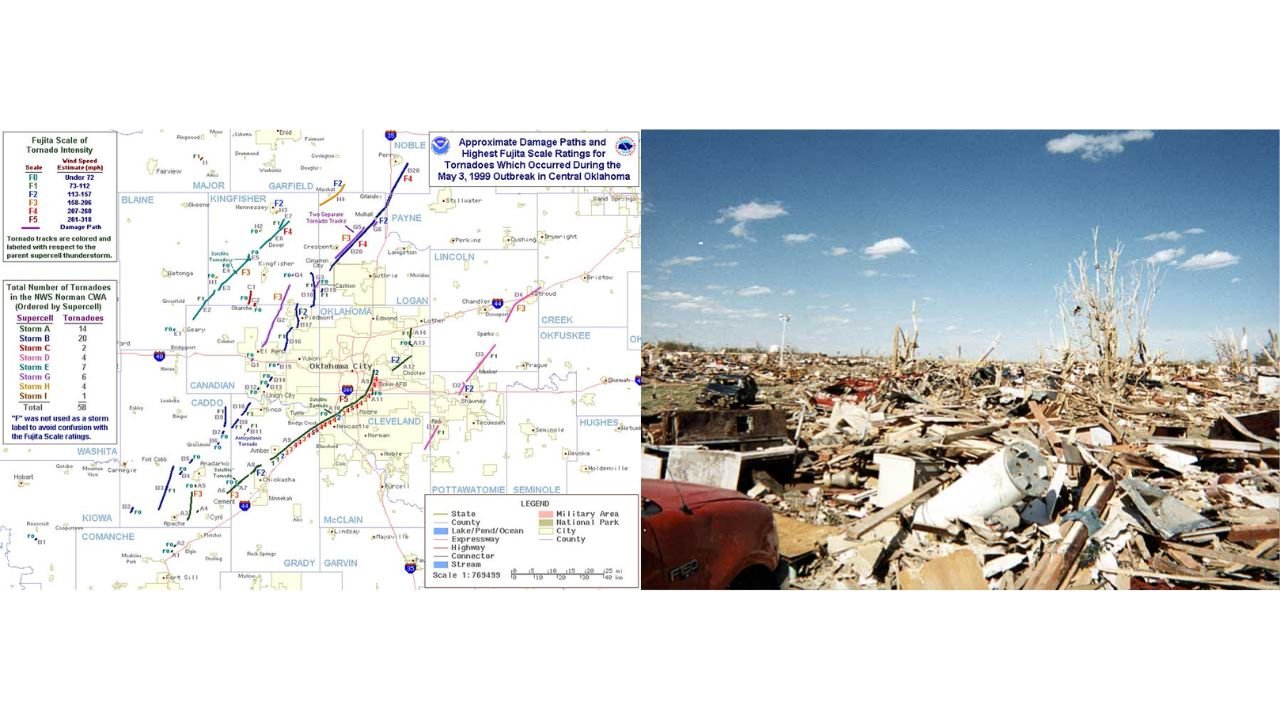
At the peak of the outbreak, as many as four tornadoes were on the ground simultaneously across central Oklahoma. A total of 58 tornadoes were confirmed within the NWS Norman County Warning Area alone, produced by eight separate supercell thunderstorms tracked across the region.
Storm B produced the most tornadoes of any single supercell that day with 20 confirmed touchdowns. Storm A generated 14 tornadoes, Storm E produced 7, and Storm G contributed 6 additional tornadoes to the outbreak total.
The F5 Tracked 38 Miles Through Oklahoma City and Moore
The strongest tornado of the outbreak was rated a maximum F5 on the Fujita Tornado Scale, with wind speed estimates of 261 to 318 MPH. It tracked for nearly an hour and a half along a 38-mile path from Chickasha through south Oklahoma City and the suburbs of Bridge Creek, Newcastle, Moore, Midwest City and Del City.
The damage path map shows the F5 track cutting directly through the heart of the Oklahoma City metro, with surrounding supercells producing additional F3 and F4 tornadoes across Canadian, Kingfisher, Logan and Payne counties.
The Final Toll Left Oklahoma Changed Forever
| Stat | Number |
|---|---|
| Total tornadoes confirmed | 74 |
| Deaths | 46 |
| Injuries | 800 |
| Homes damaged or destroyed | More than 8,000 |
| Property damage | Nearly 1.5 billion dollars |
| Longest track tornado rating | F5 |
| Track length of F5 | 38 miles |
| Duration of F5 on ground | Nearly 1 hour 30 minutes |
What the Ground Looked Like After the F5 Passed
Photographs taken in the aftermath show entire neighborhoods reduced to bare concrete foundations. Debris fields stretched for blocks in every direction across Moore and south Oklahoma City, with vehicles overturned and structural remains scattered across what had been residential streets hours earlier.
The May 3, 1999 outbreak remains one of the most studied and documented tornado events in United States history, reshaping severe weather warning protocols and emergency response procedures across the country.
Stay with CabarrusWeekly.com for continuing coverage of significant weather history and severe weather events across the United States.