California, Arizona, Nevada, Utah and Texas Break Dozens of March Heat Records as Temperatures Surge Past 100°F Across Western and Central U.S.
WESTERN UNITED STATES — A historic March heat wave continues to rewrite the record books, with dozens of cities across California, Arizona, Nevada, Utah, Colorado, and Texas tying or breaking long-standing temperature records.
Record-Breaking Heat Spans Multiple States
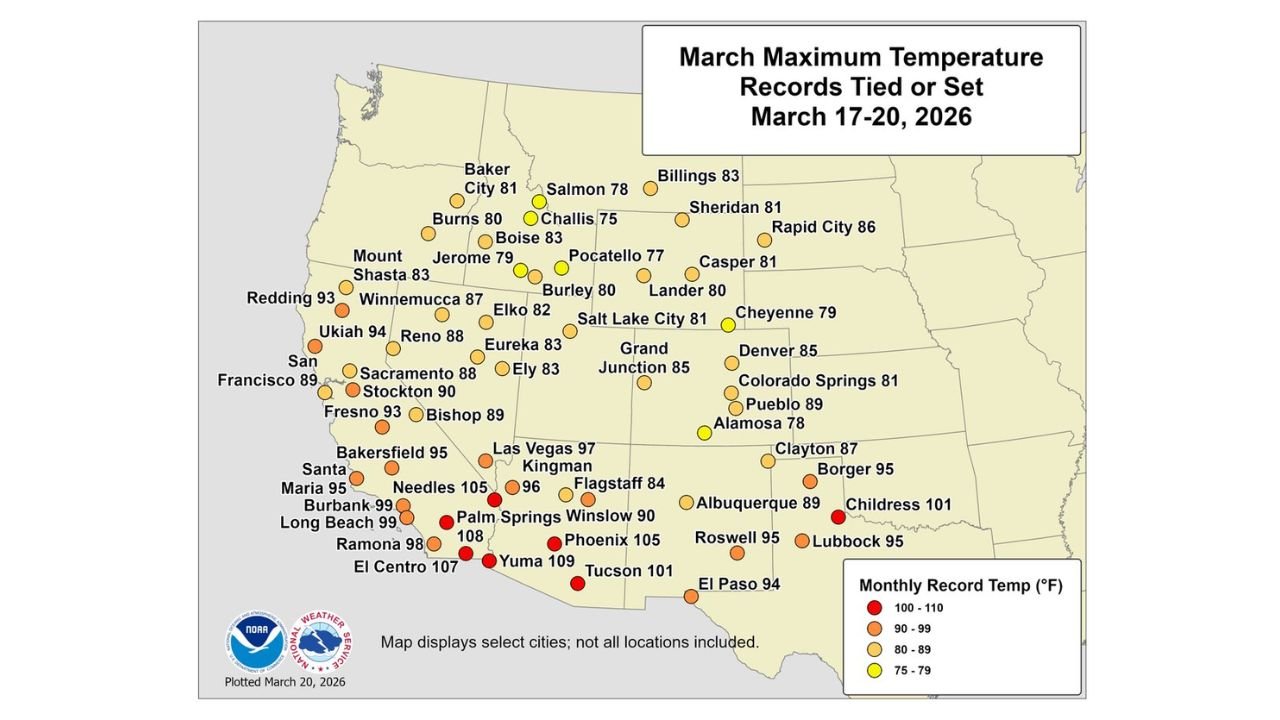
Data from March 17–20 shows an extraordinary number of locations reporting new or tied record high temperatures, many from climate records dating back decades.
The most intense cluster of records is centered across California, Nevada, Arizona, and parts of Utah, where widespread readings have surged well beyond seasonal expectations.
Cities across these regions have consistently reached into the 90s and even triple digits, signaling one of the most significant early-season heat events in recent memory.
Triple-Digit Heat Strikes Desert Southwest
The Desert Southwest has been at the epicenter of the most extreme conditions, with multiple cities exceeding 100°F.
Locations such as Phoenix (105°F), Tucson (101°F), Yuma (109°F), and Palm Springs (108°F) highlight the intensity of the heat, with several areas pushing toward levels typically seen in late spring or early summer.
Even surrounding desert communities like El Centro (107°F) and Needles (105°F) have joined the list of record-breaking locations.
California and Nevada See Widespread 90s
Across California and Nevada, temperatures have surged into the upper 80s and 90s, with cities like Sacramento (88°F), Fresno (93°F), Bakersfield (95°F), and Reno (88°F) setting or tying March records.
Coastal influence has limited some extremes, but inland valleys and desert regions have experienced significant and sustained heat, contributing to the widespread nature of this event.
Rockies and Intermountain West Join the Record List
Even higher elevation and typically cooler regions have not been spared.
Cities such as Salt Lake City (81°F), Denver (85°F), and Grand Junction (85°F) have recorded unusually warm conditions, with temperatures climbing far above normal for March.
This expansion into the Rockies and Intermountain West underscores how broad and dominant the heat pattern has become.
Texas and Southern Plains Also See Record Highs
The heat has extended eastward into parts of Texas and the southern Plains, where cities like Lubbock (95°F), Childress (101°F), and Borger (95°F) have also recorded March record highs.
This progression shows the heat wave is not confined to the West but is actively expanding into the central United States.
A Rare Early-Season Heat Event
Meteorologists emphasize that the combination of intensity, geographic coverage, and number of records broken makes this event highly unusual.
March typically brings variable conditions, but this pattern has delivered persistent, widespread, and record-breaking warmth across multiple climate regions simultaneously.
The presence of a strong upper-level ridge, dry air, and clear skies has allowed temperatures to climb rapidly and remain elevated over several consecutive days.
What This Means Going Forward
While some moderation is expected in the coming days, the scale of this event means its impacts will linger.
Early-season heat of this magnitude can influence water demand, agriculture, and wildfire risk, especially in already dry regions.
As the pattern shifts, attention will turn to how quickly temperatures return to normal and whether additional records could still be challenged.
Stay with CabarrusWeekly.com for continued updates as this historic March heat wave evolves. If you are experiencing unusual warmth in your area, share your observations with the CabarrusWeekly.com community.