Major Severe Weather Outbreak Sweeps Mississippi, Tennessee and Arkansas with 350+ Damaging Wind Reports and 13 Confirmed Tornadoes
SOUTHERN UNITED STATES — A significant severe weather outbreak tore across the Deep South as a powerful squall line moved from Arkansas into Mississippi and Tennessee, producing widespread damaging winds and multiple tornadoes.
Moderate Risk Issued Across the Mid-South
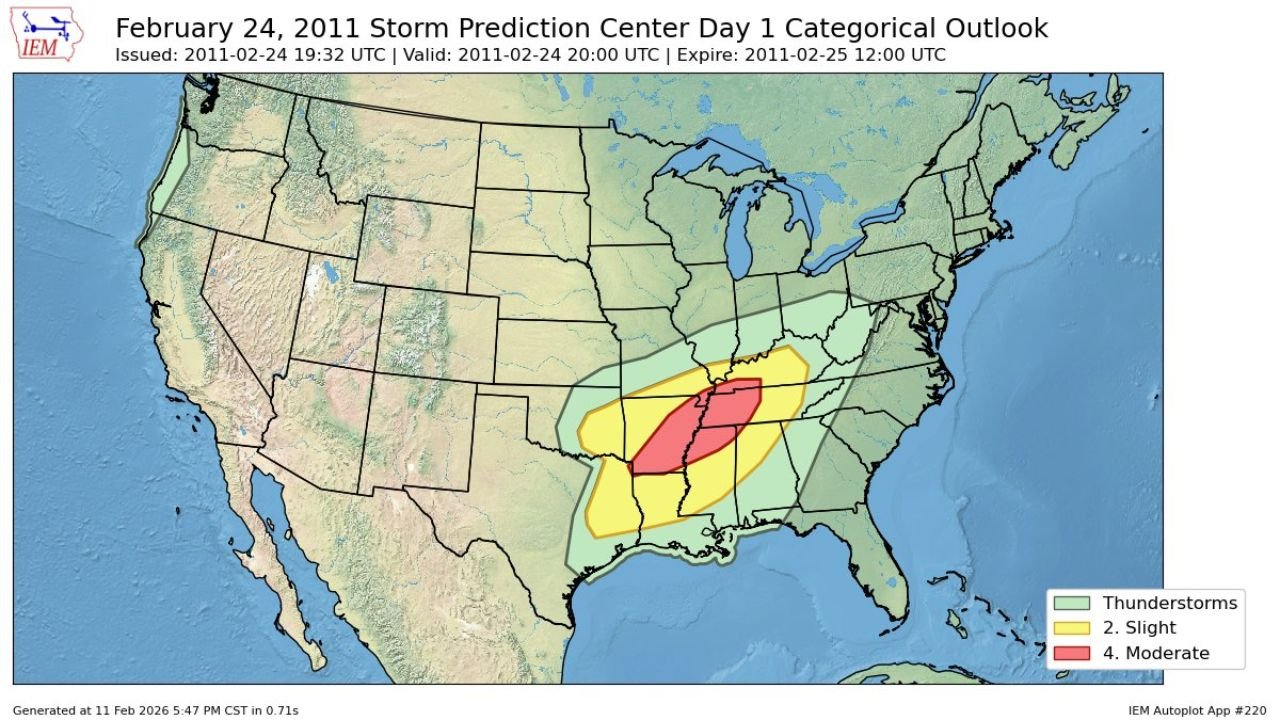
The Storm Prediction Center placed portions of Mississippi, western Tennessee, eastern Arkansas, northern Louisiana, and western Alabama under a Moderate Risk, highlighting the potential for organized severe storms.
The greatest concentration of severe weather developed from central Mississippi into western Tennessee, where atmospheric conditions strongly supported damaging winds and embedded tornadoes. Surrounding regions were included in a broader Slight Risk area.
Widespread Wind Damage Reports
As the squall line intensified and pushed eastward, it generated more than 350 reports of damaging winds, making it one of the more expansive wind-producing events in the region.
The line tracked from eastern Arkansas through Mississippi and into Tennessee, extending impacts into parts of Alabama and Kentucky. Communities including Little Rock, Memphis, Jackson, and Nashville experienced strong to severe wind gusts as the storms progressed.
The structure of the system resembled a classic bowing squall line capable of producing widespread straight-line wind damage across multiple states.
Thirteen Tornadoes Confirmed, Five Rated EF2
In addition to wind damage, the outbreak produced 13 confirmed tornadoes, five of which reached EF2 intensity.
Tornado tracks were concentrated across Mississippi and Tennessee, with additional activity extending into Arkansas and Alabama. Several tornadoes caused structural damage, particularly in rural areas and smaller communities.
Despite the intensity of the event, no fatalities were reported, though injuries did occur.
Radar Signatures Showed Embedded Circulations
Radar imagery across the Tennessee Valley showed strong reflectivity cores and pronounced velocity signatures embedded within the squall line.
Near Nashville and surrounding areas, radar scans displayed classic bowing segments and tight wind couplets, signaling areas capable of producing tornadoes and damaging straight-line winds.
The combination of strong wind shear and abundant Gulf moisture fueled a fast-moving but highly impactful severe weather event.
If you experienced this outbreak or have memories of the storms that swept across the Mid-South, share your story with us. Stay connected for more severe weather analysis and historical reviews at CabarrusWeekly.com.