Maryland and Washington D.C. Face Rotating Supercell Threat as Northern Maryland, Baltimore Metro and DMV Brace for Golf Ball Hail and Isolated Tornado Risk
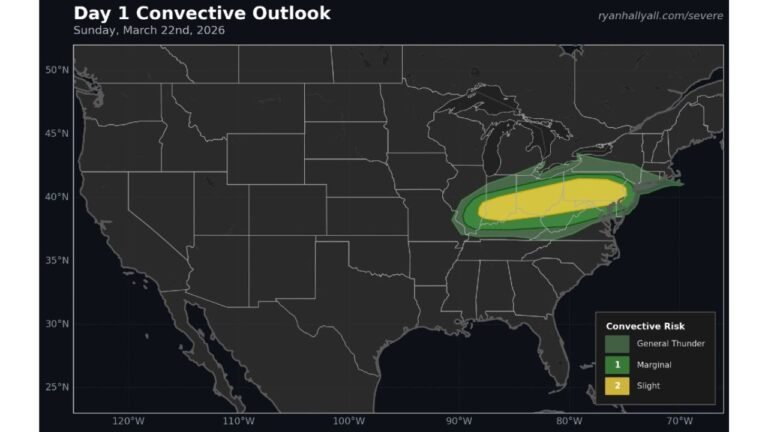
UNITED STATES — High-resolution weather models are signaling the potential for rotating supercells across northern Maryland and the greater Washington–Baltimore corridor this evening, raising concerns for large hail, damaging wind gusts, and even an isolated tornado.
Model projections focus particularly on areas west and northwest of Baltimore before storms track toward the metro region later in the evening.
Target Zone: Northern Maryland and the Baltimore Metro
Storm simulations show developing cells in:
- Western and north-central Maryland
- Near and just west of Baltimore
- Close to the Washington, D.C. metro area
- Surrounding communities including Frederick and areas between Washington and Baltimore
Radar model output suggests discrete cells capable of rotation rather than just a solid line of storms. This setup increases the chance for localized severe impacts.
Supercell Structure Emerging in Models
High-resolution reflectivity guidance shows intense storm cores with strong updraft signatures near:
- The Washington metropolitan area
- Just north of Baltimore
- Portions of northern Maryland extending toward southern Pennsylvania
These modeled cells exhibit classic supercell characteristics, including compact but intense cores that could support large hail production.
Forecasters indicate hail up to golf ball size is possible within the strongest storms.
Damaging Winds and Isolated Tornado Risk
In addition to hail, the environment may support:
- Damaging wind gusts exceeding 60 mph
- Localized wind damage in stronger cells
- A low but non-zero tornado threat, especially with rotating storms
If storms organize west of the Baltimore metro and maintain strength as they move east, the urban corridor could see significant impacts during the evening hours.
Timing and Evolution
The most likely window for stronger storm development appears to be late afternoon into early evening.
Key factors to monitor:
- Whether storms fully initiate west of Baltimore
- Whether cells remain discrete rather than merging into a weaker line
- How quickly storms track east toward populated areas
If development underperforms, impacts may remain isolated. However, if storms intensify and maintain rotation, localized severe damage could occur.
What This Means
While not a widespread outbreak scenario, the setup is conditional and capable of producing high-impact weather in a short window.
Residents across northern Maryland, Baltimore, and the Washington D.C. metro should:
- Monitor weather alerts this afternoon and evening
- Secure loose outdoor objects
- Be prepared to move indoors quickly if warnings are issued
CabarrusWeekly.com will continue monitoring the evolving severe weather setup and provide updates as conditions develop.