Magnitude 6.0 Earthquake Strikes the Big Island of Hawaii at 9:46 PM Friday at a Shallow Depth of 14 Miles Caused by Lithospheric Flexure With No Volcanic Eruption Risk
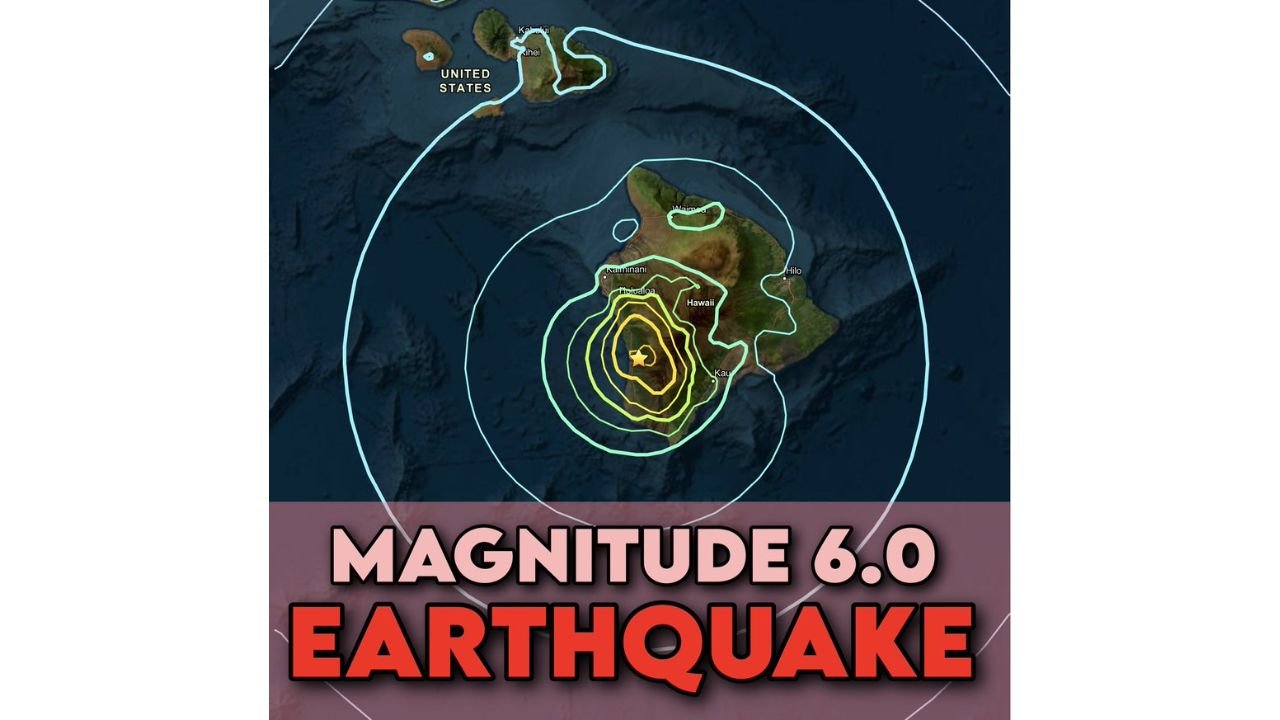
BIG ISLAND, HAWAII — A magnitude 6.0 earthquake struck the Big Island of Hawaii at 9:46 PM local time on Friday, May 22, 2026 (7:46:01 UTC, overnight into May 23), sending shockwaves across the island. The quake occurred through oblique reverse faulting at a shallow depth of 14 miles and is not connected to any volcanic or magmatic processes, meaning it does not signal any upcoming volcanic activity on the island.
What Caused This Earthquake
The United States Geological Survey explains that large earthquakes in Hawaii occurring at this depth are typically caused by lithospheric flexure, the bending and stress of the oceanic plate beneath Hawaii caused by the immense weight of the Hawaiian Islands pressing down on the underlying oceanic crust. This is a well-documented and understood seismic process specific to the Hawaiian Island chain.
The depth of 14 miles is a critical detail. Because this quake occurred at this depth and through reverse faulting rather than volcanic processes, it is not tied to magmatic activity and does not indicate any related volcanic eruption is coming.
The Big Island’s Seismic History Puts This in Context
This type of non-volcanic, stress-releasing earthquake is not unprecedented for the Big Island. In the past 50 years, there have been 36 other earthquakes with magnitudes greater than 5.0 recorded within 60 miles of today’s epicenter. The most significant historical event in this region occurred on November 29, 1975, when a magnitude 7.7 earthquake near Kalapana killed two people and triggered numerous landslides that permanently reshaped portions of the Big Island’s south coast.
Why Hawaii Experiences These Earthquakes
The Big Island of Hawaii sits atop the Hawaiian hotspot, a deep mantle plume that has generated the entire 5,500 kilometer Hawaiian island chain across the northern Pacific Ocean over millions of years. As the Pacific tectonic plate moves northwest, older volcanic islands erode and subside while new ones form over the hotspot. The enormous weight of these volcanic islands continuously stresses and flexes the oceanic lithosphere beneath them, building up pressure that is periodically released through exactly this type of earthquake.
No Tsunami Warning Reported
The shallow and inland nature of the earthquake’s epicenter on the western side of the Big Island reduces the tsunami generation potential compared to offshore submarine earthquakes. Residents should continue monitoring official channels for any updates on aftershock activity following this significant seismic event.
Stay with CabarrusWeekly.com for the latest updates on this earthquake and any aftershock activity across Hawaii.